Getting to know your Hawaiian Lobeliads #23: Lobelia gaudichaudii

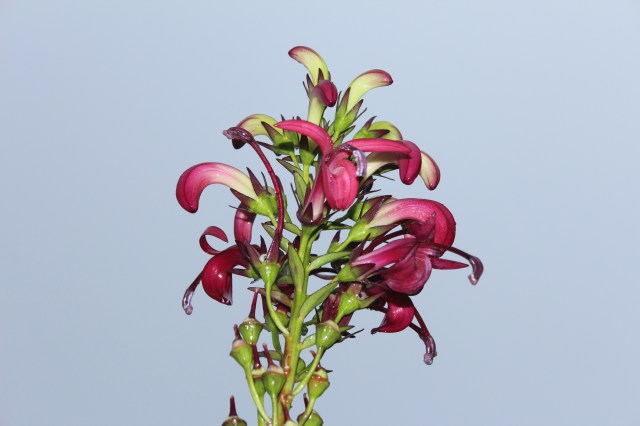
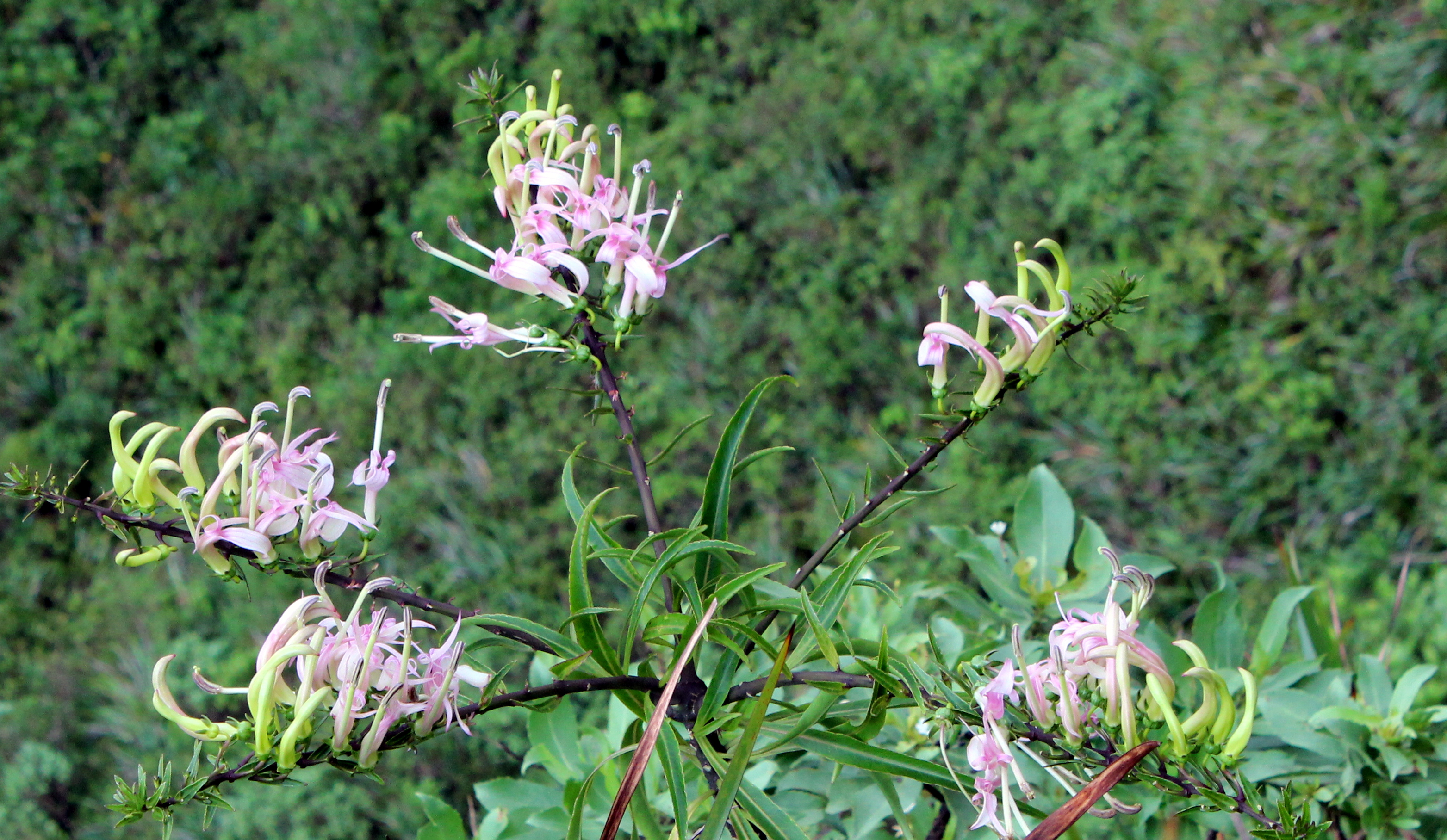
Lobelia gaudichaudii aspect

Lobelia gaudichaudii

  • Conservation Status: Endangered
  • Distribution: O’ahu (Southern Ko’olau mountains)
  • Date photographed: 12/8/2012
  • Ease of viewing: Difficult
  • *Identification: Form– Stems woody, 3-10 dm long, dense apical rosette of leaves. Leaves– oblanceolate to oblong, 8-19 cm long, 1.3-2.8 cm wide, midrib pubescent on lower surface. Flower– calyx lobes triangular, lanceolate or ovate, 10-15 mm long, 3-5 mm wide; corolla crimson, 50-75 mm long, 8-15 mm wide.
  • Phylogenetic comments: For a time, Lobelia gaudichaudii had two subspecies, subsp gaudichaudii and subsp koolauensis. Each has been raise to species level. More changes will need to be made because the genus Lobelia has be found to be paraphyletic. But that revision will be quite the undertaking.
  • My notes: Lobelia gaudichaudii is another awesome lobeliad that is part of the wet summit plant community. When we went to check them out, we were socked in by the clouds and buffeted by wind and rain. I thought it would be miserable conditions to take photos. Imagine my surprise when these came out.
  • Links: Smithsonian Flora of the Hawaiian Islands, UH Botany, Native Hawaiian Plants- Lobelia,
  • Additional Photos:

flower stalk

*From Manual of the Flowering Plants of Hawai’i

Posted in Botany | Tagged , | 2 Comments

Snapshot: The show goes on…


I should just rename this blog the Konahuanui Report. I still have a busy work schedule; yet the few times that I have been able to hike have been back to the top of the Ko’olaus. There’s a method to the madness… I think.

Since the last time I went up a few weeks ago, another Trematolobelia went into flower. This time it’s T. macrostacys. As you can see the flowers look much different than the T. singularis I highlighted recently. Aside from the much paler flowers, this specimen has thrown out multiple inflorescence in a pinwheel pattern characteristic of the species.


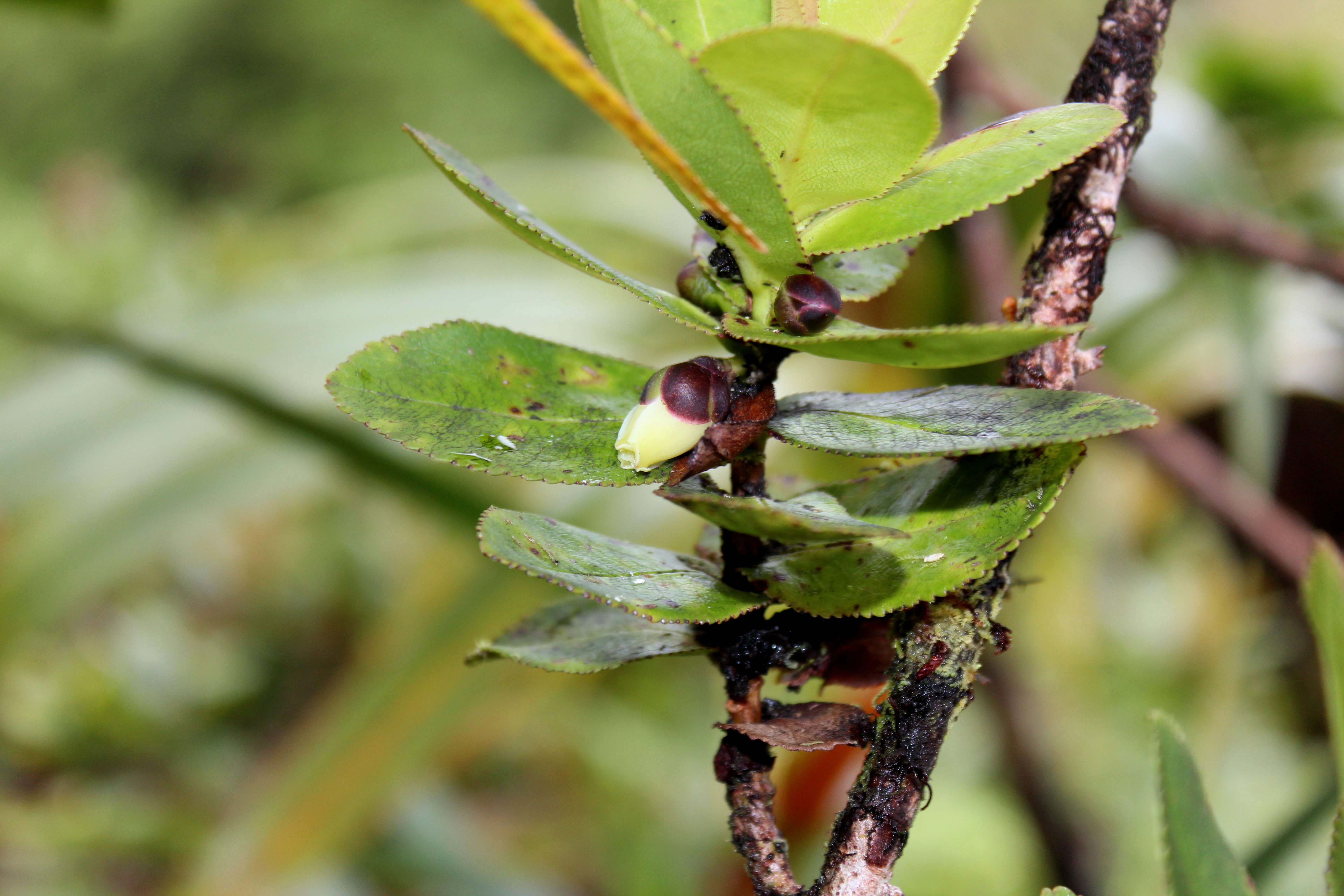
And to top it off, the Anini (Eurya sanswicensis) is starting to flower. For the sake of the population (There are 2 known in the entire Ko’olaus), may it be as fruitful as possible. Happy hiking everybody.

Posted in Botany | Tagged , , , | Leave a comment

Snapshot: Megalagrion


Coming across endemic fauna is always a highlight of any hike. Along the trail was a rather nice amount of Hawaiian damselflies (Megalagrion spp). I’m thinking male and female, though it could be sympatric species. My guess is M. oahuense but not to sure on that one. Pleasurable hiking companions in any case.

Posted in Animals | Tagged , | Leave a comment

Snapshot: iPad Doodles

So, I’ve been messing around with one of those painting apps for the iPad. It’s good fun even if my efforts are a bit amatuerish. Anyway, if conservation is successful here on O’ahu, this is a sight I would hope to see one day. This is an I’iwi (Vestaria coccinea) feeding on an Oha wai (Clermontia kakeana). It might be wishful thinking, but like I’ve said before: Dream impossible dreams, you’ll never know how close you can actually get otherwise.

Posted in Sharing the planet | Tagged , , | 2 Comments

Snapshot: How do you like them Bananas


So at work, we do what we can to perpetuate traditional Hawaiian practices and perspectives. One of our many foci is traditional farming with traditional staple crops. It is quite well known how many unique varieties of Kalo (Colocasia esculenta) were developed here in Hawaii. We care for roughly 28 different native types, for instance.

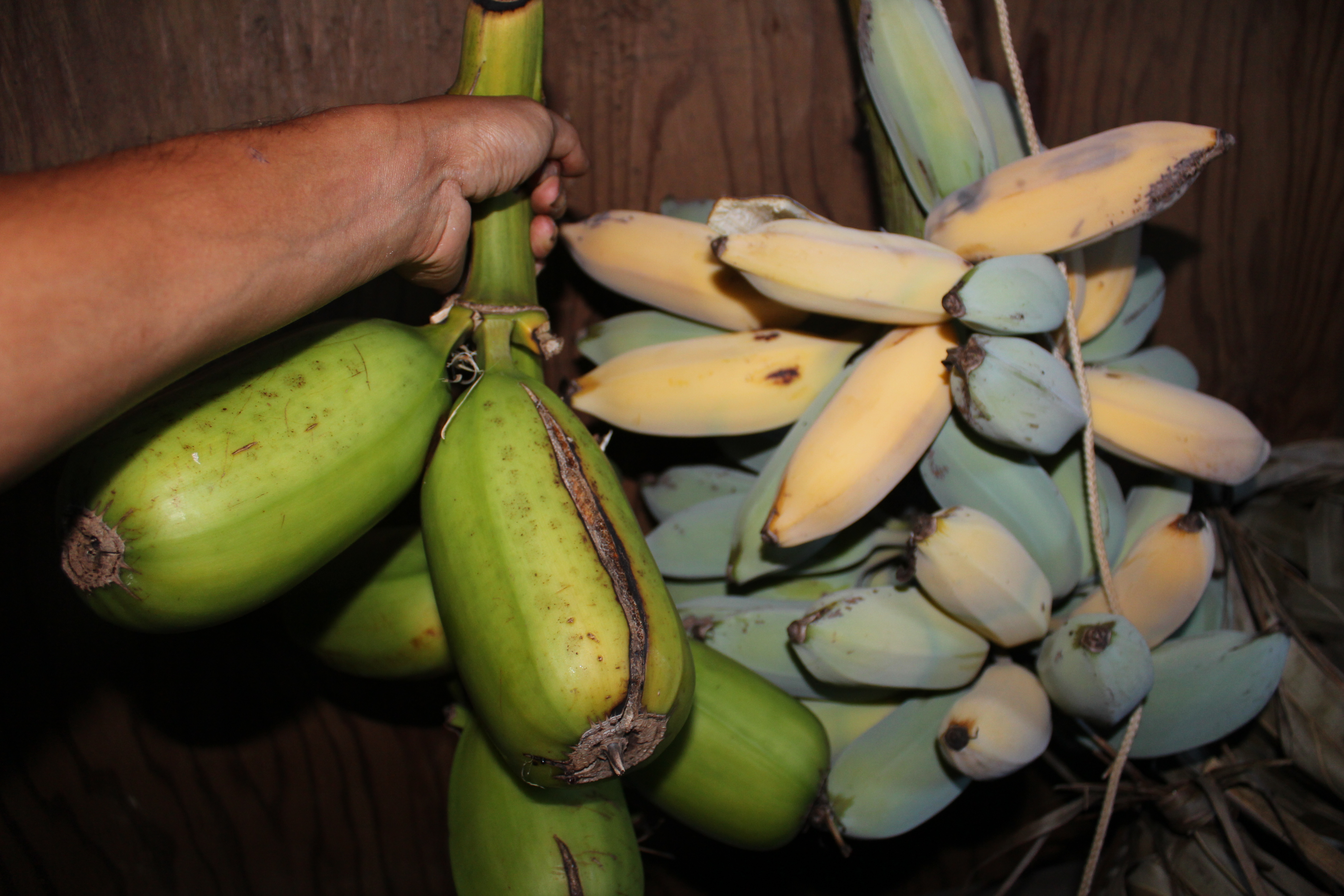
It’s worth noting that bananas (Musa spp.) were also farmed in old Hawaii. There are dozens of different strains that Hawaiians created over successive generations. This variety, Hua Moa, actually has a rather interesting modern story. It was taken to south Florida in the ’60s where it has become established in the local community. Most Hawaiian bananas are cooking bananas, so Hua Moa fit in quite nicely with all the plantains used in Latin American cuisine.

Hua Moa translates to chicken egg. As you can see from the picture, the large, squat bananas resemble their namesake more than they do other more familiar-shaped bananas. I can’t wait to try one! There’s a plantain dumpling stew that I remember from my time in Ecuador that looks like the winning recipe!

Posted in Botany | Tagged , , | Leave a comment

Lobeliads of Konahuanui

Cold, windswept cloud forests aren’t what one typically first thinks of when associating environments to O’ahu. Overlooked or not, they are critical habitats for many unique plants and animals found only here in Hawai’i. This is many of the native biota’s Masada: a great montane stronghold. The analogy is also appropriate because even here, in the most remotest of habitats, the natives are under siege by invaders. Will the defenses hold?

Continue reading

Posted in Botany | Tagged , , | 7 Comments

Beacons from the Ewa Plains

Today’s short article is about some of the remnant native flora on the Ewa Plains. Most of these nature excursions take me to remote places on O’ahu. So it was a little disconcerting to look for rare natives while dodging traffic, eating lunch on a crowded beach or talking over loud music. And through it all these plants are surviving.

Continue reading

Posted in Botany, Sharing the planet | Tagged | 2 Comments

Link of the day

This stretch of amazing weather has been quite agonizing. Work and prior engagements have kept me from the mountains. In the meantime, I did stumble across an interesting link I’d like to share:

In the footsteps of Joseph Rock – Here in Hawai’i, Joseph Rock is considered one of the Paragons of Hawaiian Botany. Much of his work is still important today. Elsewhere in the world, his exploits in southwest China are more famous. This blog digs deeper into that part of his life.

Posted in Random | Tagged , | Leave a comment

Snapshot: Clermontia FTW!

While my core philosophy is that we all share this planet, it does have its drawbacks. Namely, some people don’t share very well or care to. Here, someone broke a rare Clermontia kakeana in half. This is a good example why we’re working on making sure that the populations are vigorous enough. The extinction factor should be something other than just some young George Washington wannabe. The best part is this particular oha wai doesn’t want to be that cherry tree either; it is starting to grow new shoots. Resiliency, thy name is Clermontia!

Posted in Botany | Tagged , | 2 Comments

Koke’e part 2 of 2: The Mesic Forest

Haha lua & Hala pepe

The Pihea and Alakai Swamp trails are some of the most popular trails in Koke’e. Birders of all persuasions find these trails to be almost guaranteed sightings of native forests birds as well as the chance to see something rare. For plant enthusiasts too, these trails showcase the beauty of Kaua’i wetter forests. But the trails that overlook the Waimea canyon harbor some interesting denizens as well. They offer a glimpse into the mesic forest…

Continue reading

Posted in Botany | Tagged , , | Leave a comment