One of the absolute highlights of my trip to New Zealand was spending a day at Tiritiri Matangi. It was suppose to be an overnight stay but the weather wasn’t with us. Still, it was awesome to see an intensive restoration effort with a large compliment of native birds in it.
Here, we were able to see the unique endemic stitchbird. It’s an interesting lineage of nectivorou with a long history in New Zealand. The feeders were specifically designed to help this species as another of the islands success, the saddleback is more aggressive and will out compete stitchbirds at feeding sites. They are too big to fit here.
DLNR here in Hawai`i has for the last few years given a theme to each year to highlight different components of conservation here. A few years back was about Achatinella tree snails, last year was about native forest birds. This year was themed around the idea of community forest. Considering that I have been part of a native forest restoration project for the last 15 years, I was completely supportive of the idea. It’s something I’d like to think I have some experience with.
I’ve mentioned before how I don’t think of native forests as a place to go to; I see them more as an intricate, connected web of interactions that occur when the conditions are right. While some are the most basic of primordial forces (Wind, rain, fire, earth, light), others are interactions with different living things. For as much as the landscape shapes its respective plants and animals, the plants and animals also shape the place.
Autochthony is a term that comes up here at Studia Mirabilium because you can’t talked about native ecosystems in an isolated area without talking about how distinctive and unique it is. In some ways it’s the diametric opposite of the modern connected social world. Someone can be reading this post in Ghana right now. I could look up what life is like for herder in Mongolia just as easily as I could a truck driver in Tennessee. I could have one tab open to write a blog post, and have another tab book a flight and be in Japan tomorrow.
This global village with goods and ideas spreading at the speed of light has had an affect on biota. Mimosa pudica is found all over the tropics worldwide, Mus musculus is found just about anywhere there is human habitation. One species of felid and one species of canid has spread worldwide far beyond where they existed before domestication In some places like islands, they’ve become established in areas they would have never been able to reach without assistance. In very many ways, we didn’t create multiple distinct urban habitats, we created a pseudo-Pangea, propped up by our actions, in which plants and animals that have somehow adapted to the human condition opportunistically exploited. A strangely sometimes deliberate community of plants and animals have shaped landscapes and disrupted ecosystems worldwide.
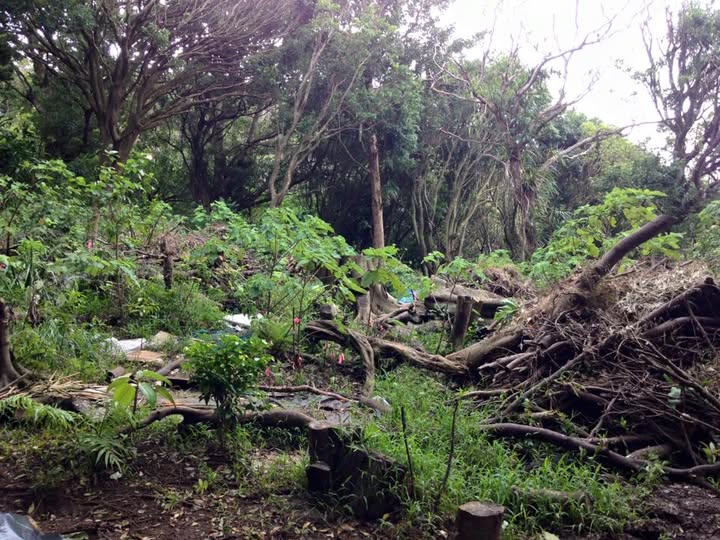
November 29, 2015 After a year of planting
Here in Hawai`i, the autochthonous forms that shaped these forests are mostly gone sadly. Hunted, outcompeted and replaced by these members of the global village. Many Hawaiian residents can look out their window and see a Monkeypod tree, a plumeria, a chicken, a cat and dog and not really think about just how weird it is to even have those species here. And those endemic forms, the `o`o birds, the moa nalo, the tree snails, the land crabs, the sea bird colonies have all largely been forgotten.
If we have created a wholesale turnover in the native biota and replaced it with these species that have adapted to human created habitats can it be reversed? And to what extent? Enter Community Forests.
Most places where people live and play in Hawai`i where once dryland forests. But there are some neighborhoods the abut mesic and wet forests. That is where we’ve been working for the last 20 years. A small handful of folks have dedicated one day a week with a goal of rehabilitating a heavily degraded native forest. And it’s made a difference.
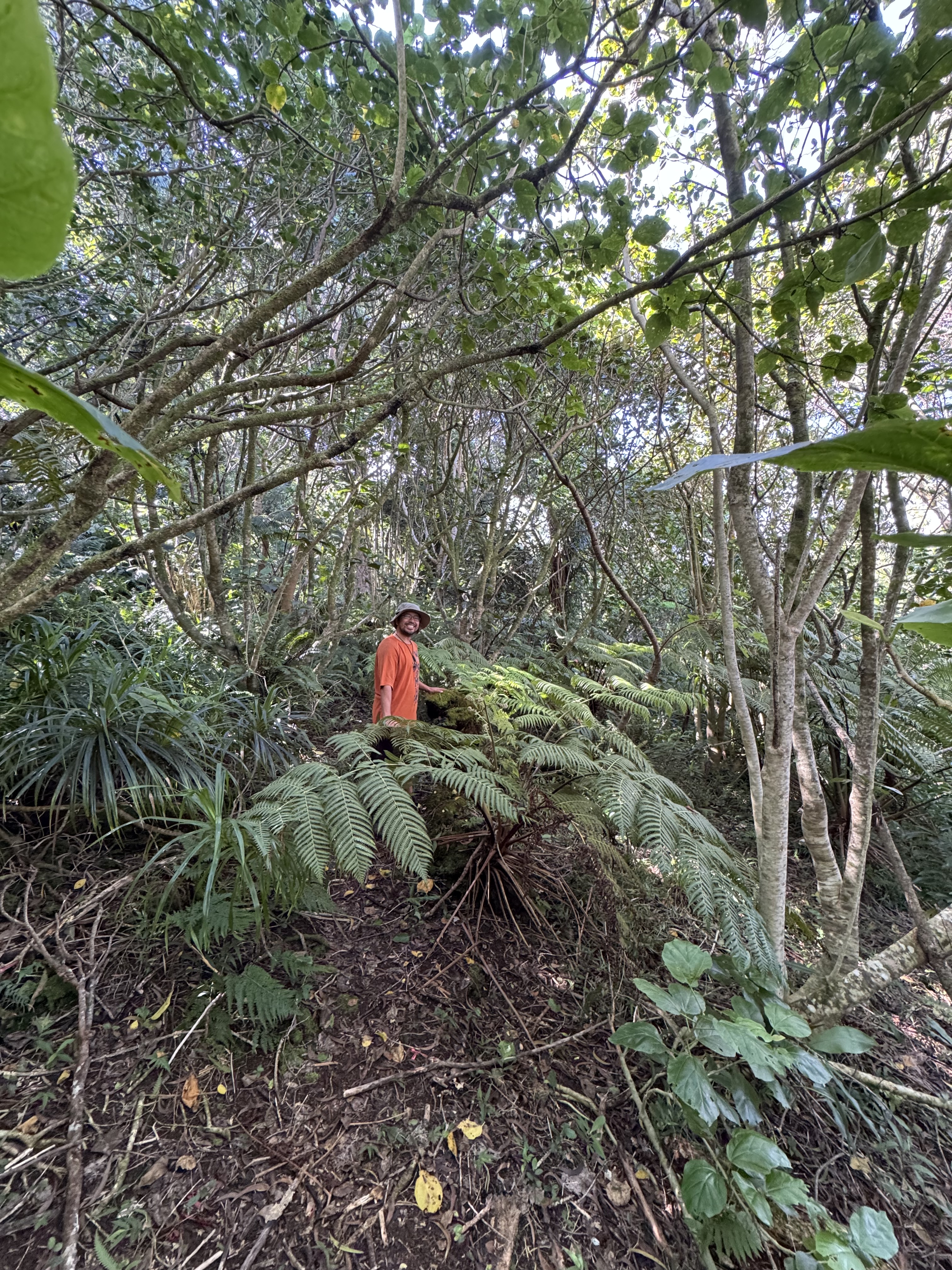
Today, November 30, 2025. My hand is resting on what remains of the banyan stump
The series of photos I’ve interspersed through this post are all taken from the same place, over a period of 11 years. Where an invasive banyan once stood, a canopy of native Hibiscus and Acacia dominate with many native ferns in the understory. It took plenty of work, but this part of the forest has seemed to have stabilized in a native condition.
I think in some ways, when people here community forest, they think of it just from a human perspective. And there is nothing wrong with that. The forests that are around us, what sort of benefits can we get? But for me, I like to think about it from the other shoe: what benefit does the forest get from us? Can we play the role of `i`iwi, `o`u, land crab, flightless rail with a dash of Paul Bunyon and Johnny Appleseed? Yes, we can. If there is anything I would like folks to get out of DLNR’s designation for the year of the community forest it is that potential for a mutually beneficial relationship between man and forest is there and not as far-fetched as one may think.
Every so often I like to do some self reflection and look back on this blog. In some ways it is strange that when I wrote my Why studia mirabilium post, I mentioned that I was tired of the negativity surrounding many topics. And yet for how some folks choose to interact with the world wide web, it’s gotten worse in these intervening 15 years.
I’d like to think for as challenging as the world is today, there is still magic out there. The world is still awesome. And luckily, as unsure as I was in that very second post on this blog back in October 2010, I have more certainty because I have receipts. I feel blessed to have the ability to take those aspirations I had as a 20-something year old man and turn them into durable, meaningful change for the environment.
How durable? How impactful? Will these tenuous changes last over space and time? Well, that’s what next 15 years is for. Even in today’s challenging world, we can do more good than one would think. I hope these posts I’ve done over the years show that possibility. Thanks for sharing the ride.
As much as blogging is a selfish exercise, fundraising is even more so. I figure I would do it this one time as we are trying to do a short documentary about the native forest restoration work we’ve been doing for the past 20 years. If you folks ever notice the optimistic tone I tend to strike in my blog posts, a lot of it stems from how well the native forest we work on has bounced back in these intervening 2 decades.
O`ahu is depauperate when it comes to native forest birds. Only 3 species `Elepaio (Chasiempis ibidis), `Apapane (Himetone sanguinea) and `Amakihi (Chlorodrepanis flava) are known with any confidence on the island. What is hopeful is that all 3 species are showing signs of resistance to avian malaria. While still just a glimmer, O`ahu has a very real possibility of having native forest birds in people’s backyards, This very obliging `Apapane preening away in a koa tree could be a sight seen in backyards in the urban landscape in the near future. A lot of it depends on what we are willing to do.
For all my consternation on where to take this blog into the future, what doesn’t change is the restoration work itself. While I am pondering the social media landscape, native plants are trying their darndest to survive.
Case in point above, this mamaki (Pipturus albidus) opportunistically germinated and started growing on an old rag on one of our water catchments. The current zeitgeist is that native hawaiian plants are very sensitive with specific requirements, yet here is a plant making the most of a surprising opportunity.
In some ways the reforestation work I do is kind of like a herder: The plants are doing all the hard work, I’m just doing what I can to shepherd them along and give them every advantage I can. The fact that they are the ones doing the heavy lifting means we see compounding interest. These small victories add up. I’m sure I’ll post a picture of this tiny mamaki that started it’s life on a rag 5 years from now, marveling at its size.
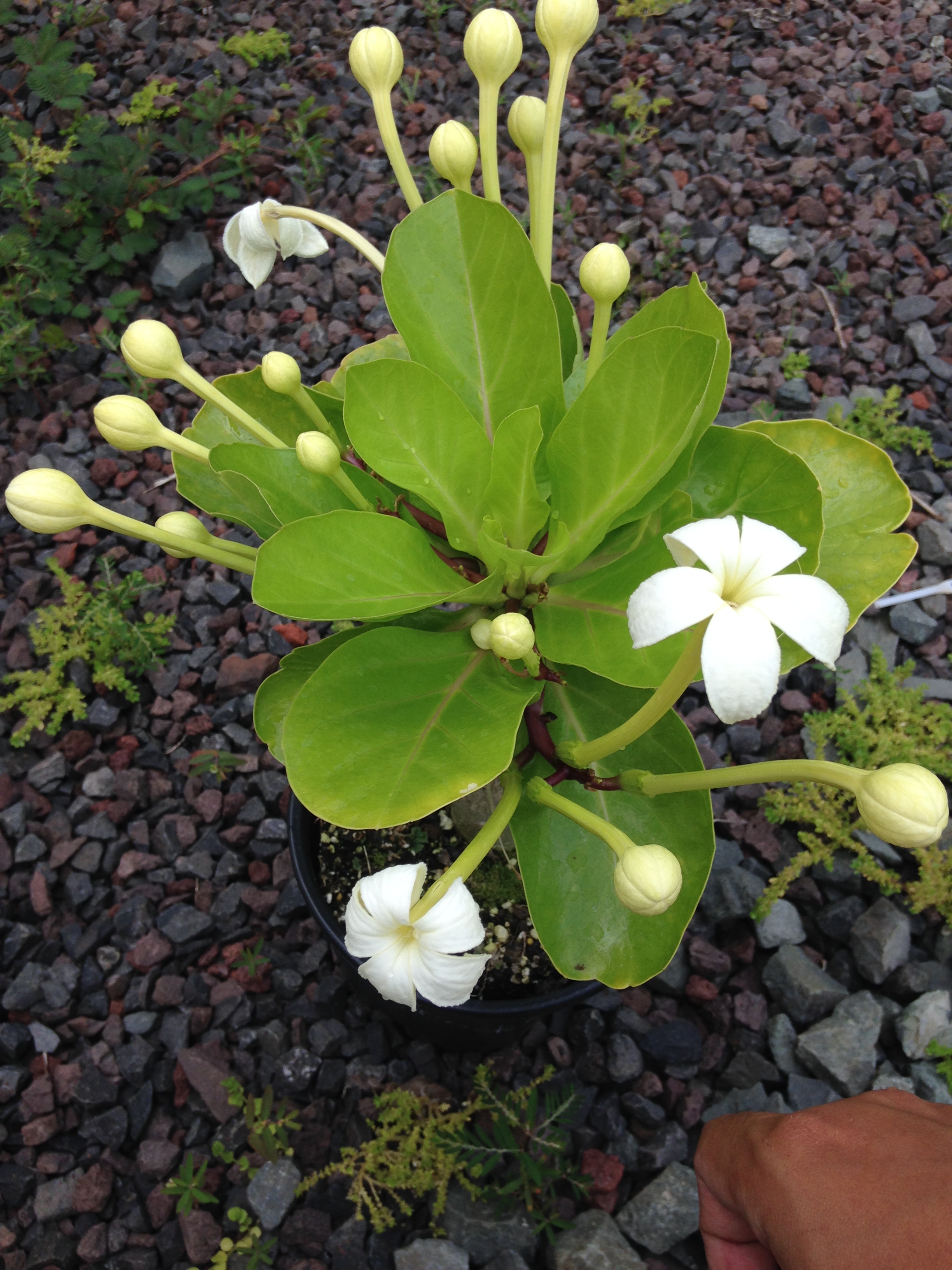
Identification: : Form– Unbranched stem succulents 1-5 m tall stems stout, fleshy Leaves– 6-22 cm long, 5-15 cm wide Flower– calyx lobes oblong to elliptic, 2.5-8 mm long; corolla white, the tube green to yellowish green, 8-13 cm long, 0.2-0.4 mm wide
My notes: It took me long enough to finish off one of the clades of Hawaiian lobeliads. This species seems a bit more finicky in cultivation compared to B. insignis, hopefully with time and better genetics that can change. I sat on these photos of Pua `ala for so long that I forgot when exactly I took them. Some of the most spectacular sea cliffs in the world happen to be this species home range, perhaps one day I’ll get a chance to check it out. Again, I’m at a cross-roads where to take the blog. 10 years ago it was Flickr and Instagram, nowadays it’s the benefits of iNaturalist that is giving me pause. I’ll figure it out. In the meantime enjoy some photos of this gorgeous native plant.
Growing up in Chicago, seabirds were not something that I normally encountered. Here in Hawai`i, we are blessed with a number of species that regularly visit our shores. And this species in particular we on O`ahu are quite proud of.
While quite common elsewhere in the Pacific and especially the northwest Hawaiian islands, Manu-O-Ku (Gyrgis alba) has a uniquely restricted range in the main Hawaiian islands. Their main population is in the urban core of Honolulu. They along with the kolea, are one of the few native species that one will easily come across while visiting O`ahu.
I mentioned them in a post about 15 years ago, and the population has only grown since then. This pair were sitting on a egg for a while on a tree above a sidewalk and I was happy to see that it had recently hatch. Given my work with trying to saving native species and the rather intensive energy needed, seeing the continued success of these little seabirds amongst the urban hustle and bustle with little aid gives me all the more resolve to keep going. Small efforts like planting baby plants and watching baby seabirds thrive.
DLNR has dedicated this year as the year of the community forest. While we have plans to highlight the work we’ve done over the last 20 years, at the end of the day a lot of it boils down to this photo. Quietly adding more native plants to the forest, shifting that trajectory back toward native.
Here, the 2 native Touchardia lineages (T. latifolia, T. glabra) are ready for outplanting. It might not be loud or flashy, but it is the backbone of our work.
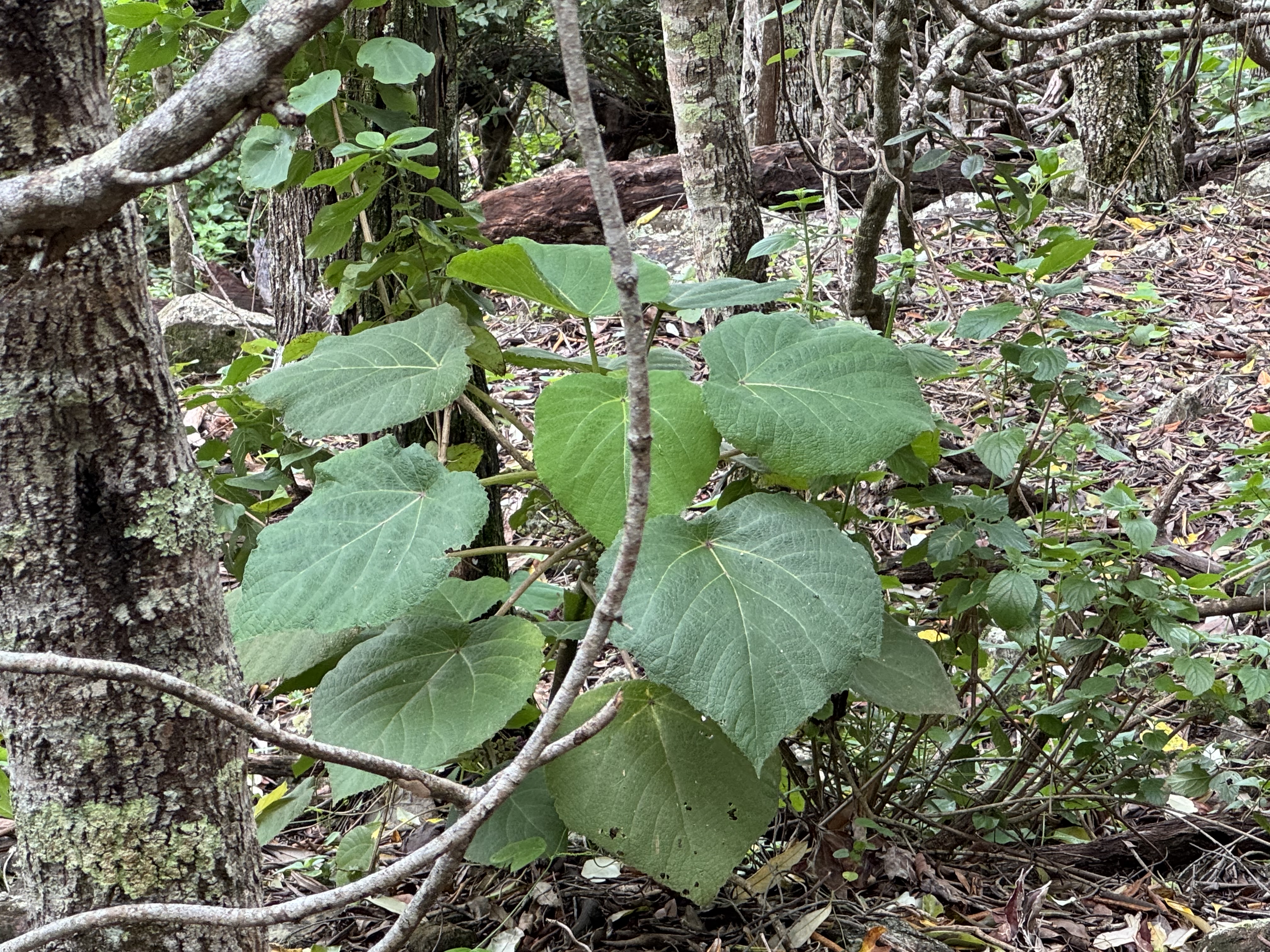
Plant blindness can be quite the challenge for the botanical community. Getting people to care can be a difficult thing: plants for a lot of folks tend to disappear into the background whilst people focus on something else. Some plants do break through the backdrop every now and then. While I was in Australia I figure I would try and look for one of these infamous plants. I didn’t realize that I would also end up with a spectacular image of Hawai`i better than I could have imagine…






 Studia Mirabilium