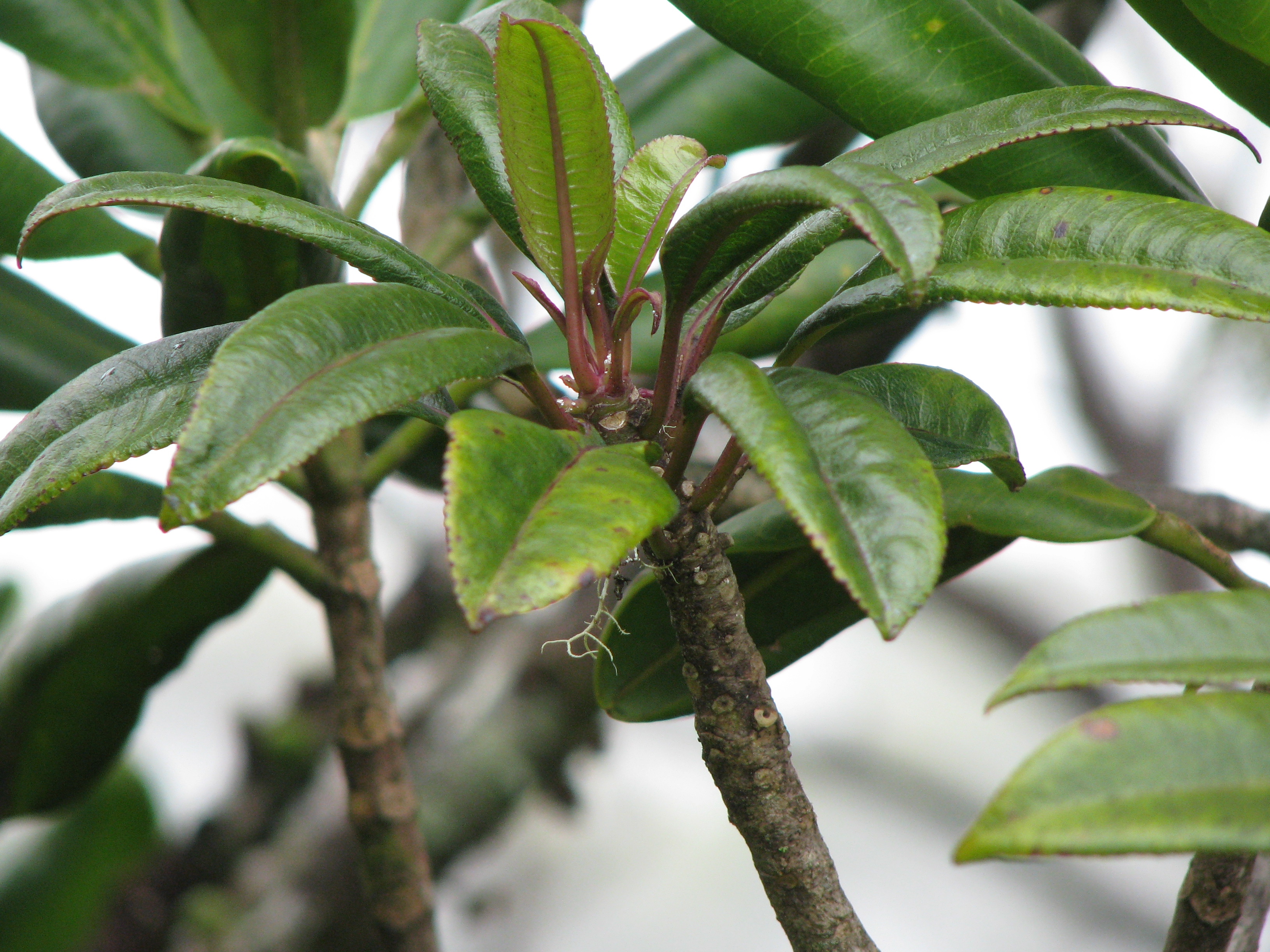
Urticaceae strikes back!

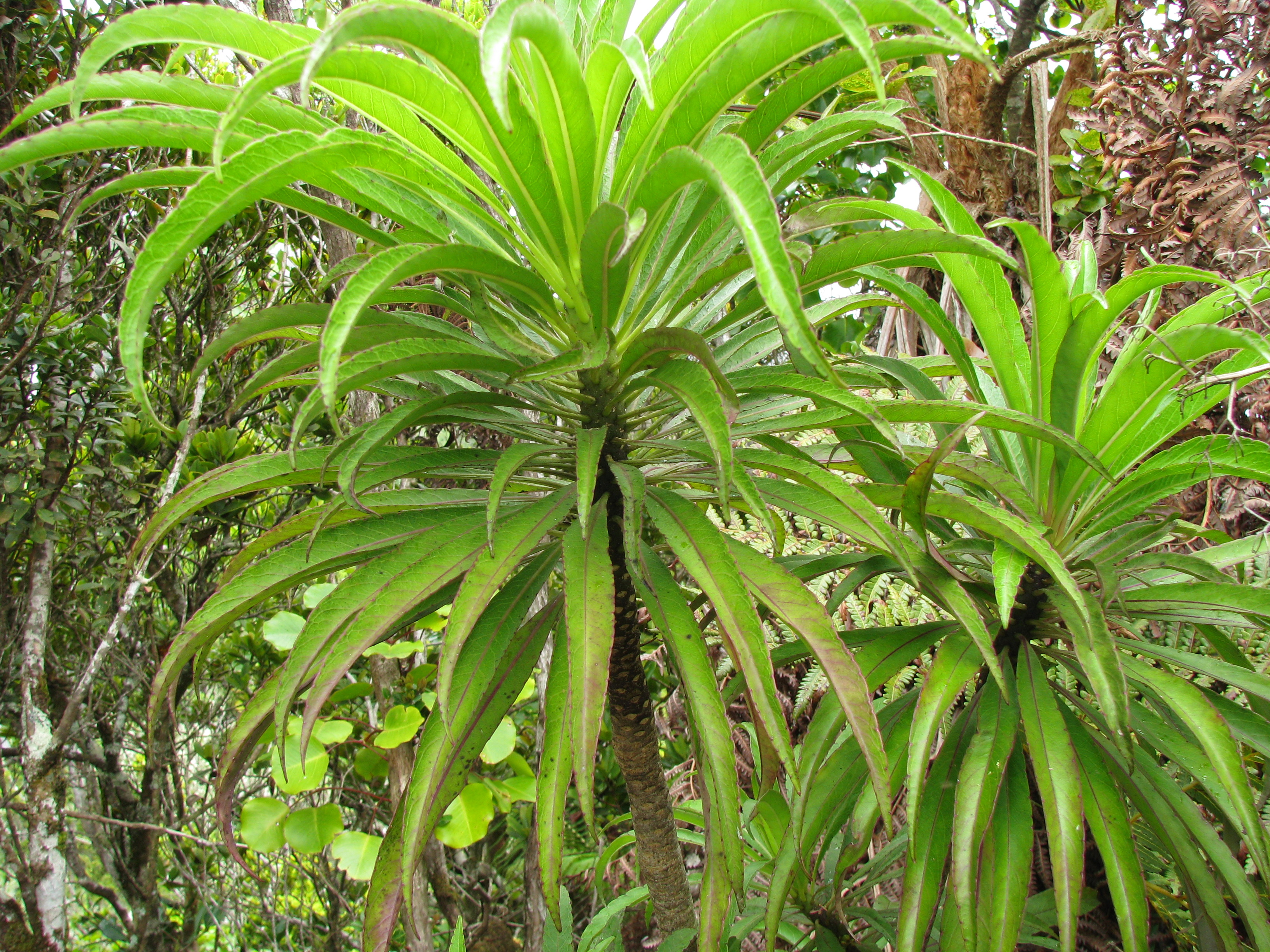
Hawaiian nettles are another strange product of that engine known as island evolution. Nettles (Urtica spp.) are well known around the world for their stinging hairs which are a major deterrent for herbivores (or the random off-trail hiker). I’m glad I never encountered the Common Nettle (Urtica dioica) while playing outdoors in Chicago. Stinging hairs aren’t necessarily basal to the family, but anytime traits are secondarily lost, it always gets my attention. Always. Nettle-less nettles… I want to know more!

Continue reading

Posted in Botany | Tagged | 1 Comment

A romp through a dryland forest

I think most people picture lush tropical rain forest when they think of Hawai’i, full of waterfalls and rainbows. But there are other types of plant communities found here. One dominant type being dryland forests found mostly on the leeward sides of each island. And even though O’ahu is the most populated of the islands, it has some of the most diverse dryland forest in the entire chain.

A few weeks back, I went with a few experience hikers and botanists to check out a few gulches in the Wai’anae Kai area that are still predominantly native. Even with all the general habitat destruction, dryland forest here have been especially hard hit. The hospitable climates of dry forest attracted a lot of human development from the start. As a consequence, there aren’t very many areas of pristine dry forest left in the state.

Continue reading

Posted in Nature | Tagged | 4 Comments

Getting to know your Hawaiian Lobeliads #9: Trematolobelia kauaiensis

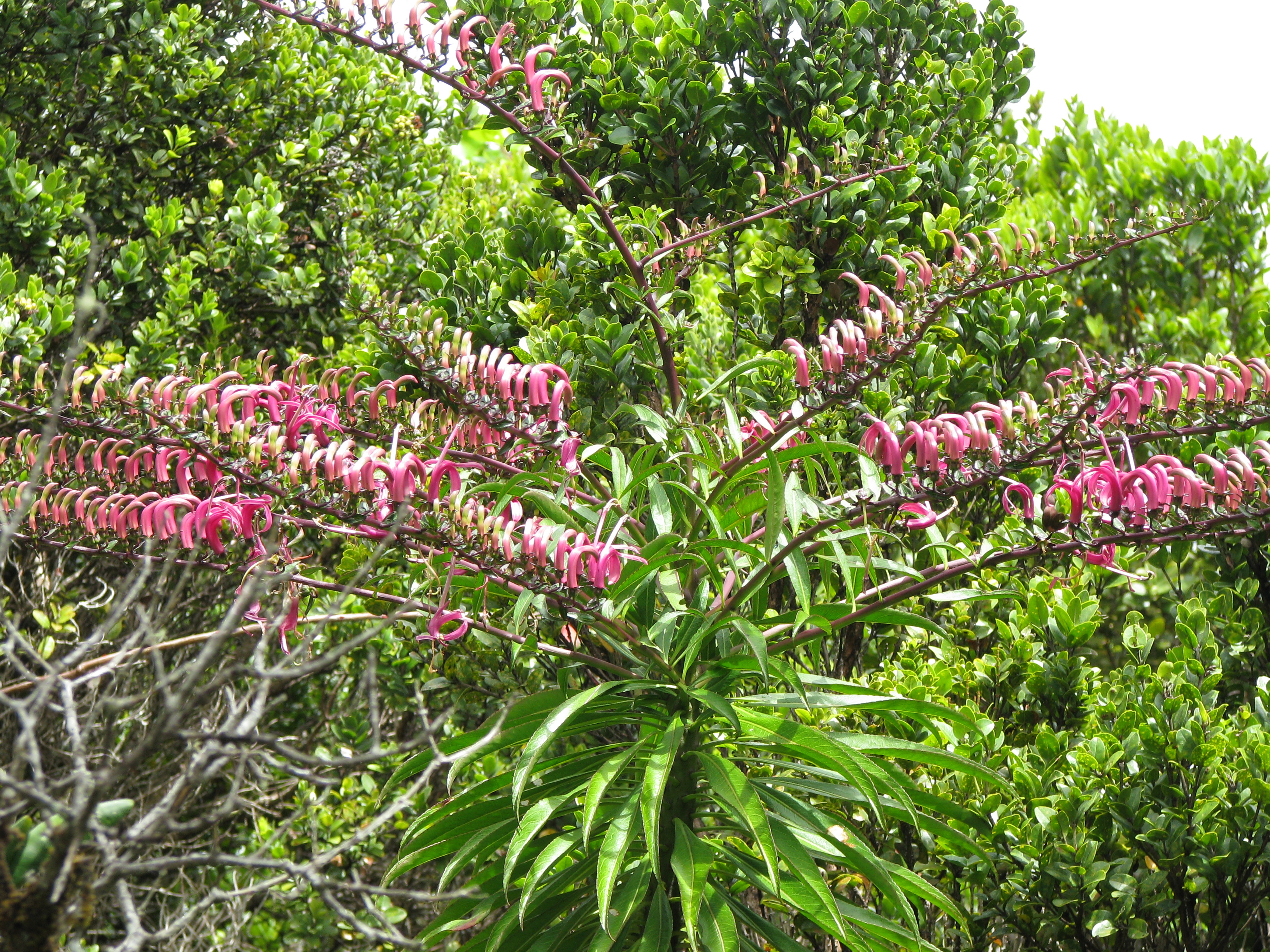
Trematolobelia kauaiensis

  • Hawaiian Name: Koli’i
  • Conservation Status: Apparently Secure
  • Distribution: Kaua’i
  • Date photographed: 9/22/10
  • Ease of viewing: Easy
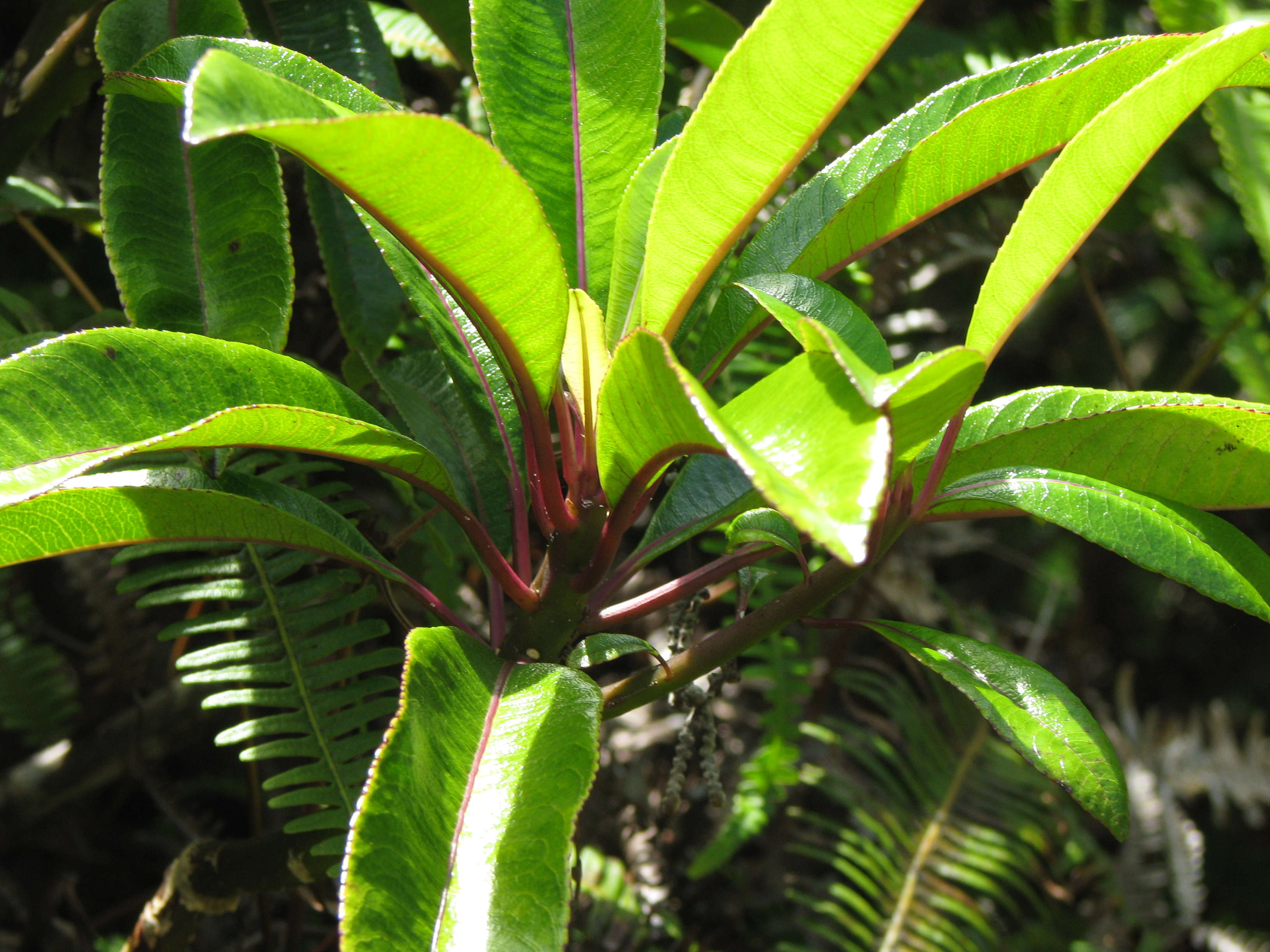
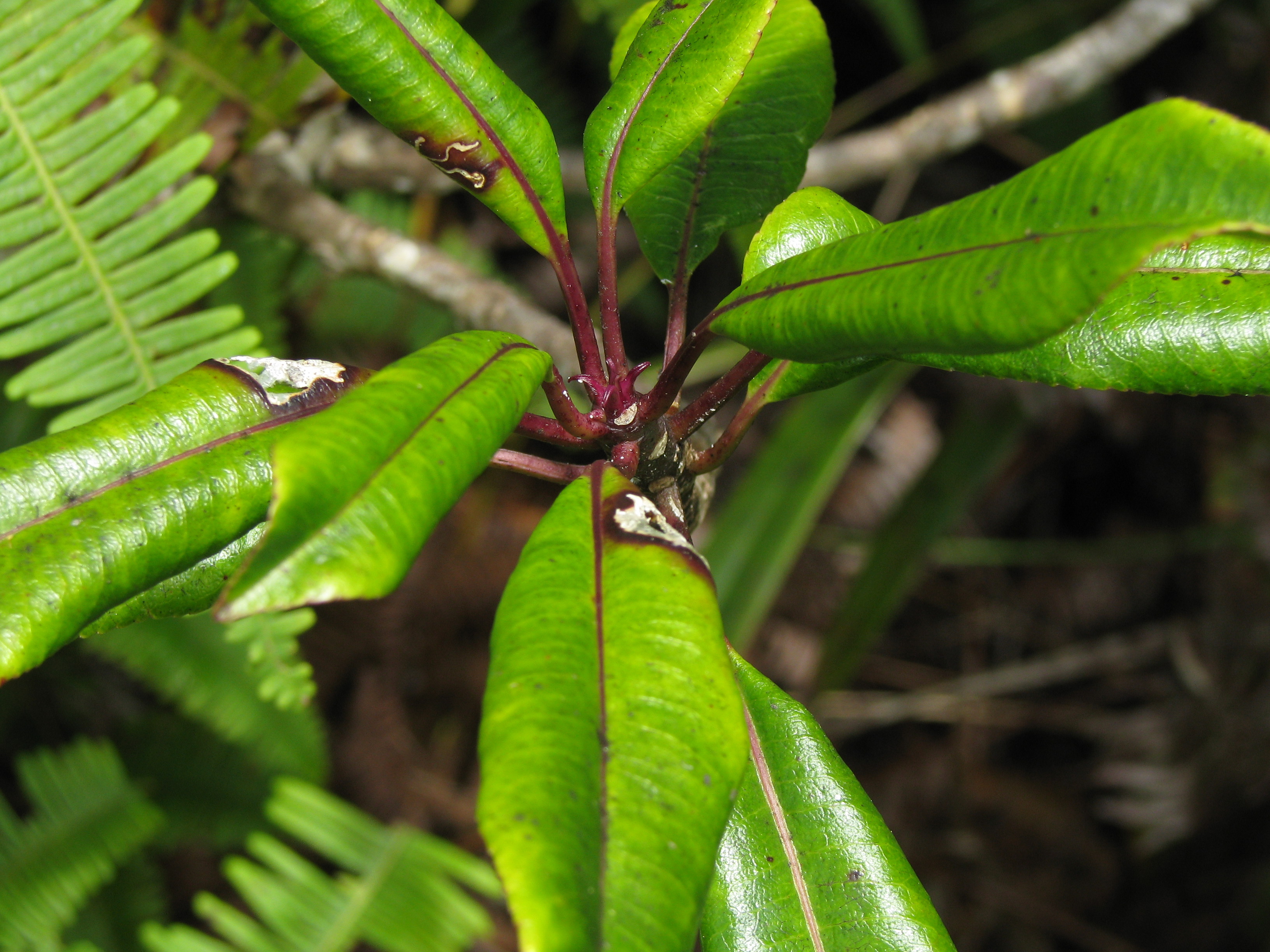
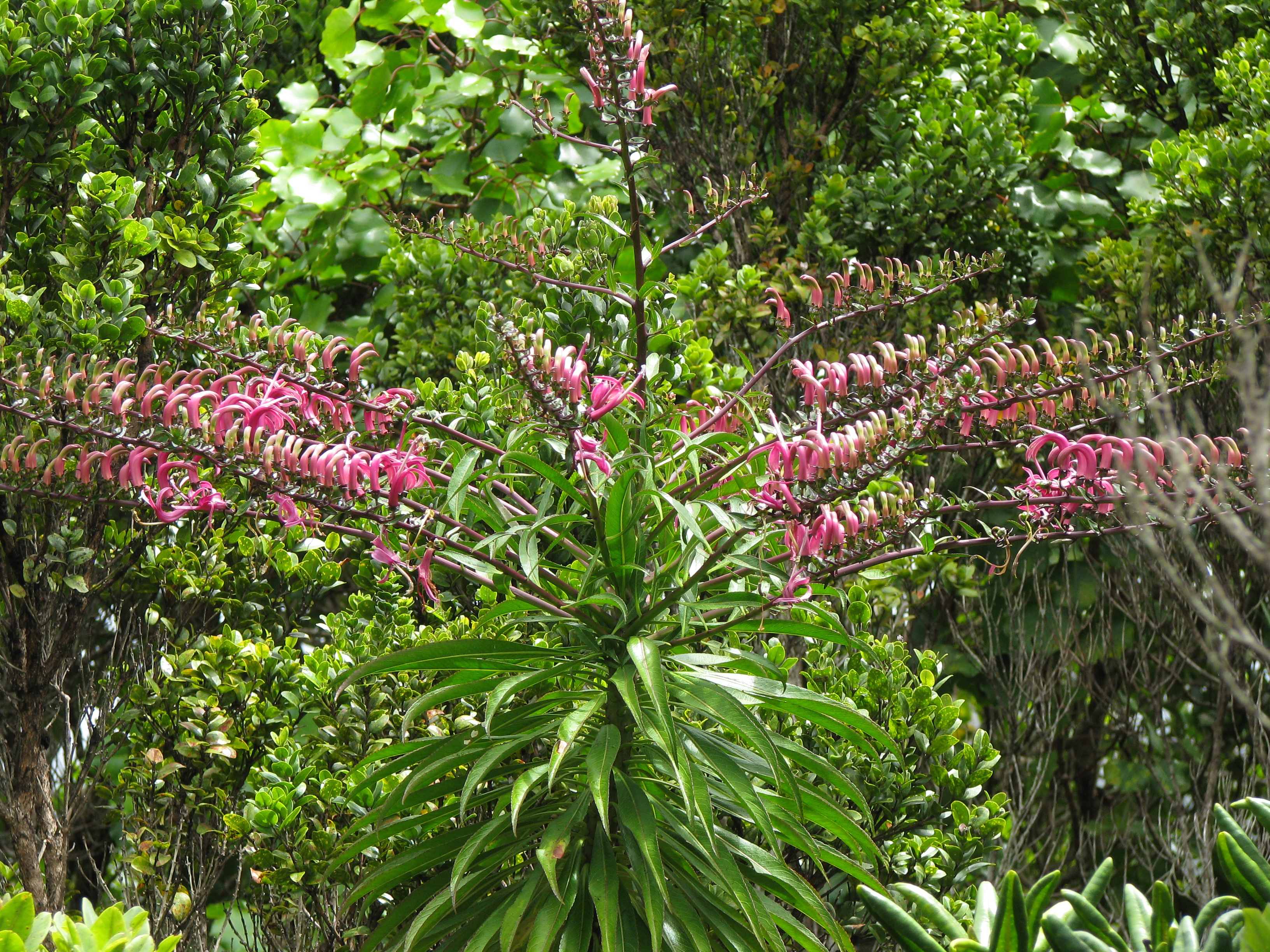
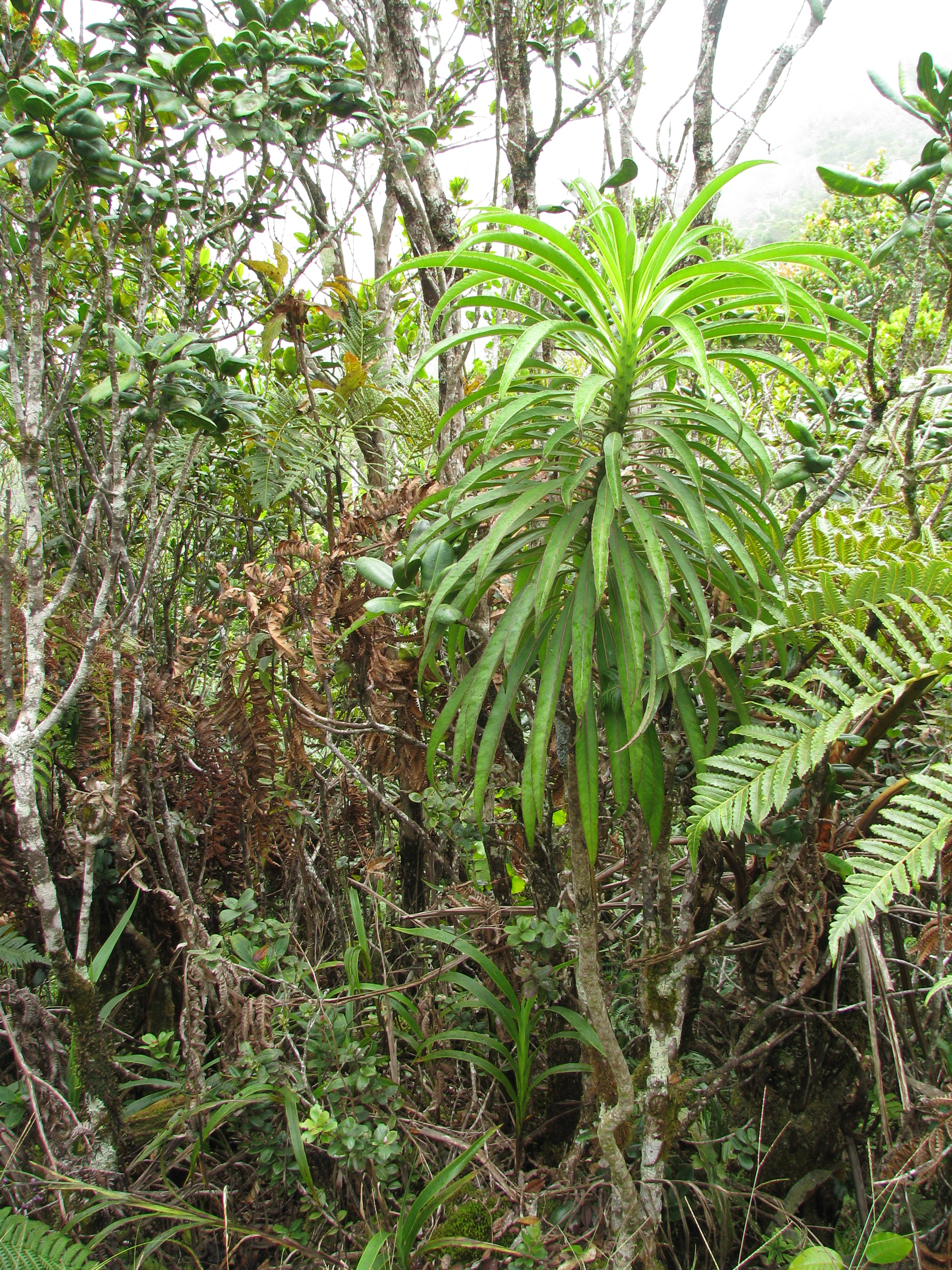
  • *Identification: Form– Stems 1.5-3 m long. Leaves– linear-elliptic to elliptic; blades 12-22 cm long by 1-3 cm wide; margins callose-crenulate; petioles 1.3-2.5 cm long. Flower– hypanthium 5-8 mm wide; calyx lobes spreading, oblong, 4-10 mm long; corolla scarlet, 5-5.5 cm long.
  • Phylogenetic comments:  T. kauaiensis seems to be an example of the “progression rule”: it diverged first and is sister to all the remaining Trematolobelia spp.
  • My notes: Trematolobelia spp in full inflorescence are some of the showiest of the native flora. T. kauaiensis is still quite common along the Pihea trail. With their large amount of flowers to attract pollinators, Trematolobelia spp offer one of the better chances to see the interactions with native birds.
  • Links: Smithsonian Flora of the Hawaiian Islands, UH Botany, Native Hawaiian Plants- Trematolobelia
  • Additional Pics:

*From Manual of the Flowering Plants of Hawai’i

Posted in Botany | Tagged , | 1 Comment

The Akoko that hid in plain sight

Here is a shot I took of the Pali lookout. It is a very popular tourist location here on O’ahu. Aside from the great view of the windward side of the island, it was also the site of the Battle of Nu’uanu in 1795. But it also held a wonderful secret.

‘Akokos (Chamaesyce spp.) are variable plants that are found throughout the island chain. Some species are quite common, others are very rare. One of these rare species is Chamaesyce deppeana. This plant was really only known from collections in the late 1800’s from the southern Ko’olaus. By 1980, it was considered extinct. It was rediscovered in 1986… at the Pali lookout of all places.

Take a look at the top picture. That area on the left is where thousands of people walk around daily taking pictures. But the rock face on the right, that is where this plant was rediscovered. We are not talking about the Pali lookout vicinity. The habitat IS the Pali lookout. These plants were hiding in plain sight. I’m sure untold numbers of people must have seen this plant that botanists hadn’t seen in decades, they just didn’t know what they were looking at.

So here’s a picture of this Akoko. It is an example of us living with endangered species. Except for the longest time, we had no idea we actually were.

Posted in Sharing the planet | Tagged | 1 Comment

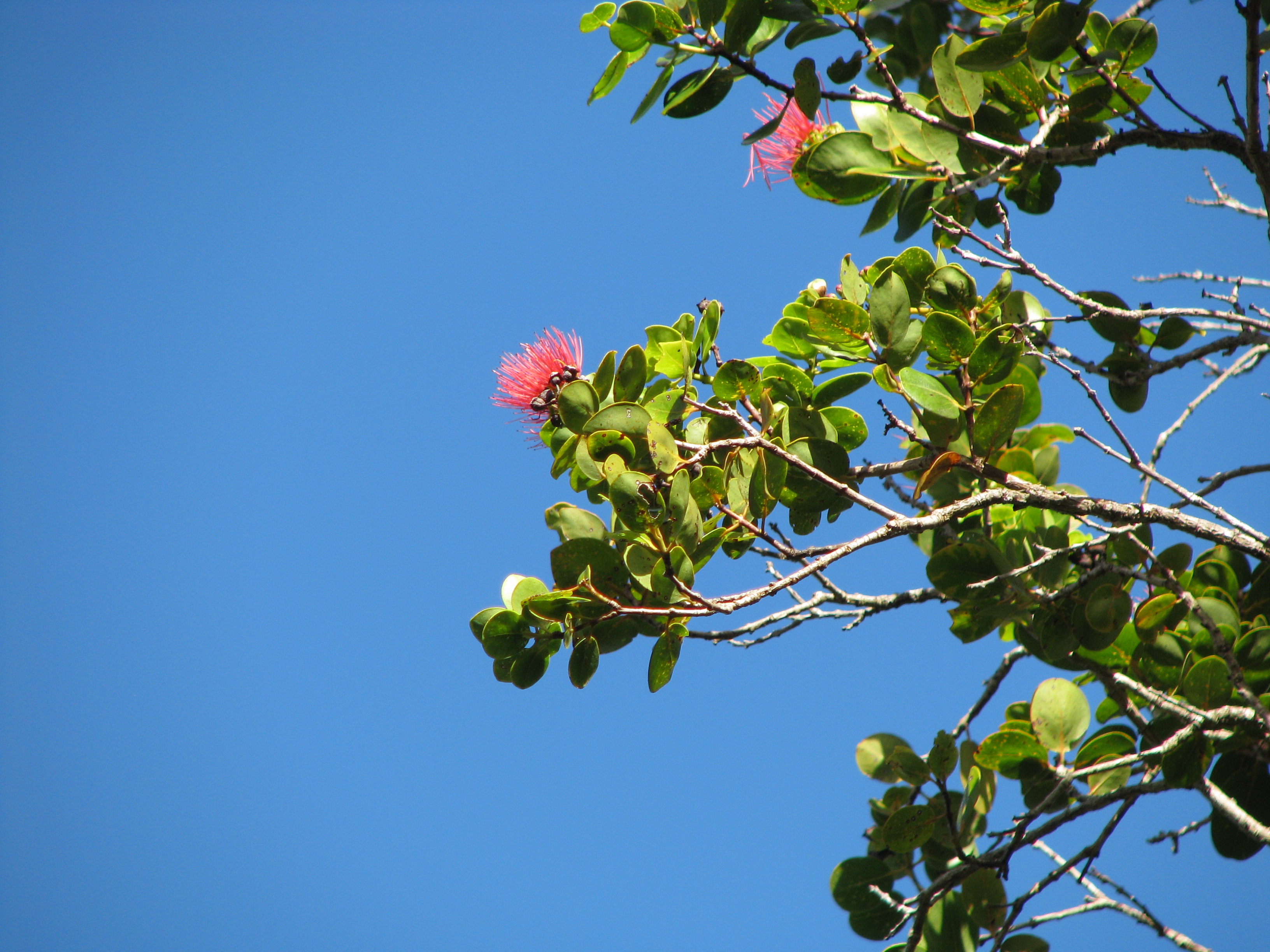
Getting to know your Hawaiian Lobeliads #8: Clermontia oblongifolia

Clermontia oblongifolia

  • Hawaiian Name: Oha wai
  • Conservation Status: Apparently Secure
  • Distribution: O’ahu, Moloka’i, Lana’i (extinct), Maui
  • Date photographed: 1/2/2011
  • Ease of viewing: Easy
  • *Identification: Form– Terrestrial shrub or tree 2-7 m tall. Leaves– oblong, elliptic, or lanceolate; blades 7-19 cm long by 2-5 cm wide; margins callose-crenulate; petioles 1.8-11.5 cm long. Flower– hypanthium hemispherical to obconical, 10-13 mm long; perianth greenish-white to purplish externally, white or cream within, arcuate, distinctly tubular, 50-65 mm long.
  • Phylogenetic comments: Clermontia oblongifolia is currently split into 3 different subspecies. Subsp. brevipes is found on Moloka’i, subsp. mauiensis on Maui, and subsp. oblongifolia on O’ahu.
  • My notes: This is the rarest of the native lobeliads in our restoration site. We have some seedlings; the sole large individual was outplanted at the site about 16 years ago.
  • Links: Smithsonian Flora of the Hawaiian Islands, UH Botany, Native Hawaiian Plants- Clermontia

*From Manual of the Flowering Plants of Hawai’i
Posted in Botany | Tagged , | Leave a comment

Getting to know your Hawaiian Lobeliads #7: Lobelia monostachya

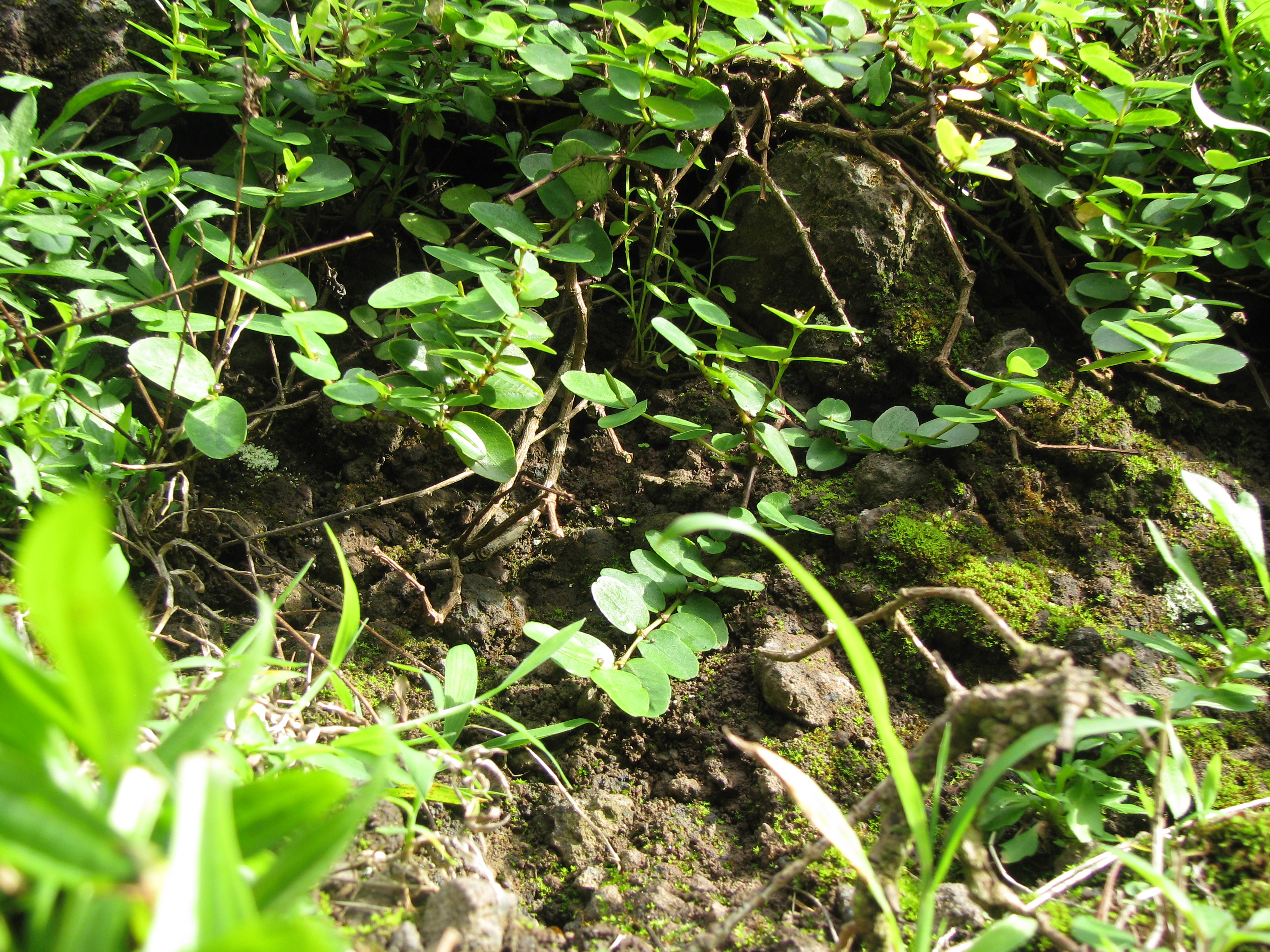
Lobelia monostachya

  • Conservation Status: Endangered
  • Distribution: O’ahu (Southern Ko’olau mountains)
  • Date photographed: 10/27/2010
  • Ease of viewing: Difficult
  • *Identification: Form– Stems woody, prostrate, 1.5-2.5 dm long Leaves– linear; blades 7-15 cm long by 0.4-0.7 cm wide; margins entire to minute callose-denticulate, flat or revolute; sessile or subsessile. Flower– hypanthium obconical; calyx lobes subulate to linear, 1-2.5 mm long; corolla magenta, curved, 15-18 mm long.
  • My notes: Lobelia monostachya has a pretty cool story. Aside from the type specimen found in the early 1800’s, the only other records of this species were in the 1920’s in Manoa valley. It was thought to be extinct until it was rediscovered in 1994. To be shown this population of L. monostachya by the gentleman who rediscovered the species, well that is just icing on the cake.
  • Links: Lobelia monostachya SGCN (pdf), Smithsonian Flora of the Hawaiian Islands, US Fish & Wildlife, UH Botany, Native Hawaiian Plants- Lobelia, Lobelia monostachya 5-year review (pdf)

*From Manual of the Flowering Plants of Hawai’i

Posted in Botany | Tagged , | Leave a comment

Getting to know your Hawaiian Lobeliads #6: Cyanea angustifolia

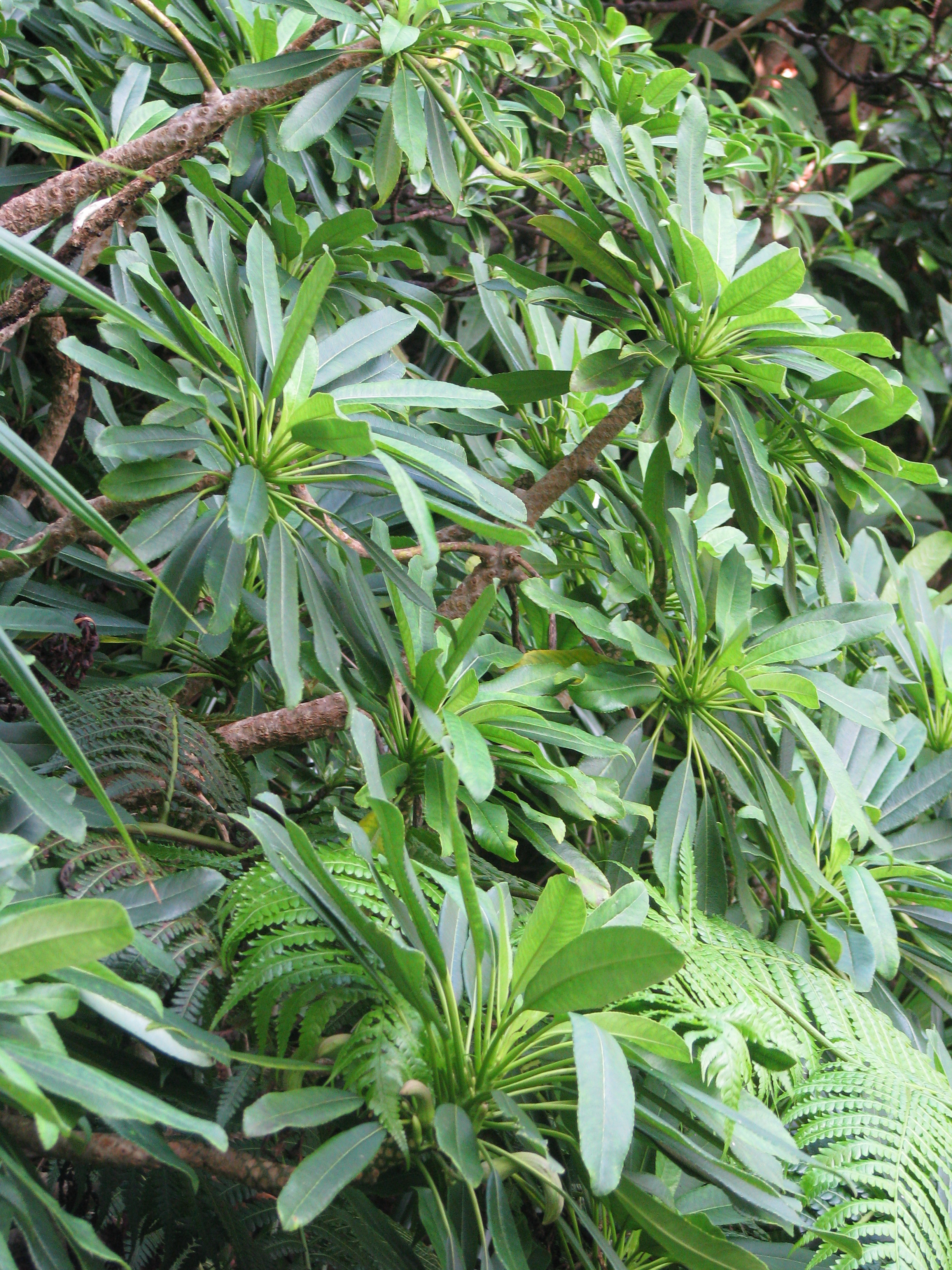
Cyanea angustifolia

  • Hawaiian Name: Haha
  • Conservation Status: Apparently Secure
  • Distribution: O’ahu, Moloka’i, Lana’i, Maui
  • Date photographed: 8/9/2010
  • Ease of viewing: Easy
  • *Identification: Form– Branched shrub 1.5-5 m tall. Leaves-lanceolate, narrowly elliptic, or narrowly oblong; blades 9-32 cm long by 1.5-5.5 cm wide; margins callose-crenulate to callose-crenate; petioles 2.5-9 cm long. Flower– hypanthium purple, obovoid, 3-6 mm long; calyx lobes dentiform, 0.5-1 mm long; corolla white or greenish white, 20-30 mm long.
  • Phylogenetic comments: C. angustifolia is part of the clade of Cyanea that has purple fruit. Many of these purple-fruited types can be found in more open forest habitat, as opposed to the forest interiors like the orange-fruited Cyanea2022 update — C. angustifolia seems to have diverged early on from C. pyrularia and together with C. membrenacea  and species related to C. mannii form the angustifolia clade.
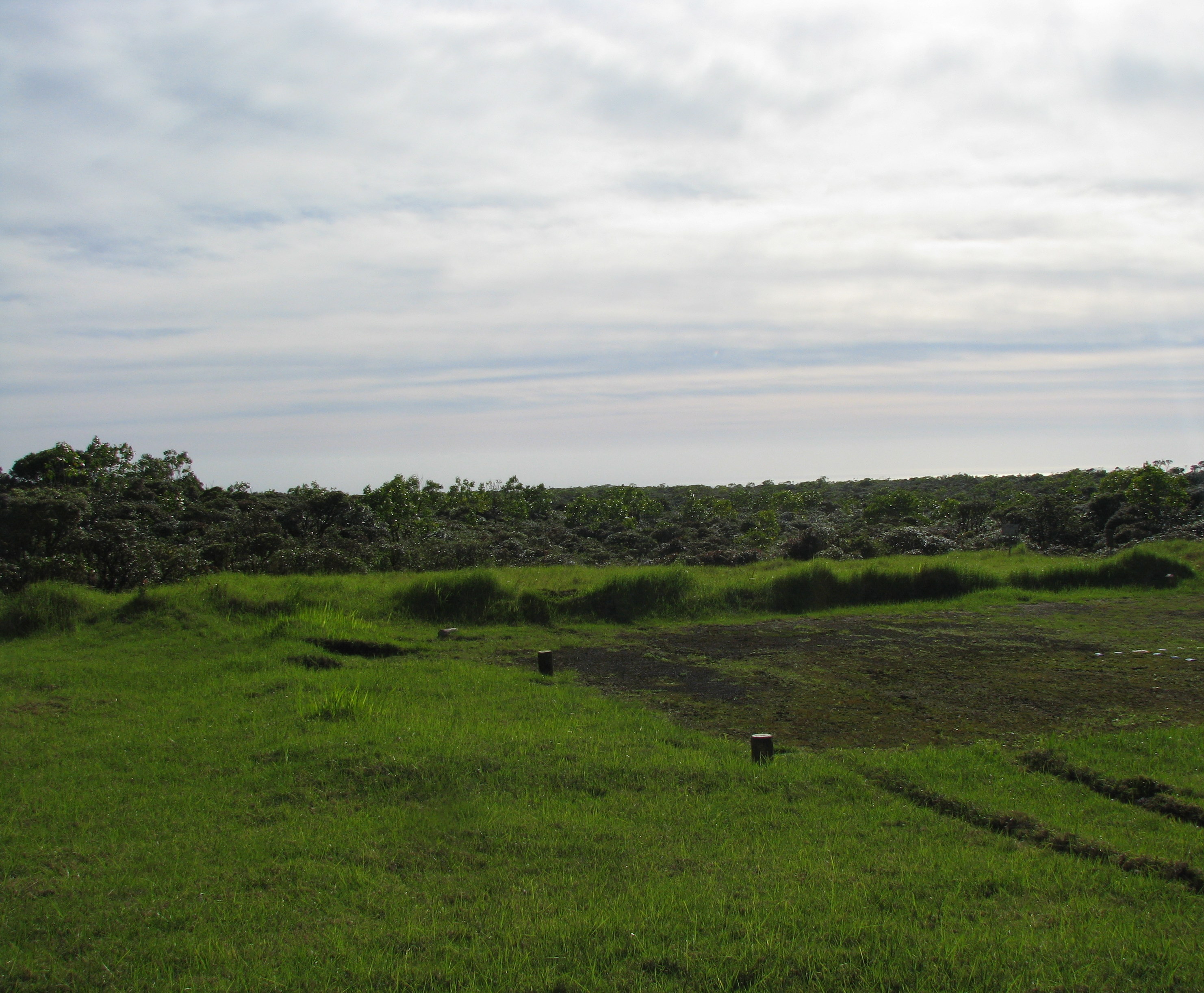
  • My notes: Currently, this is the second-most common lobeliad found in the Manoa Cliff restoration site. It is quite easily seen along the trail. Some of the older ones are about 10-12 ft tall. Another very easy to see individual is off the popular Aiea Loop trail. — Now in 2023, this species is in an interesting spot for me. Over the years, this has been the most common species of Cyanea that I’ve come across. When I originally did this write-up for this species a decade ago, there were still areas where one could come across dozens. Rarely had I come across seedlings though. We’re still doing what we can to keep this species robust.
  • Links: Smithsonian Flora of the Hawaiian Islands, UH Botany, Native Hawaiian Plants- Cyanea
  • Additional pics:

*From Manual of the Flowering Plants of Hawai’i
Posted in Botany | Tagged , | Leave a comment

Snapshot: The only Hawaiian carnivorous plant

Mikinalo (Drosera anglica) in the Alaka'i Swamp

Posted in Botany | Tagged | Leave a comment

Layman’s guide to the plants along the Pihea Trail

I’m calling it a layman’s guide not because of my readers, rather because I’m the humble layman. My very first post was about the birds easily spotted along the trail, it seems appropriate to finally talk about some of the flora on the Pihea Trail.

This will be a guide of the Pihea Trail to the spur of the Pihea vista. I’d say it takes about 3 hrs total round trip. The trail itself starts at the end of State Highway 550 at the 2nd Kalalau lookout. Here is a view of the trailhead looking back from about 1/2 mile in on the trail:

Continue reading

Posted in Botany, Nature | Tagged , | Leave a comment

Iliau Loop Trail

Waimea Canyon is a very famous natural area on the island of Kaua’i. There are a couple lookouts that many people take their scenic shots at, but I like the view from the Iliau Loop Trail. As seen above, you can get just about the same panorama except here you have a pretty cool grove of endemic plants to add into the picture.

Continue reading

Posted in Nature | Tagged , , | Leave a comment