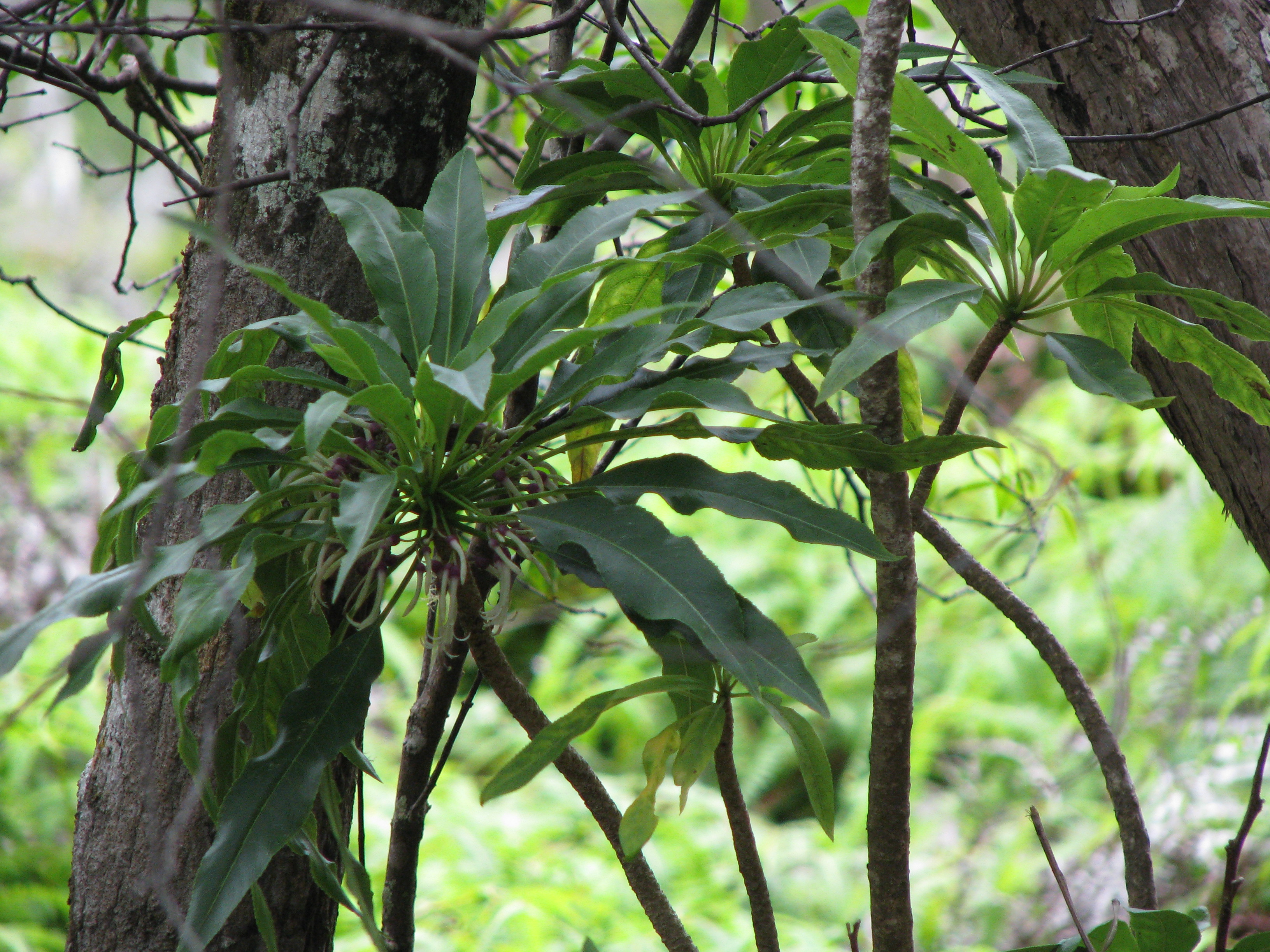
Getting to know your Hawaiian Lobeliads #5: Cyanea crispa

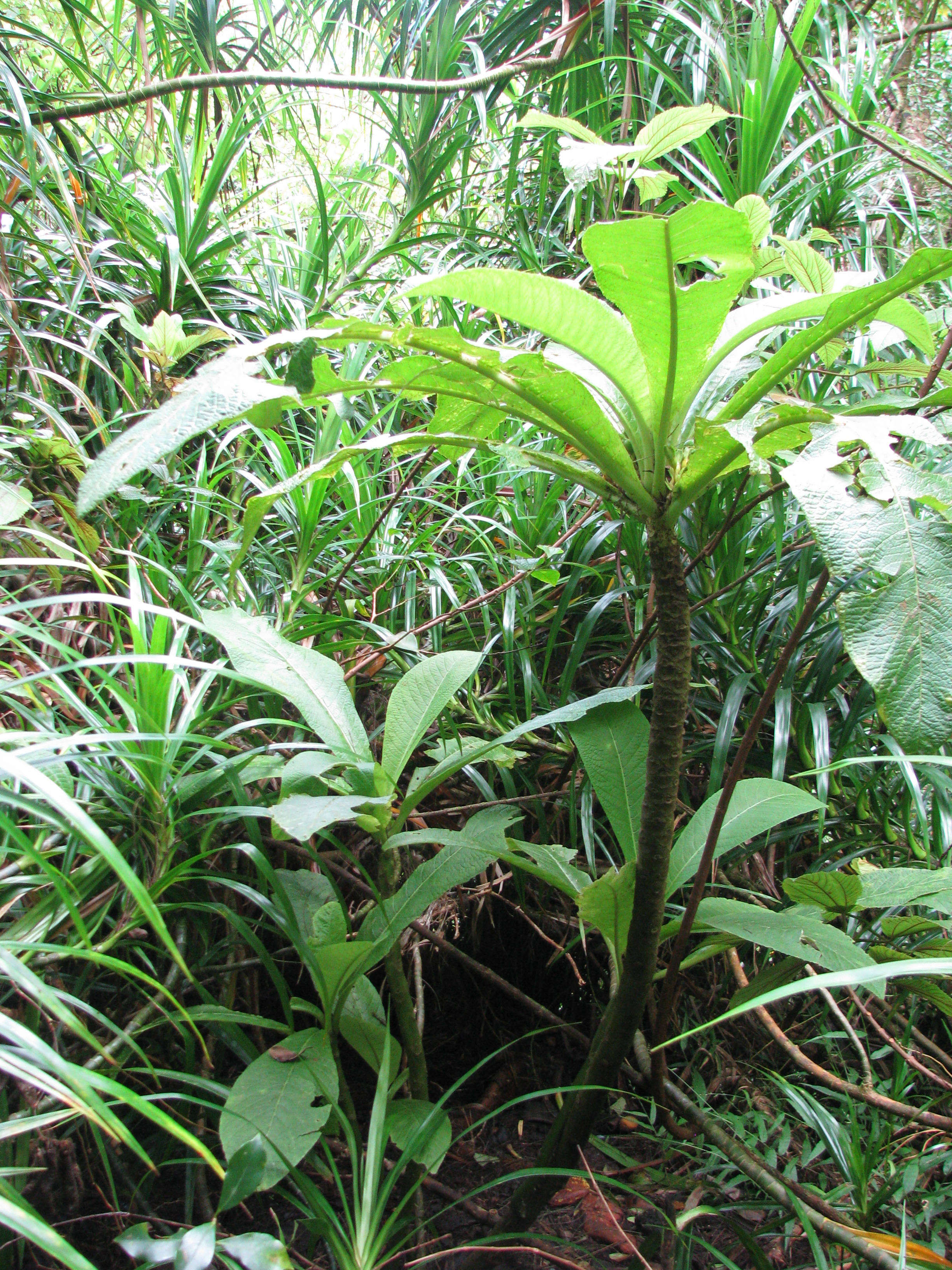
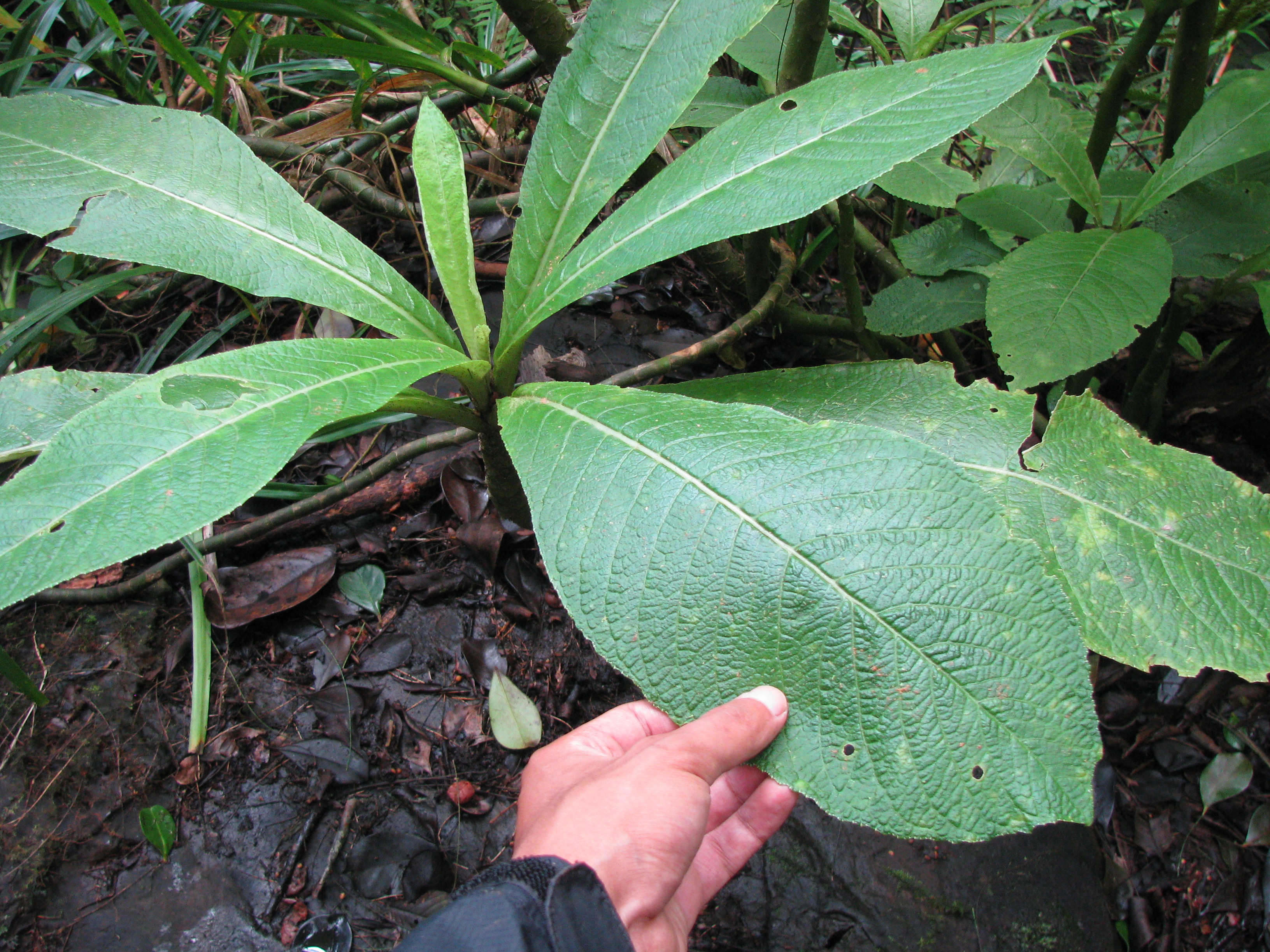
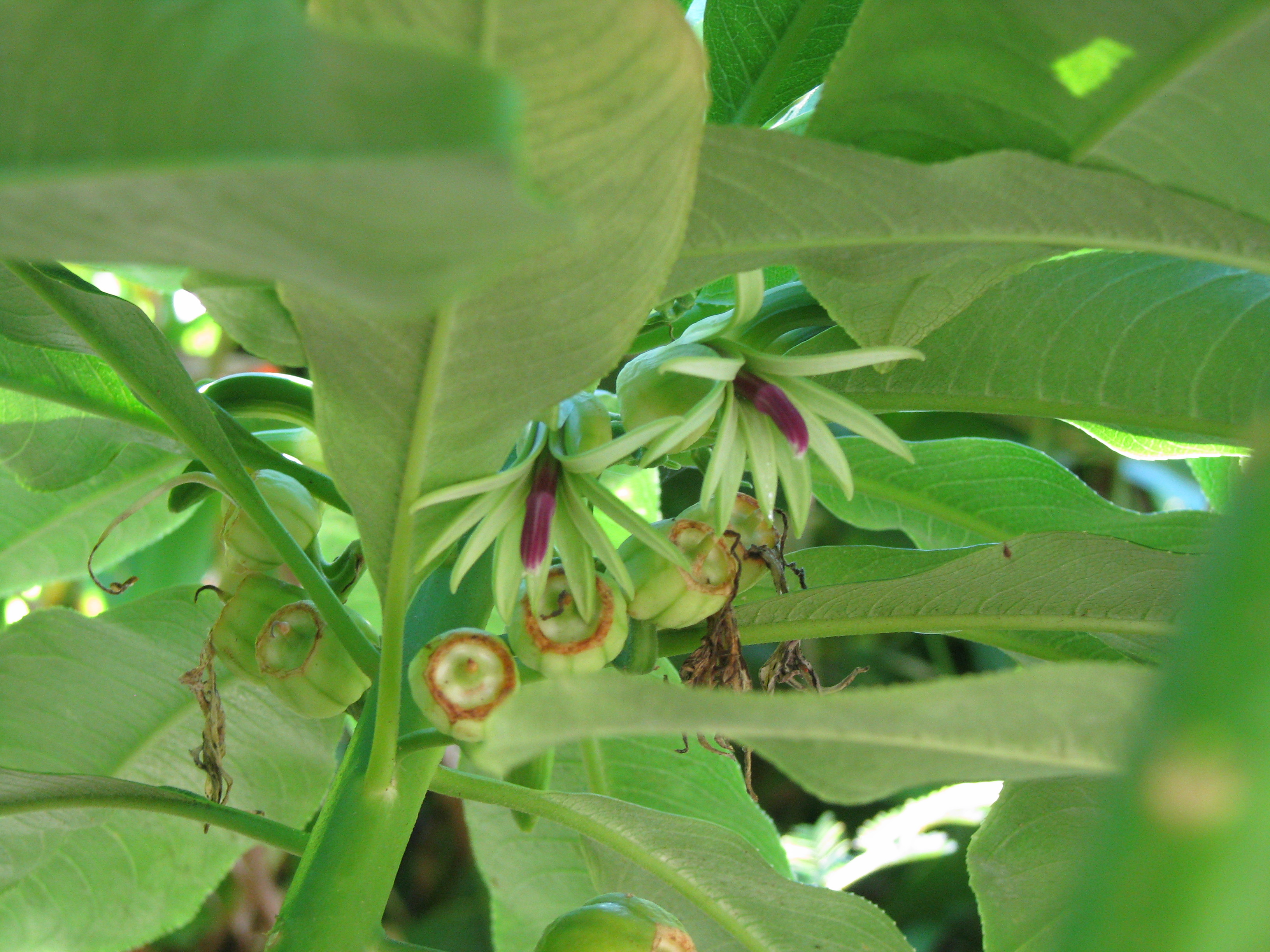
Cyanea crispa

  • Hawaiian Name: Haha
  • Conservation Status: Endangered
  • Distribution: O’ahu (Ko’olau mountains)
  • Date photographed: 11/2/2010
  • Ease of viewing: Difficult
  • *Identification: Form– Stems fleshy, 0.3-1.3 m long Leaves– broadly obovate; blades 30-75 cm long by 9-16 cm wide; margins undulate, callose-crenulate to entire; petioles 0.8-4 cm long. Flower– hypanthium obconical, 8-12 mm long; calyx lobes ovate to oblong, 6-12 mm long; corolla pale magenta with darker longitudinal stripes, 4-6 cm long.
  • My notes: I was shown this population in the Southern Ko’olaus. It consists of 2 mature plants about 10 feet from each other. I truly am a dorky guy because I was so excited to come across these plants. I almost high-fived the guy I was with. It was like seeing a mint condition Amazing Fantasy #15 in the middle of the forest. They were a lot bigger than I was expecting: one was about 4 feet tall. Unfortunately, I saw no other seedlings or juveniles in the area.
  • Links: Cyanea crispa SGCN (pdf), Smithsonian Flora of the Hawaiian Islands, UH Botany, Native Hawaiian Plants- Cyanea, US Fish and Wildlife, Cyanea crispa 5-year review (pdf)
  • Additional pics:

*From Manual of the Flowering Plants of Hawai’i
Posted in Botany | Tagged , | Leave a comment

O’ahu tree snails in the Wai’anaes

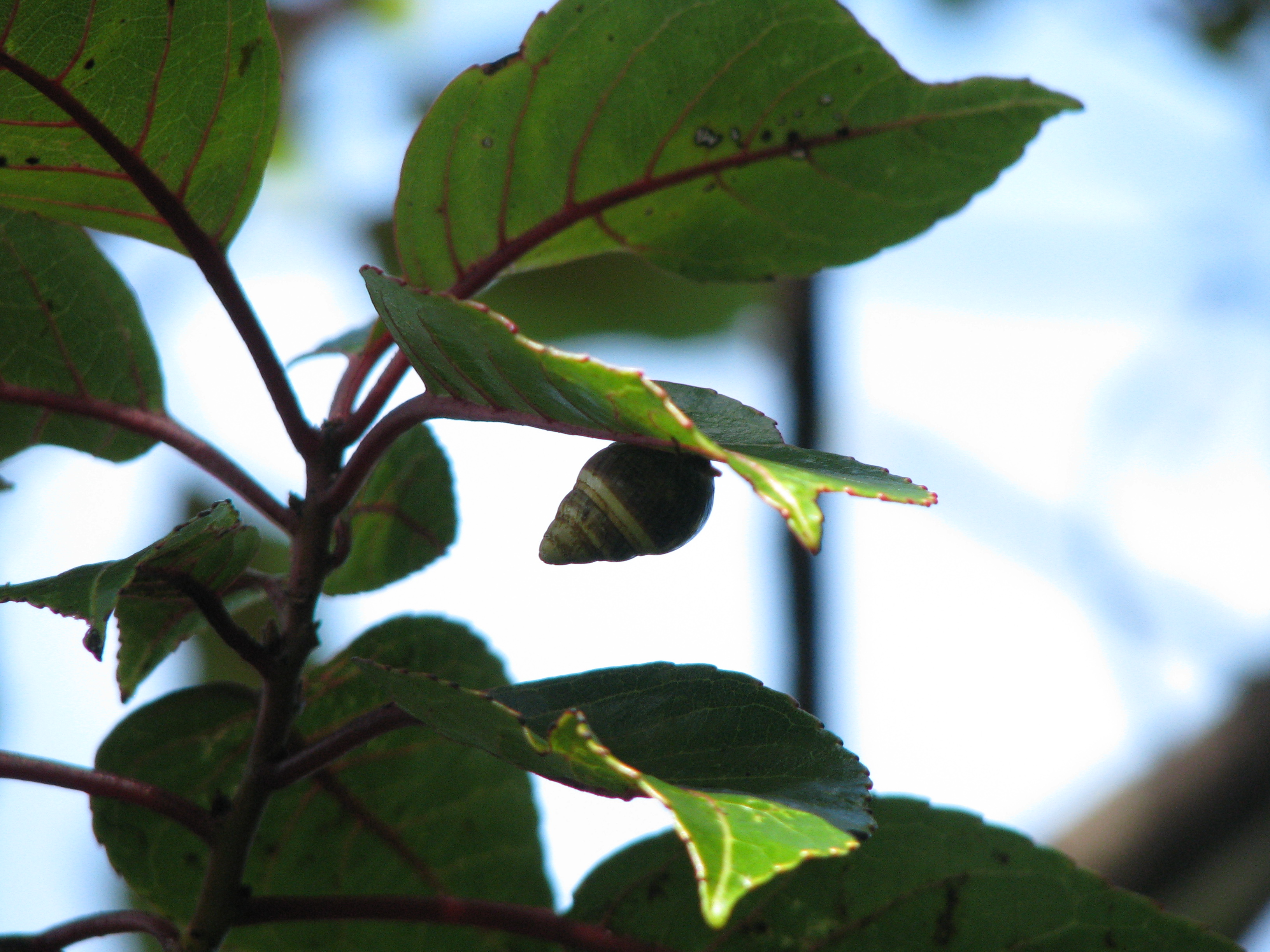
Here are some pictures I took of Achatinella mustelina, a rare endemic snail found only in the Wai’anae range.

Continue reading

Posted in Animals | Tagged , , | Leave a comment

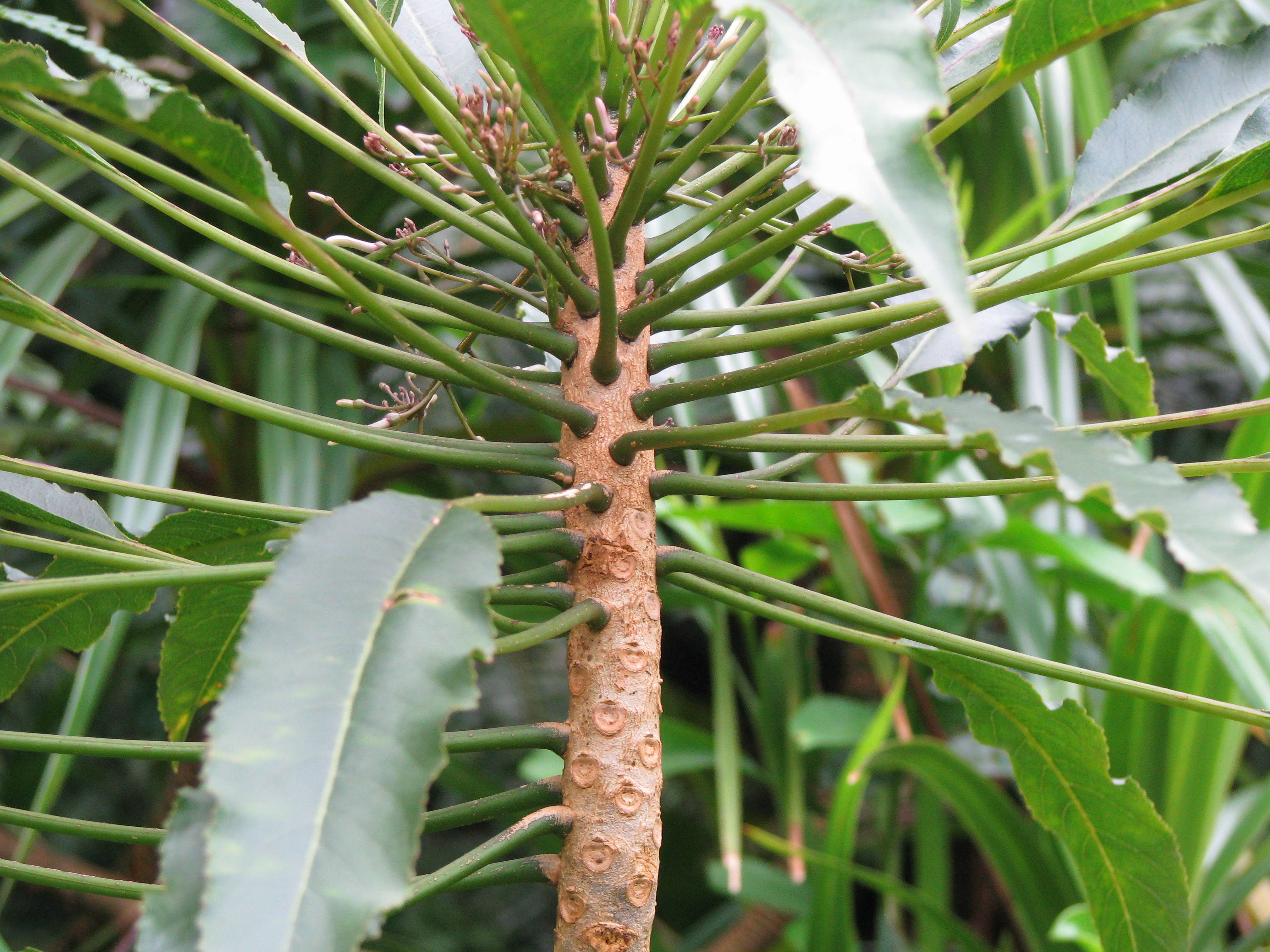
Getting to know your Hawaiian Lobeliads #4: Clermontia kakeana

Clermontia kakeana

  • Hawaiian Name: Oha wai
  • Conservation Status: Apparently Secure
  • Distribution: O’ahu, Moloka’i, Mau’i
  • Date photographed: 6/20/2010
  • Ease of viewing: Easy
  • *Identification: Form– Terrestrial or epiphytic shrub or tree 1-6 m tall. Leaves-elliptic, oblanceolate, or narrowly obovate; blades 12-26 cm long by 3.5-9.8 cm wide; margins callose-crenulate; petioles 2-7 cm long. Flower– hypanthium hemispherical to obovoid, perinath pale green externally, greenish-white to white internally, 45-55 mm long.
  • Phylogenetic comments: 2022 update Clermontia kakeana does not seem to be closely related to the other 2 Clermontia spp found on O’ahu. Rather it forms a monophyletic clade with the rest of the Big Island Clermontia.
  • My notes: I can’t help but beam with pride when talking about this plant. It is becoming more and more rare on O’ahu. On many of the trails where it was formerly common, C. kakeana has vanished in the last couple years. Except on the Manoa Cliff Trail in our restoration area. In our enclosure, I’d say we might be over 100 individuals by now, with some of the earliest plantings already reproducing. I might be biased, but this is probably the easiest of the native lobeliads to see on O’ahu.
  • Links: Smithsonian Flora of the Hawaiian islands, UH Botany, Native Hawaiian Plants- Clermontia
  • Additional pics:

*From Manual of the Flowering Plants of Hawai’i
Posted in Botany | Tagged , | Leave a comment

Andrew R. Plack artwork

A few weeks back, I was searching for images of ‘o’o birds for the Gardner article, when I came across this fine piece by Andrew R. Plack:

Wow! I haven’t seen many pieces on mohoids this well done. His other paintings on the Hawaiian fauna are amazing too. Check them out at his website.

Posted in Random | Tagged , , , , , | Leave a comment

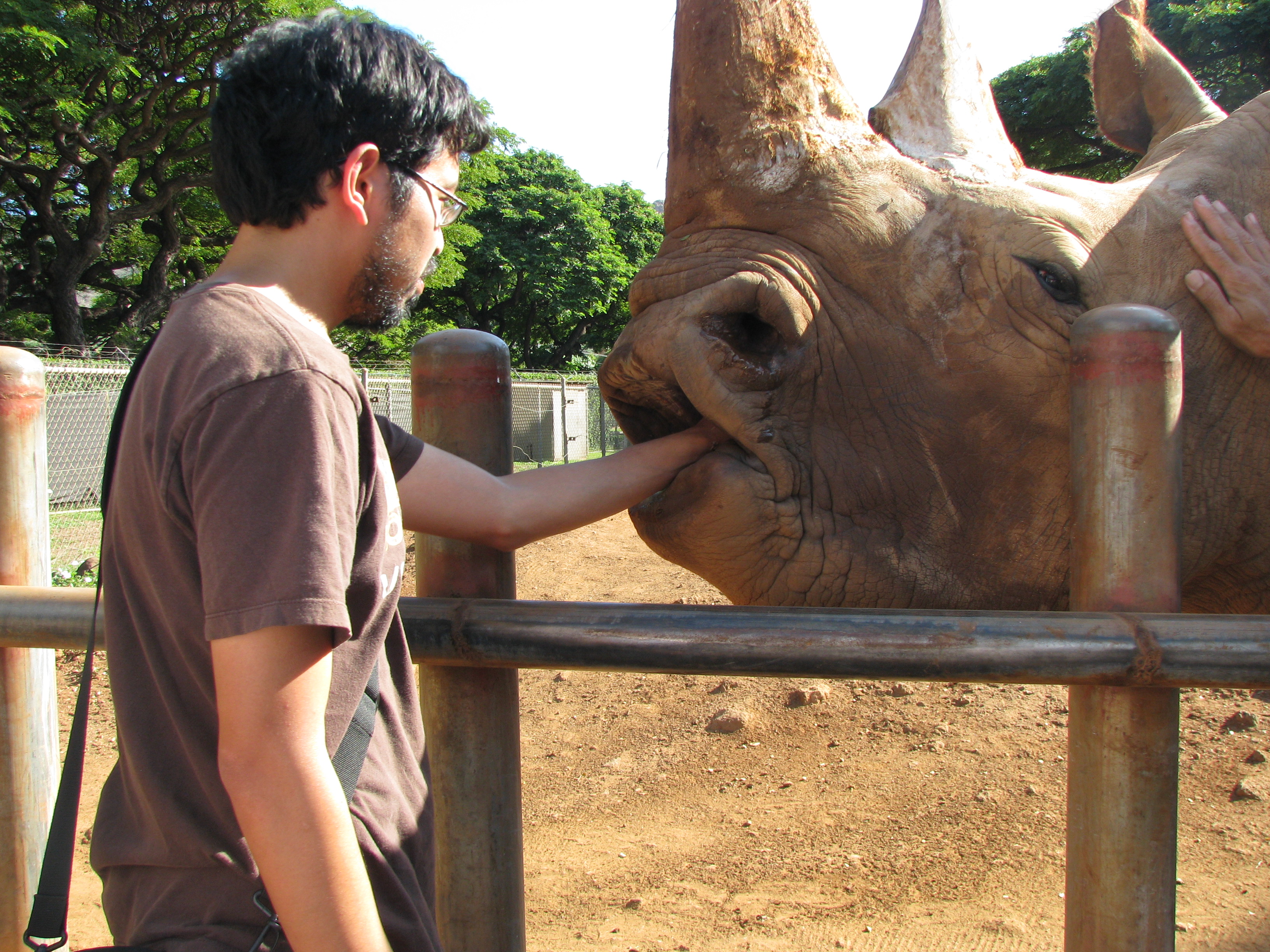
Honolulu Zoo: Dramatis Personae

I love, love, love the zoo. Now, I know there are a lot of valid critiques out there about zoos, but my view is that zoos help create meaningful passion in people.

Continue reading

Posted in Animals | Tagged , , , , , | Leave a comment

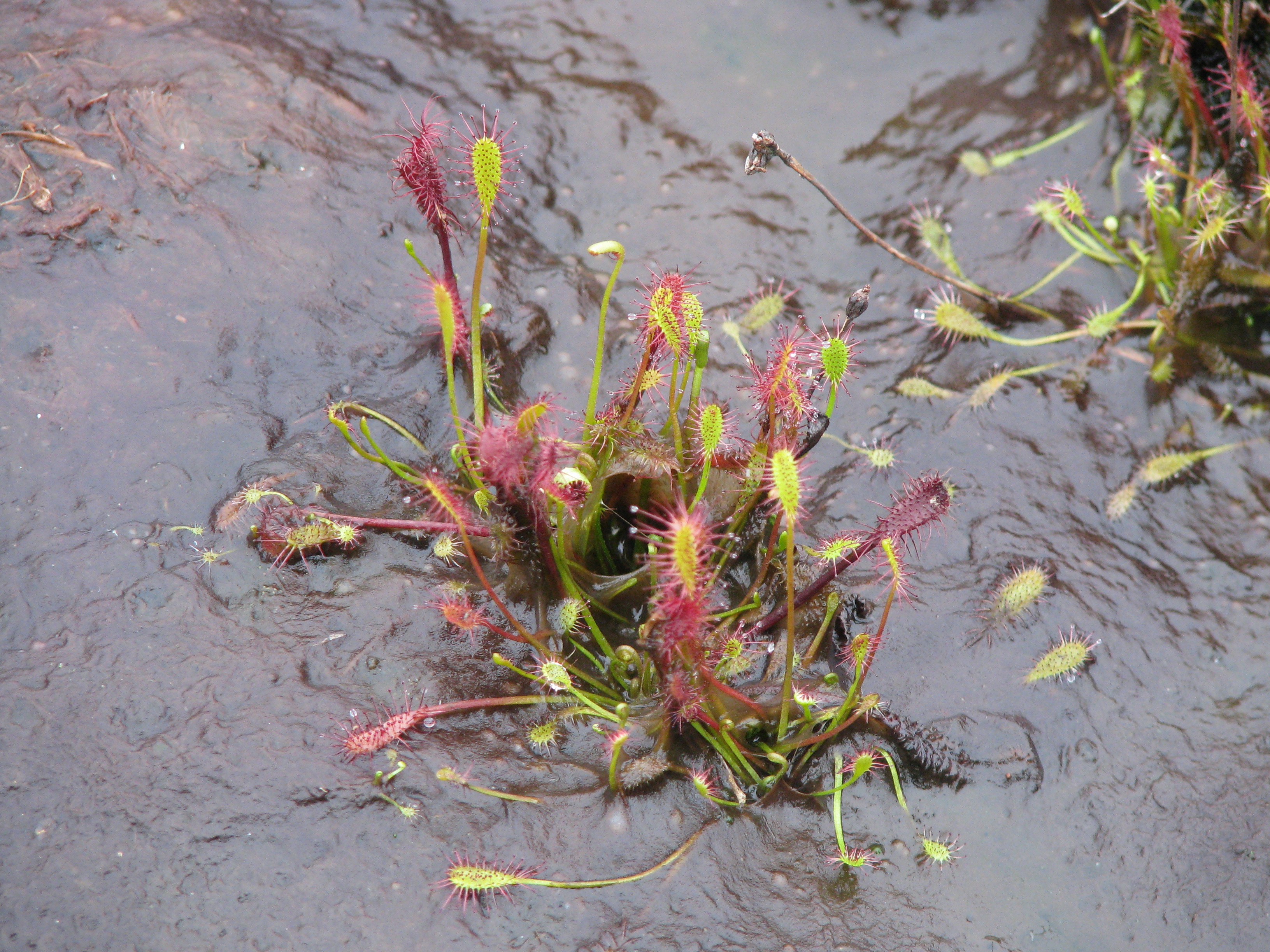
Getting to know your Hawaiian Lobeliads #3: Cyanea koolauensis

Cyanea koolauensis

  • Hawaiian Name: Haha
  • Conservation Status: Endangered
  • Distribution: O’ahu (Ko’olau mountains)
  • Date photographed: 11/14/10
  • Ease of viewing: Difficult
  • *Identification: Form– Stems woody, 1-1.5 m long. Leaves– whitish on lower surface; linear to narrowly elliptic; blades 16-36 cm long by 1.5-4 cm wide; margins callose-crenulate to subentire; petioles 1.5-4.5 cm long. Flower– hypanthium obconical to turbinate, 6-12 mm long; calyx lobes connate, 2-8 mm long; corolla dark magenta, 5-9 cm long.
  • Phylogenetic comments: With the recent nomenclature revisions, Hawaiian Lobeliads of the genus Rollandia have been incorporated back into Cyanea. Because Cyanea angustifolia is already used to describe another species, Rollandia angustifolia has been renamed Cyanea koolauensis.
  • My notes: We went into one of the gulches that this species was known to be found 15-20 years ago. Unfortunately we saw none, highlighting the plight of some of our native plants. Luckily, there was an individual some distance away that I was able to take a picture of.
  • Links:Smithsonian Flora of the Hawaiian Islands, UH Botany, Native Hawaiian Plants- Cyanea
  • Additional photos:

Cyanea

C_koolauensis_061111

Cyanea koolauensis

*From Manual of the Flowering Plants of Hawai’i
Posted in Botany | Tagged , | Leave a comment

My line in the sand

When it comes to the environment and our interactions with it, passion is definitely involved. There are a lot of different points of views that people have which can lead to very heated arguments. Everybody seems to have a different way of saving the planet. Or not save, I suppose.

Continue reading

Posted in Sharing the planet | Tagged , | 4 Comments

Getting to know your Hawaiian Lobeliads #2: Cyanea leptostegia

Cyanea leptostegia

  • Hawaiian Name: Haha lua
  • Conservation Status: Vulnerable
  • Distribution: Kaua’i
  • Date photographed: 9/22/2010
  • Ease of viewing: Very easy
  • *Identification: Form– Palm-like tree 3-14 m tall. Leaves– Dimorphic. Juvenile leaves: irregularly parted or divided, blades 20-70 cm long by 5-12 cm wide; margins minutely callose-denticulate, petioles 0.5-2 cm long. Adult leaves: linear to narrowly oblanceolate; blades 50-100 cm long by 2.5-8.5 cm wide; margins gently undulate & minutely callose-denticulate; sessile. Flower– hypanthium oblong, 15-25 mm long; calyx lobes linear, 30-55 mm long; corolla rose to purple, 45-55 mm long.
  • Phylogenetic comments: Cyanea leptostegia is the tallest of the extant Hawaiian Lobeliads; it can reach heights in excess of 30 ft. 2022 update — C. leptostegia seems to have very close affinities with the pyrularia clade with some admixture from the coriacea clade.
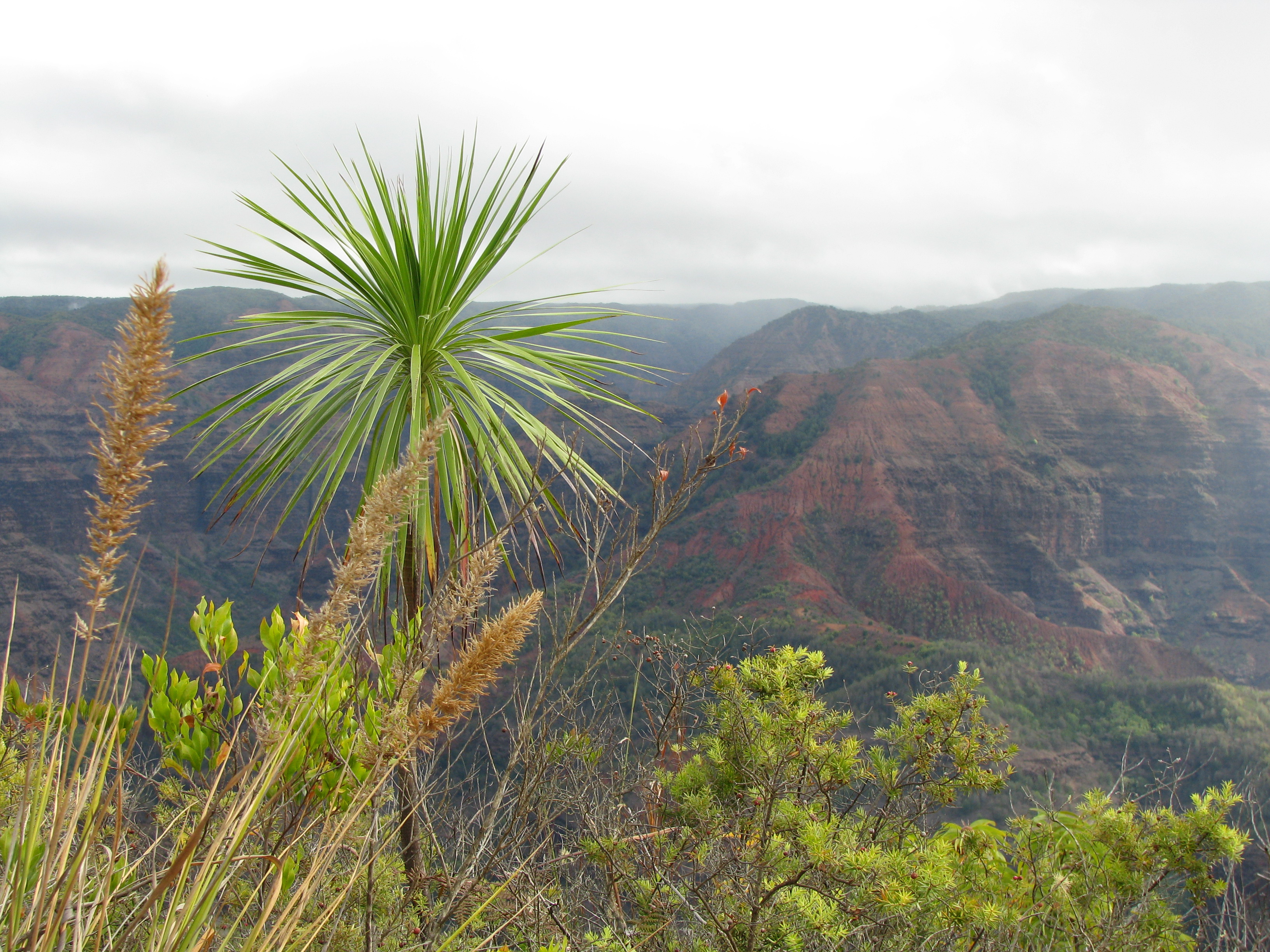
  • My Notes: This Cyanea is found in mesic forests on Kaua’i. It is fairly common near the beginning of the Mohihi-Wai’alae Trail. Getting to that trailhead though isn’t the easiest; you’ll most likely need a 4 wheel drive vehicle. Luckily, there is one particular individual that is very easy to see: It is outplanted on the short nature trail right behind the museum at Koke’e State Park. They even give you a guide that points out where exactly it is at. I’m still used to seeing the different lobeliads as bushes and shrubs, to come across this 15 ft tall tree put a smile on my face.
  • Links: A Monographic study of the Hawaiian species of the tribe Lobelioideae family Campanulaceae, Smithsonian Flora of the Hawaiian Islands,UH Botany, Native Hawaiian Plants- Cyanea
  • Additional Pics:

*From Manual of the Flowering Plants of Hawai’i
Posted in Botany | Tagged , | Leave a comment

Getting to know your Hawaiian Lobeliads #1: Trematolobelia singularis

Trematolobelia singularis

  • Conservation Status: Endangered
  • Distribution: O’ahu (Southern Ko’olau mountains)
  • Date photographed: 10/24/2010
  • Ease of viewing: Difficult
  • *Identification: Form– Typically unbranched shrubs 0.6-1.5 m long. Leaves– linear-elliptic; blades 10-18 cm long by 1-1.8 cm wide; margins callose-crenulate; winged petioles 1-2 cm long. Flower– calyx lobes erect, 4-7 mm long; corolla violet, gently curved, 4-5.5 cm long
  • Phylogenetic comments: Among the different Trematolobelia species in Hawai’i, T. singularis is notable that it typically only has one floral stalk vs. multiple stalks in other Trematolobelias (See Birds of the Pihea Trail). This makes it look more similar to lobeliads in the genus Lobelia sect. Galeatella.
  • My notes: I took a picture of this plant near the summit of the Konahuanui, the highest point in the Ko’olau mountains. It is not an easy plant to see; it took me about 4 hours of strenuous hiking to take this shot. I was pleased to find that there were many more individuals in the general vicinity; mostly on the windward side of the mountain.
  • Links: Trematolobelia singularis SGCN (pdf), Smithsonian Flora of the Hawaiian Islands, UH Botany, Native Hawaiian Plants- Trematolobelia

*From Manual of the Flowering Plants of Hawai’i
Posted in Botany | Tagged , | Leave a comment

Manoa Cliff Forest Restoration

Native sweet-smelling Hibiscus (Hibiscus arnottianus)

Now we’re getting into the meat of things. Helping restore a native forest has been one of the most satisfying things I’ve done here in Hawai’i.

Continue reading

Posted in Nature, Sharing the planet | Tagged , , , , , , | 1 Comment