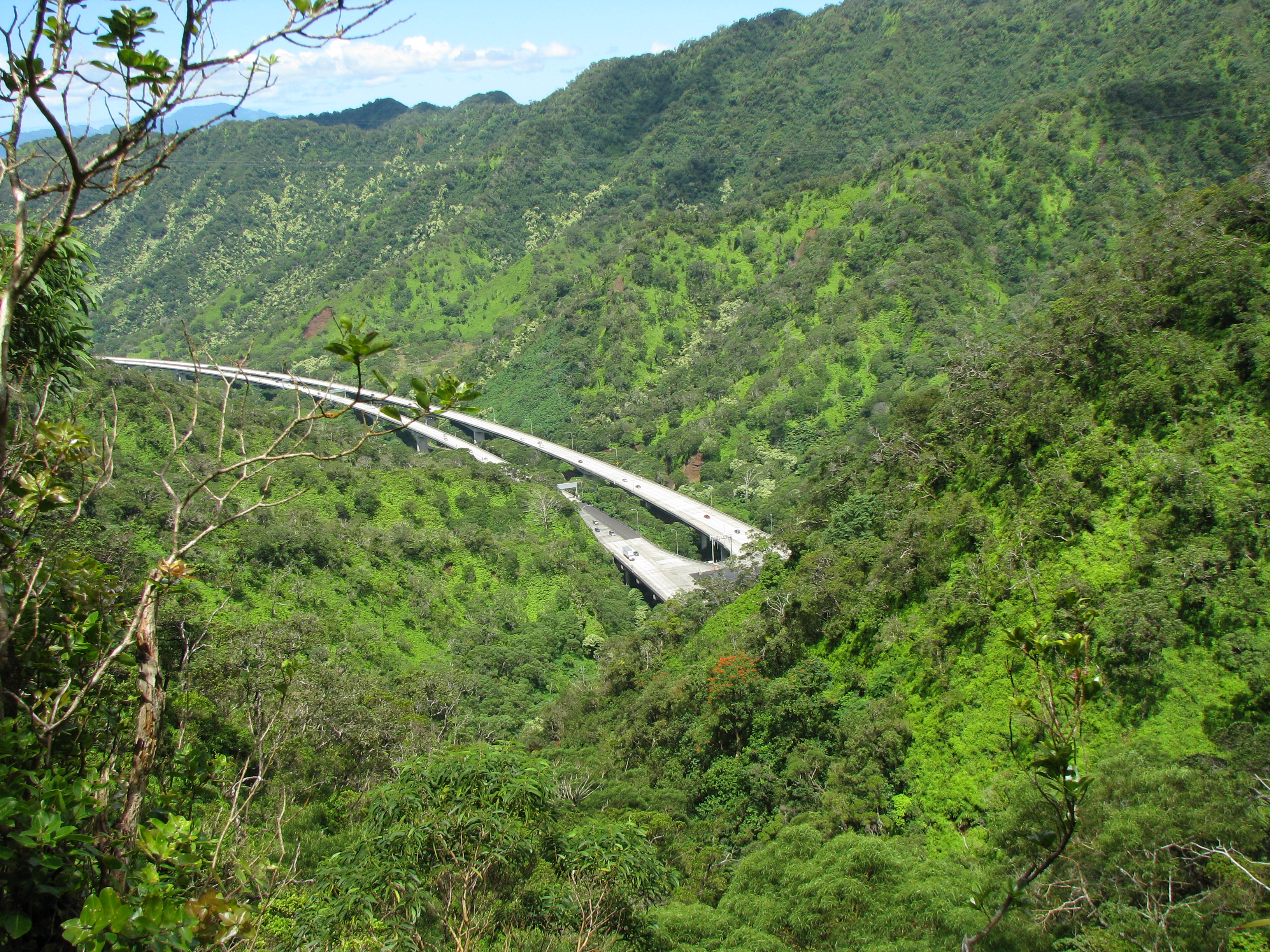
Loulu of La’ie

A few weeks back, I had the pleasure of attending Don Hodel’s talk on the native Loulu palms (Pritchardia spp.) found here in Hawai’i. It was highly informative. Mostly, Dr. Hodel focused on the key distinctions between various species. The very next week, as if on cue, the L.I.C.H. Native Plant Initiative was having their Pritchardia hike. Armed with this new found knowledge, I joined them on a hike for Loulus above La’ie.

Continue reading

Posted in Botany | Tagged , | 4 Comments

Snapshot: Gahnia vs. Gahnia

Sedges are a key component of the forest understory. Here, I just wanted to highlight the big difference between 2 native species of Gahnia is Hawai’i. The infloresence for the 2 is quite different. Pictured above is Gahnia beecheyi. It is still a common plant on many trails  on O’ahu. Pictured below is it’s congener, Gahnia aspera.

This was the plant from the Kaunala trail. Notice how much more robust the infloresence is on G. aspera. I don’t believe they are sympatric: G. aspera is typically found in drier areas than G. beecheyi. Keep an eye out for both.

Posted in Botany | Tagged , | Leave a comment

Snapshot: Olona fruit

One of the best feelings when doing restoration work is seeing your efforts paying off. Here, one of the Olona (Touchardia latifolia) has finally come into full infructescence. The Manoa population seems to exhibit some morphological diversity. These mature fruits are a much paler color than usual orange. There are several plants with these lighter colored fruits. Whether there is any genetic correlation for this remains to be seen.


Posted in Botany | Tagged , | Leave a comment

Getting to know your Hawaiian Lobeliads #15: Brighamia insignis

Brighamia insignis

  • Hawaiian Name: Alula
  • Conservation Status: Endangered
  • Distribution: Kaua’i (Napali Coast)
  • Date photographed: 9/30/2011
  • Ease of viewing: Cultivated
  • *Identification: Form– Unbranched stem succulents 1-5 m tall; stems stout, fleshy, thickened toward base. Leaves– Leaves obovate, arranged in a dense apical rosette; 12-20 cm long, 6.5-11 cm wide; sessile to subsessile. Flower– salverform; hypanthium 10-12 mm long, 4.5-7 mm wide; calyx lobes deltate to ovate, 0.2-1 mm long; corolla yellow, tube 7-14 cm long, 0.3-0.4 cm wide, lobes elliptic, 1.3-2.2 cm long, 0.7-1.1 cm wide
  • Phylogenetic comments: The 2 Brighamia species have traits unique among Hawaiian Lobeliads; for a long time they were thought to be a separate colonization. However, studies have shown the genus to be nested normally within the Hawaiian Lobeliad clade; Brighamia and Delissea form a subclade within the group.
  • My notes: The wild populations of B. insignis are highly endangered. Problems such has ungulate browsing, over collection, landslides and hurricanes have reduced the wild populations down to perhaps 1 in the wild. B. insignis does well in cultivation. The individual above is one such cultivated plant.
  • Links: Brighamia insignis SGCN (pdf), Smithsonian Flora of the Hawaiian Islands, UH Botany, Native Hawaiian Plants- Brighamia, Brighamia insignis 5- year review (pdf)
*From Manual of the Flowering Plants of Hawai’i
Posted in Botany | Tagged , | Leave a comment

Book Review- The Information: A History, A Theory, A Flood

If there was a silver lining to the demise of the Border’s bookstores, it’s the new books that I was introduced to during their liquidation sales. One of those books was The Information: A History, A Theory, A Flood, by James Gleick. I was expecting it to be a thought provoking book (which it was). I just didn’t realize how much fun I would have reading it.

Continue reading

Posted in Random | Tagged , , , , , | 1 Comment

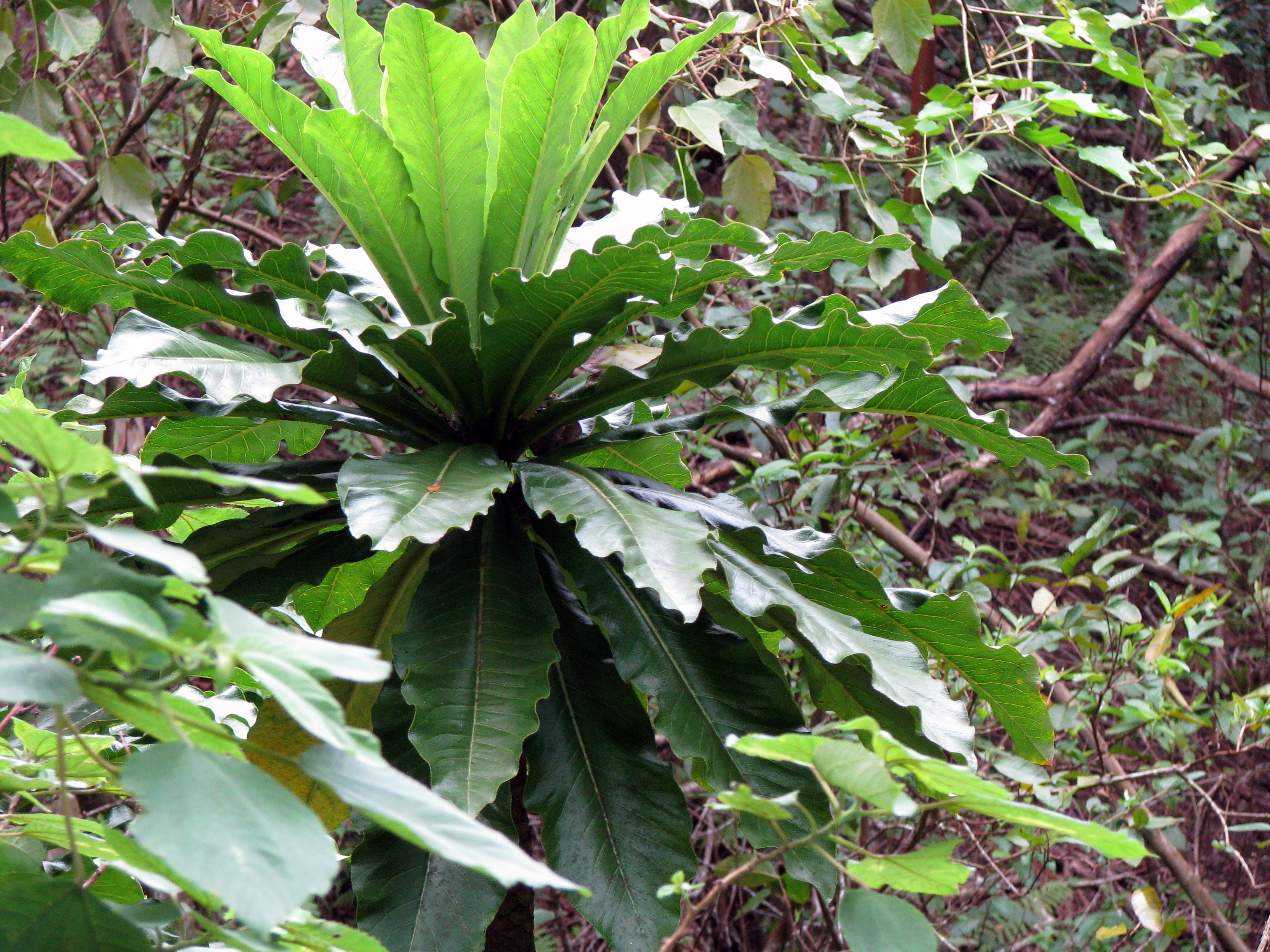
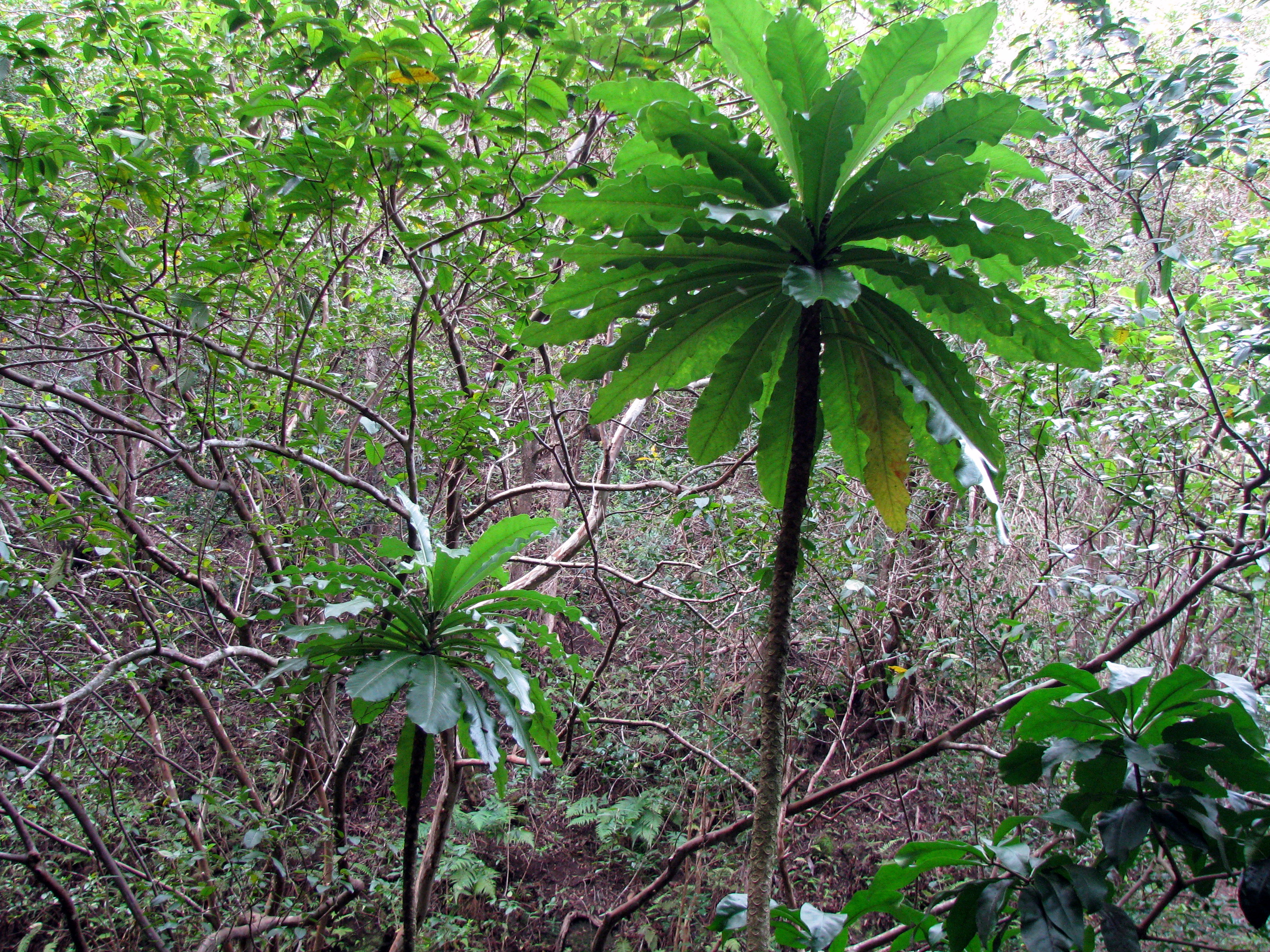
Getting to know your Hawaiian Lobeliads #14: Cyanea superba

Cyanea superba


  • Hawaiian Name: Haha
  • Distribution: O’ahu (Northern Wai’anae Mountains)
  • Date photographed: 2/5/2011
  • Ease of viewing: Moderate
  • *Identification: Form– Palm-like trees 4-6 m tall. Leaves– oblanceolate, blades 50-100 cm long, 10-20 cm wide; margins callose-crenulate; petioles 5-8 cm long. Flower– hypanthium obconical, 10-16 mm long, densely pubescent; calyx lobes narrowly oblong, 6-16 mm long; corolla whitish or cream with purple veins, 55-80 mm long, 7-11 mm wide, densely pubescent, tube curved.
  • Phylogenetic comments: Cyanea superba is split into 2 subspecies: subspecies superba found in the northern Wai’anaes and subspecies regina found on the opposite end in the southern Ko’olaus.
  • My Notes: The Wai’anae population is still extant; there is a nice exclosure next to the Mokule’ia trail with several mature specimens. The Ko’olau population, however, might be extinct. The last individual was known from Pia Valley and last seen in the 1960’s.
  • Links: Cyanea superba SGCN (pdf), Smithsonian- Flora of the Hawaiian Islands, UH Botany, Native Hawaiian Plants- Cyanea, US Fish and Wildlife Cyanea superba 5-year review (pdf)
  • Additional Pics:


Posted in Botany | Tagged , | Leave a comment

An ode to Football with musings from Jaws

It’s that time of year again, when football is welcomed from it’s long respite. Sunday plans are altered, office bets are made and we take our rightful place on couches across America to watch 22 guys battle and battle. I got ready for this season by reading Ron Jaworski’s cool book Games that Changed the Game: The Evolution of the NFL in Seven Sundays.

Continue reading

Posted in Random | Tagged , , , | Leave a comment

Two roads diverged in a wood (Halawa Ridge)

… I most certainly took the one less traveled. All this blogging about hiking and it took till now to get to Robert Frost’s famous poem? After today’s long hike, it seemed particularly apropos.

Continue reading

Posted in Botany | Tagged , | 4 Comments

Snapshot: Philippine Tarsier

There’s nothing like quirky endemic fauna. Here is a picture I took in Bohol of Philippine Tarsiers (Tarsius syrichta). If you love phylogeny (and who doesn’t?), tarsiers have been found to be more closely related to monkeys and great apes (clade Haplorhini) than lemurs and lorises (clade Strepsirrhini).

Biogeographically, it’s neat that they are only found in Indonesia and the Philippine archipelago. In the Philippines, there are only Macaques, Tarsiers and People present from the primate family. Lorises and Gibbons, found throughout Southeast Asia, are absent. Like the Philippine Flying Lemur, Tarsiers are only found on Greater Mindanao. Back in during the lower sea levels of the last ice age, Bohol, Samar, Leyte and Mindanao all form a much larger landmass, much like Maui Nui. Here, the little Tarsiers prospered.

Tarsiers have been exploited by people in the past. I’m fairly certain many of the Philippine Tarsier photos people find on the web like mine are from the Loboc & Loay  captive populations. Those have since been closed. Let’s hope we can find a way to live better with our neat little cousins.

Posted in Animals | Tagged , | 1 Comment

Roadside plants of Mauna Kea

Mauna Loa from Mauna Kea summit road

I may enjoy hiking, but taking on Mauna Kea is a different beast altogether. Perhaps it’s a challenge for hikers more extreme than I. Besides there is a perfectly good road that takes you up to the native alpine denizens, so why not take it?

Continue reading

Posted in Botany | Tagged , | Leave a comment