Snaphot: Hawaiian Avifauna

Hawaiian birds

The work by Dr. Helen James and Dr. Storrs Olson has greatly enriched our knowledge of the birds of Hawai’i. I’ve read as many of their *papers as I can. I was surprised to see this awesome mural when I visited the Smithsonian campus at Washington D.C. Aside from the speciose honeycreepers… look at all the other lineages represented in Hawai’i! Crows, Eagles, Flightless Ducks, Flightless Ibis; this great mural shows the other elements missing from today’s birdlife. Oh to have witness this firsthand…

*By the way, the 2011 paper on updating Hawaiian Honeycreeper phylogeny with respects to temporal events is a must read. Telespiza Finches nested deeper within the drepanididae radiation… yowza!

Lerner, Heather R L., Meyer, Matthias, James, Helen F, Hofreiter, Michael and Fleischer, Robert C 2011. Multilocus Resolution of Phylogeny and Timescale in the Extant Adaptive Radiation of Hawaiian HoneycreepersCurrent Biology, 21(21): 1838-1844.

Posted in Animals | Tagged | Leave a comment

Why science blogs are the best thing on the Internet

Let’s skip the actual bad stuff like deviant solicitations and other such nonsense. Even without that, the Internet can be a rather not nice place. Negativity runs rampant in so many circles of the web.

From topics as disparate as Politics to Sports to Celebrities, things can rapidly devolve into personal attacks and flame wars. It’s enough to make you question your faith in humanity.

And yet, I feel lucky to be able spend my time trolling the internet and not really see much of that. Much of my time is spend on various science blogs and searching for neat peer-reviewed papers to read. Possibly by virtue of their small niche, science blogs don’t really generate that much inflammatory commentary. Granted, some blogs do. And certainly I can always chum the waters by superficially blogging about flamebait topics. Even when you do get the random inane comment on a respectable blog, the commentariat is pretty good about policing it.

For the most part people are looking to gather more information or it’s other scientist looking to add their knowledge about the topic. But it is not this Pollyanna, circle of peace and knowledge that is the best thing to me (Although it’s nice). What I truly love is the correspondence.

I love basketball as much as the average Chicagoan that grew up in the 80’s and 90’s. While the barriers are coming down, it would be pretty hard for me to randomly ask Michael Jordan about shot selection against zone vs. man d or his thoughts about the lack of post play from today’s nba guards. I can do that on science blogs. These are some of the top minds in their respective fields. Hero worship has taken such a negative connotation nowadays, but I’d like to think I treat these blog authors with that sort of respect. It is a joy to realize these people who’s books I grew up on are so easy to communicate with now. Try not to be too much of an adoring fan, Sebastian!

If I had one wish for 2014, it would be that the best things of the sciblog community spread to more and more parts of the Internet. Keep blogging and have a Happy New Year everybody!

Posted in Random | 2 Comments

Getting to know your Hawaiian Lobeliads #28: Clermontia pyrularia

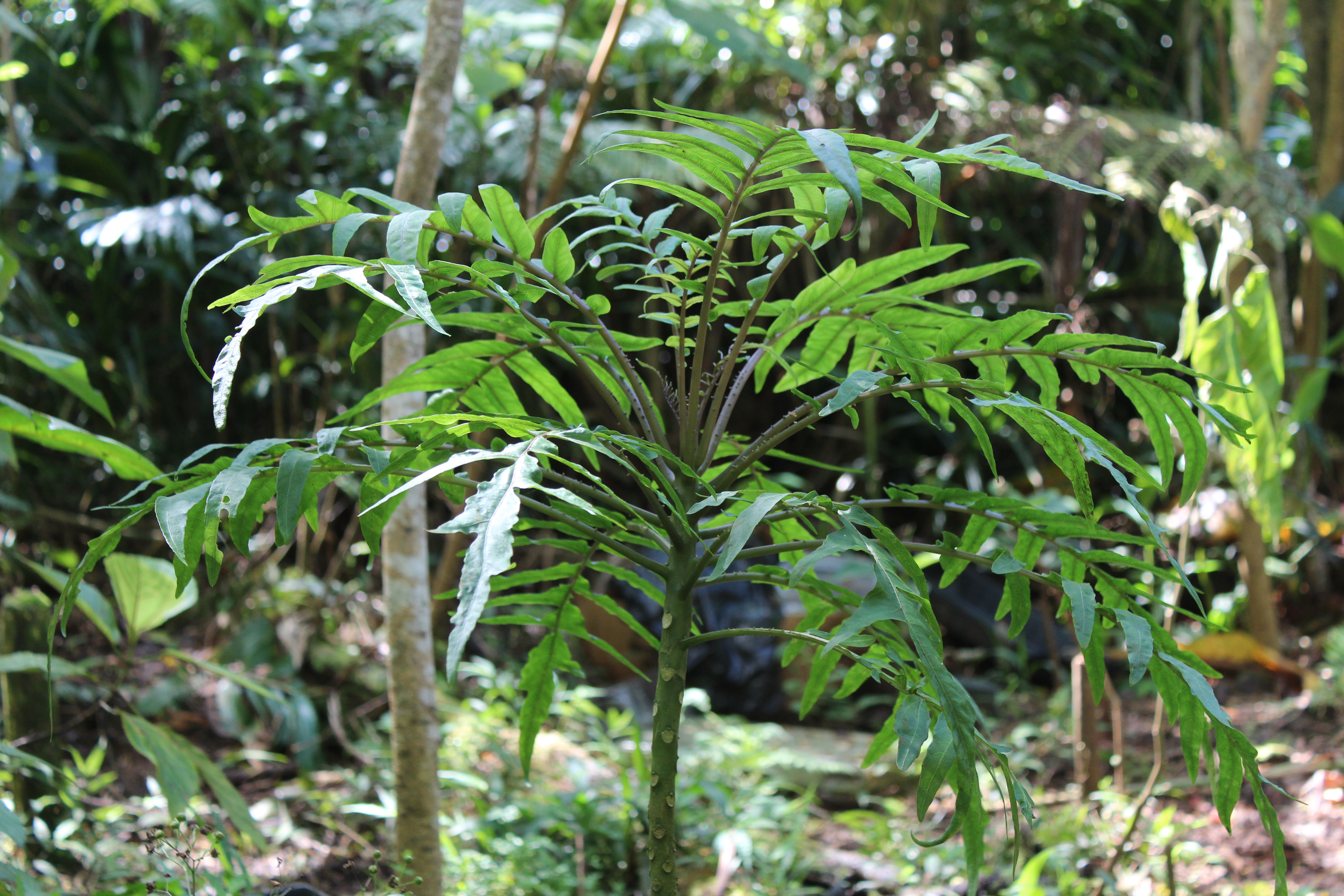
Clermontia pyrularia

Clermontia pyrularia

  • Hawaiian Name: ‘Oha wai
  • Conservation Status: Endangered
  • Distribution: Hawai’i (Windward Mauna Kea; Leeward Mauna Loa)
  • Date photographed: 8/24/2013
  • Ease of viewing: Cultivation
  • *Identification: Form– Terrestrial trees 3-4 m tall. Leaves– narrowly elliptic rarely oblanceolate; blades 15-28 cm long by 2.5-5 cm wide; margins callose-serrulate; winged petioles 1.5-3.5 cm long. Flower– calyx lobes triangular, 3-5 mm long; corolla white or greenish white, 40-45 mm long
  • Phylogenetic comments: 2 papers have come out recently that show something interesting with the phylogeny of this species. Both Givinish, 2013 and Pender, 2013 have done DNA work on the Clermontia genus. In both papers, they surprisingly find that Clermontia pyrularia nests deeply with the genus Cyanea! It might mean that in the past there was some introgression with a Cyanea spp. or Clermontia as we know it is not monophyletic. 2022 update — The latest genetic work not only backs up that C. pyrularia is a solid member of the purple fruited Cyanea clade, but it or its ancestor was part of a hybridization event that lead to Cyanea leptostegia! I find it interesting because each species is found on opposite ends of the archipelago: C. pyrularia on Hawai’i island and C. leptostegia on Kaua’i.
  • My notes: This was the species that I planted up at Hakalau. I thought it was a neat looking Clermontia; little did I realize what else lay in store.
  • Links: Clermontia pyrularia SGCN (pdf); Smithsonian Flora of the Hawaiian Islands; Givnish TJ, Bean GJ, Ames M, Lyon SP, Sytsma KJ (2013) Phylogeny, Floral Evolution, and Inter-Island Dispersal in Hawaiian Clermontia (Campanulaceae) Based on ISSR Variation and Plastid Spacer Sequences. PLoS ONE 8(5): e62566. doi:10.1371/journal.pone.0062566; Pender, Richard “Flora trait evolution and pollination ecology in the Hawaiian lobeliad genus Clermontia (Campanulaceae)” Diss. U. of Hawaii, 2013, print

*From Manual of the Flowering Plants of Hawai’i

Posted in Botany | Tagged , | Leave a comment

An Afternoon at the National Zoo

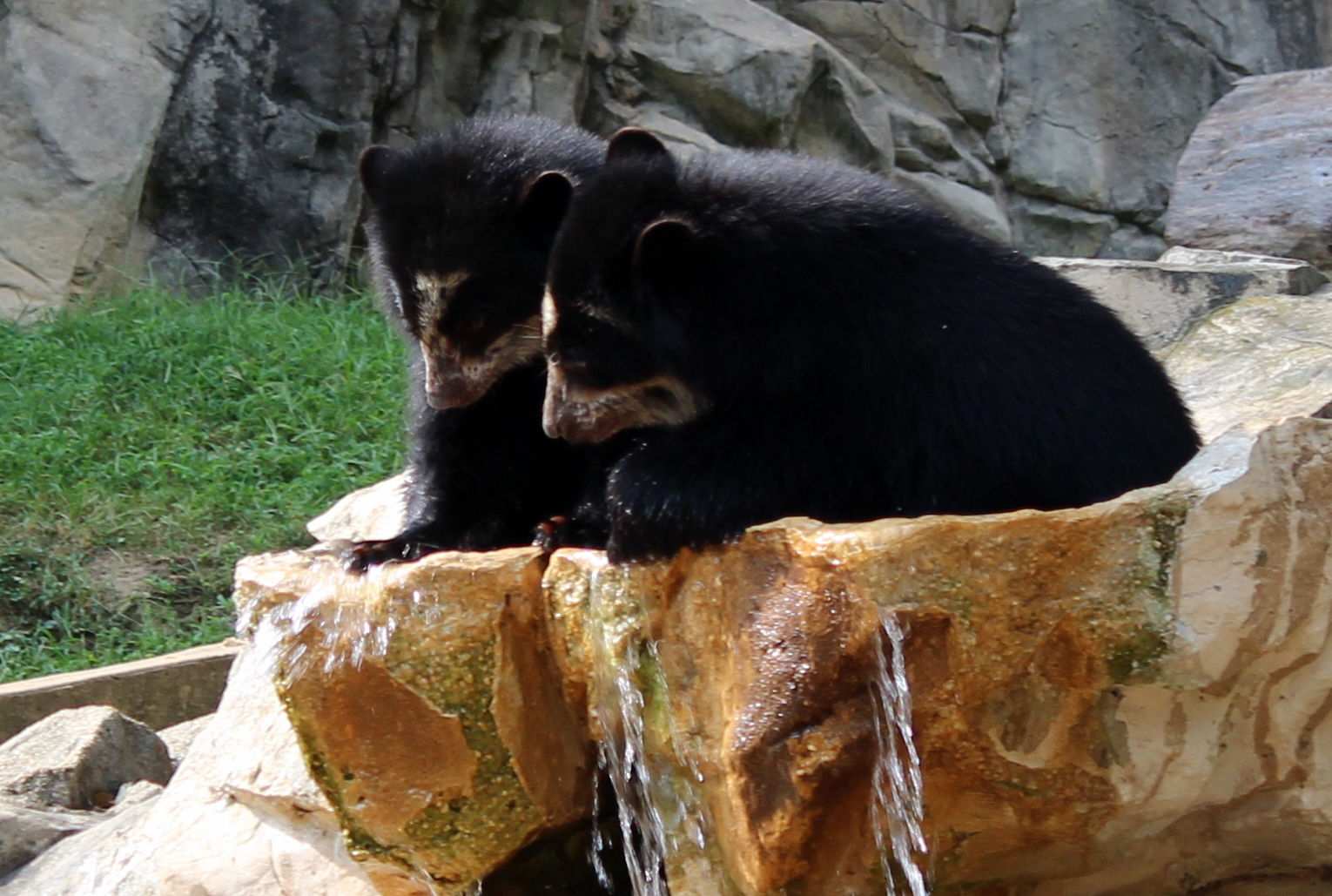
spectacled bear cubs

Back in September, I took a trip to see the National Zoo in Washington D.C. It was my first time there, so I was quite excited to see their collection. Naturally coming from O’ahu, I wanted to compare it to the Honolulu Zoo back home. The zoo had a number of animals that I was especially keen on seeing.

Continue reading

Posted in Animals | Tagged , , | 1 Comment

Snapshot: O’ahu ‘Elepaio

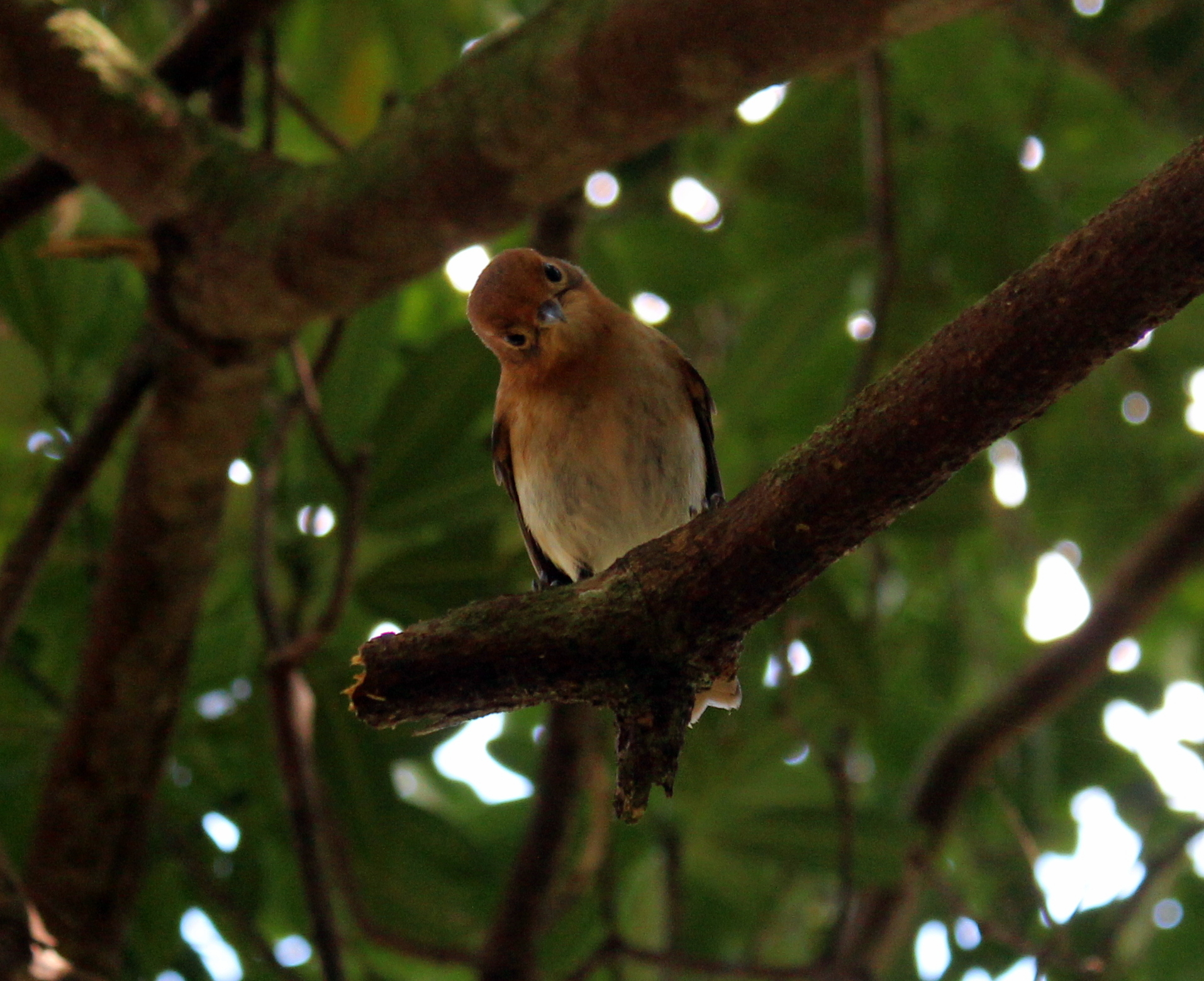
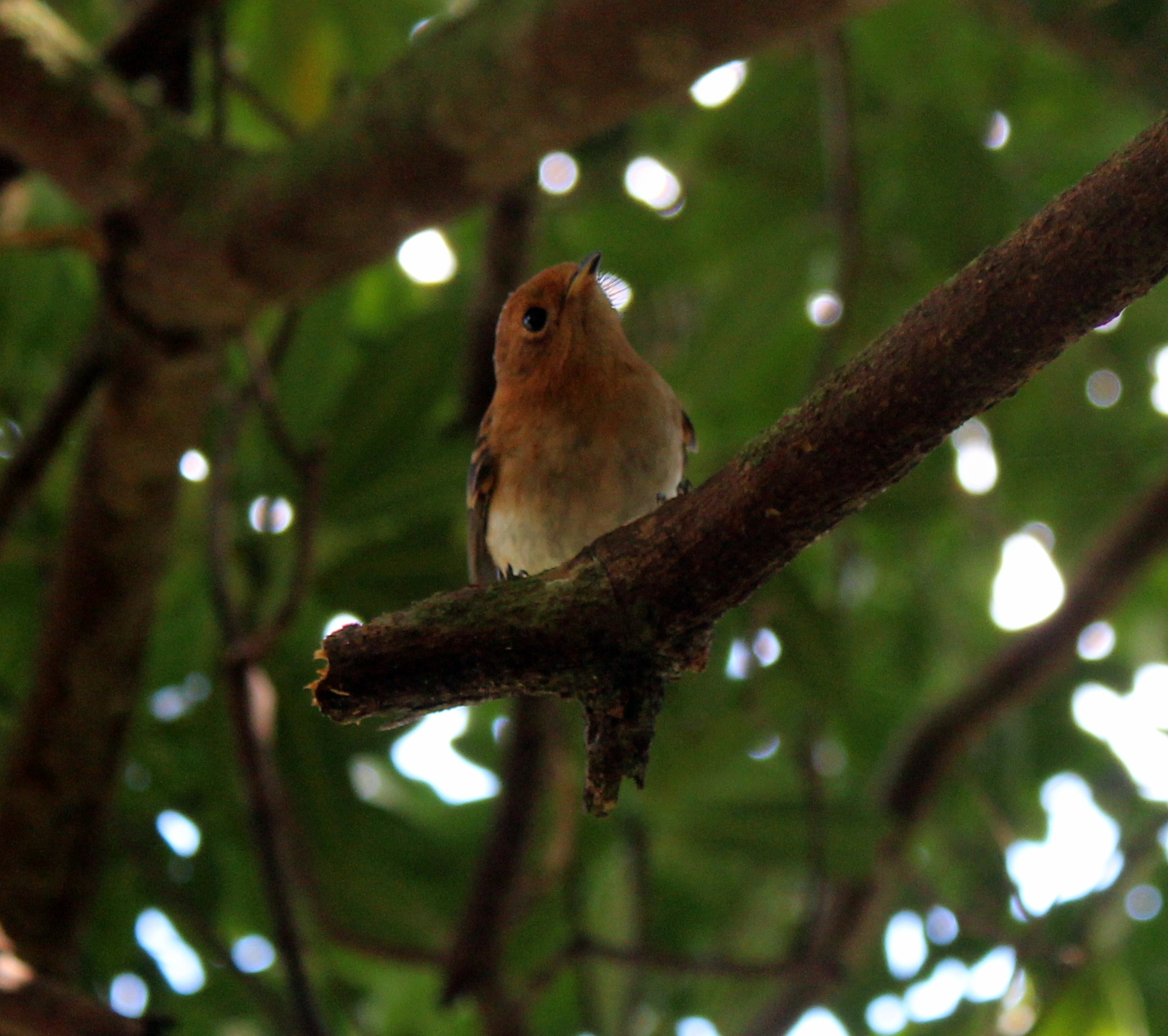
Oahu ElepaioI had mentioned earlier this year how one of my favorite sights on O’ahu trails was seeing O’ahu ‘Elepaio (Chasiempis ibidis) on Wiliwilinui Ridge trail. Well today, I hiked the Wiliwilinui Ridge trail again, and wouldn’t you know it, another ‘Elepaio appeared! In a rare O’ahu endemic (Ochrosia compta) no less! We saw it hunting for insects within the leaf axils of the O. compta before the bird flew off. All in all, a wonderful way to spend a few minutes with a native denizen of the O’ahu forest.

Oahu Elepaio

Oahu Elepaio

Posted in Animals | Tagged , , | 1 Comment

Reforesting Hakalau: The Back Office

Cyanea shipmanii

For many people, birds are the stars of the Hawaiian forest. Rare creatures with distinct evolutionary history tend to get the lion’s share of people’s attention. There is a reason it’s called charismatic fauna. At Hakalau, thousands upon thousands of visitors from around the world come to see these wonders of nature.

I’ll say now that there is a good amount of people out there that love plants. But there is also a reason that the term charismatic flora isn’t as popular. Akin to a Broadway production, the birds are the scene-stealers and the plants are the scene. The backdrop. That’s the front of the house, what the paying public sees. What is going on behind the scenes, with the reforestation efforts? Let’s unveil the curtain of some of the awesome things going on in the back office…

Continue reading

Posted in Sharing the planet | Tagged , , , , , | Leave a comment

Identifying native plant seedlings

It is difficult enough to try and identify the hundreds of different plant species native to Hawai’i. Keying out the different characteristics takes a lot of work and patience. Identifying native seedlings adds more challenges for many of them look different than mature plants. This is especially important in restoration work; many native seedlings can be accidentally pulled up because they aren’t what people expect to see. We’ll try to look at these issues in this post…

Continue reading

Posted in Botany | Tagged , | 1 Comment

Birds of Hakalau

Akepa & Creeper

Akepa & Creeper

Finally, I was able to cross off something that I’ve wanted to do for a long, long time. Over the weekend, our regular group of Manoa Cliff volunteers was able to help with the Hakalau National Wildlife refuge on the Big Island of Hawai’i. Hakalau is one of the finest birdwatching spots in the state and it did not disappoint….

Continue reading

Posted in Animals | Tagged , , , , | 2 Comments

Getting to know your Hawaiian Lobeliads #27: Cyanea lanceolata

Cyanea lanceolata

Cyanea lanceolata

  • Hawaiian Name: Haha
  • Conservation Status: Endangered
  • Distribution: O’ahu (Ko’olau mountains)
  • Date photographed: 7/20/2013
  • Ease of viewing: Difficult
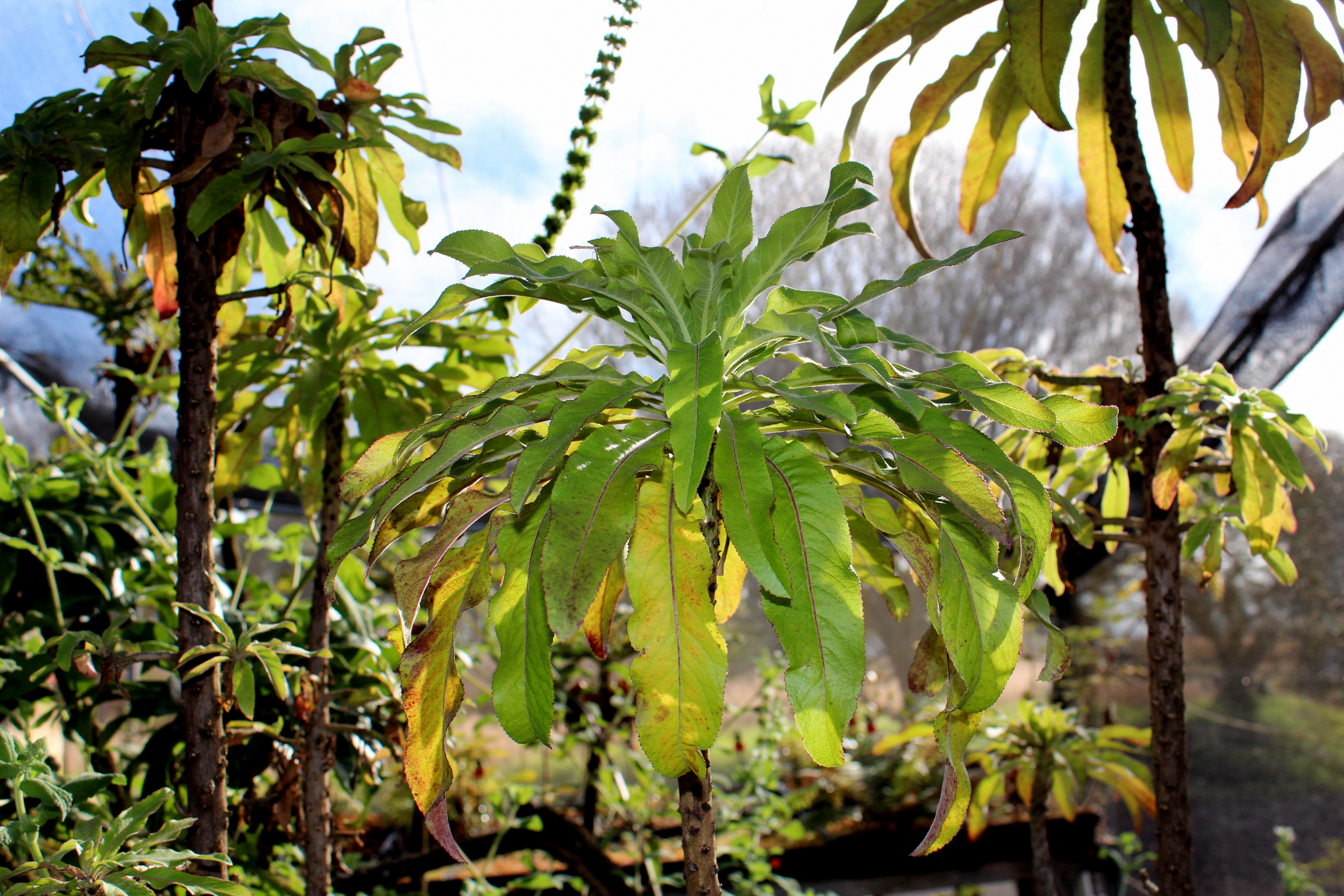
  • *Identification: Form– Stems woody, muricate in juveniles Leaves– elliptic to oblanceolate, blades 15-60 cm long, 5.5-14 cm wide Flower– calyx lobes triangular, 1-3 mm long; corolla glabrous, pale to dark magenta
  • Phylogenetic comments: Formerly part of Rollandia, subspecies lanceolata was elevated to full species status. Where there was once Rollandia lanceolata, now there is Cyanea lanceolata and Cyanea calycina.
  • My notes: Another of the Cyanea spp. on O’ahu that I’ve only recently seen for the first time in the wild. I was very excited to see this particular species because Cyanea lanceolata is the first of the muricate lobeliads I’ve encountered. Thorns and prickles may have evolved in Cyanea in response to browsing pressure from giant flightless ducks (Givnish, 1994). In the picture above, I can almost see the O’ahu Moa Nalo attempting to feed from the plant and moving off in frustration.
  • Links: Smithsonian Flora of the Hawaiian Islands, UH Botany, Native Hawaiian Plants- Cyanea
  • Refs: Givnish, T. J., Sytsma, K. J., Smith, J. F., & Hahn, W. J. (1994). Thorn-like prickles and heterophylly in Cyanea: adaptations to extinct avian browsers on Hawaii?. Proceedings of the National Academy of Sciences91(7), 2810-2814.
  • Additional Pics:

Cyanea lanceolata prickles

*From Manual of the Flowering Plants of Hawai’i
Posted in Botany | Tagged , , | Leave a comment

Getting to know your Hawaiian Lobeliads #26: Cyanea acuminata

Cyanea acuminata

Cyanea acuminata

  • Hawaiian Name: Haha
  • Conservation Status: Endangered
  • Distribution: O’ahu (Ko’olau mountains)
  • Date photographed: 6/22/2013
  • Ease of viewing: Difficult
  • *Identification: Form– Shrub, 0.3-2 m tall Leaves– oblanceolate to narrowly obovate or elliptic, blades 11-32 cm long, 3-9 cm wide, base attenuate to cunate. Flower– calyx lobes narrowly triangular, 2-5 mm long; corolla white, 30-35 mm long, 3-4 mm wide.
  • My notes: I was given some general directions on finding this particular guy, so I was pretty please when I actually found the plant. I’ve seen Cyanea acuminata only once before at the Poamoho summit and it looked quite different. It had fat leaves and was very prostrate. In this sheltered gulch, this C. acuminata was about 2 feet tall.
  • Links: Smithsonian Flora of the Hawaiian Islands, UH Botany, Native Hawaiian Plants- Cyanea
  • Additional Pics:

Cyanea acuminataCyanea acuminata

*From Manual of the Flowering Plants of Hawai’i
Posted in Botany | Tagged , | Leave a comment