Lagerstatten present an interesting, if morbid, paradox. The very processes which leads to exquisite fossil preservation for appreciation and study, while quite fortuitous from our point of view, are also horrible, no good, very bad ones for the object of our inquiry. Think extreme landslide or flood or eruption. Things that we ourselves would not want to be caught in the middle of. Still, these catastrophic events can sometimes provide an unparalleled view of the past. One of the finest examples of this in the world happens to be on a small hillside 3 hours outside Omaha, Nebraska. A few days ago I was lucky enough to finally visit the Ashfall Fossil Beds in Antelope County, NE.
Growing up in Chicago, American Robins (Turdus migratorius) were a favorite of mine. How could they not be? Robins are adaptable, resilient, and plentiful. As a little kid, they were an easy bird to observe even in the very urban area that I grew up. There was even one spring in third grade when a pair of robins made a nest just outside our window sill, giving the budding little naturalist in me a wonderful chance to observe them.
Watching this particular robin in my parent’s backyard made me a bit sad, honestly. For they are songbirds. The extinctions and habitat destruction that happened in Hawai`i over the last several centuries have left the current situation where the average person living in the state will never see a native songbird in their backyard. An exquisite radiation of honeyeater, honeycreepers, thrushes have either become completely extinct or extirpated from the areas where most people live.
`I`iwi, `Akohekohe, `Akikiki should be as easy to see and film in Hawai`i as this robin. Instead there is a very real chance that some of these species may go extinct in the next few years. We will never see them again. For all the talk of people caring for the planet and saving the environment we have still ended up in this very grave situation.
There are measures going on right now to use a naturally occurring bacteria to help alleviate the pressure mosquitoes and the diseases they pass on to the birds. There are some… let’s call them well-meaning folks opposed to this. They are worried about perceived threats vs. these very real extinction possibilities. It is not hypothetical at this point.
Is there a last minute, last ditch effort that will save these birds? Maybe. People will still give their all on even the slimmest chance that we can save these birds. I wish I could say that it should have never gotten this bad. But it has and now we have to hope that all the dice roll our way and that someday these birds will be like American Robins once again.
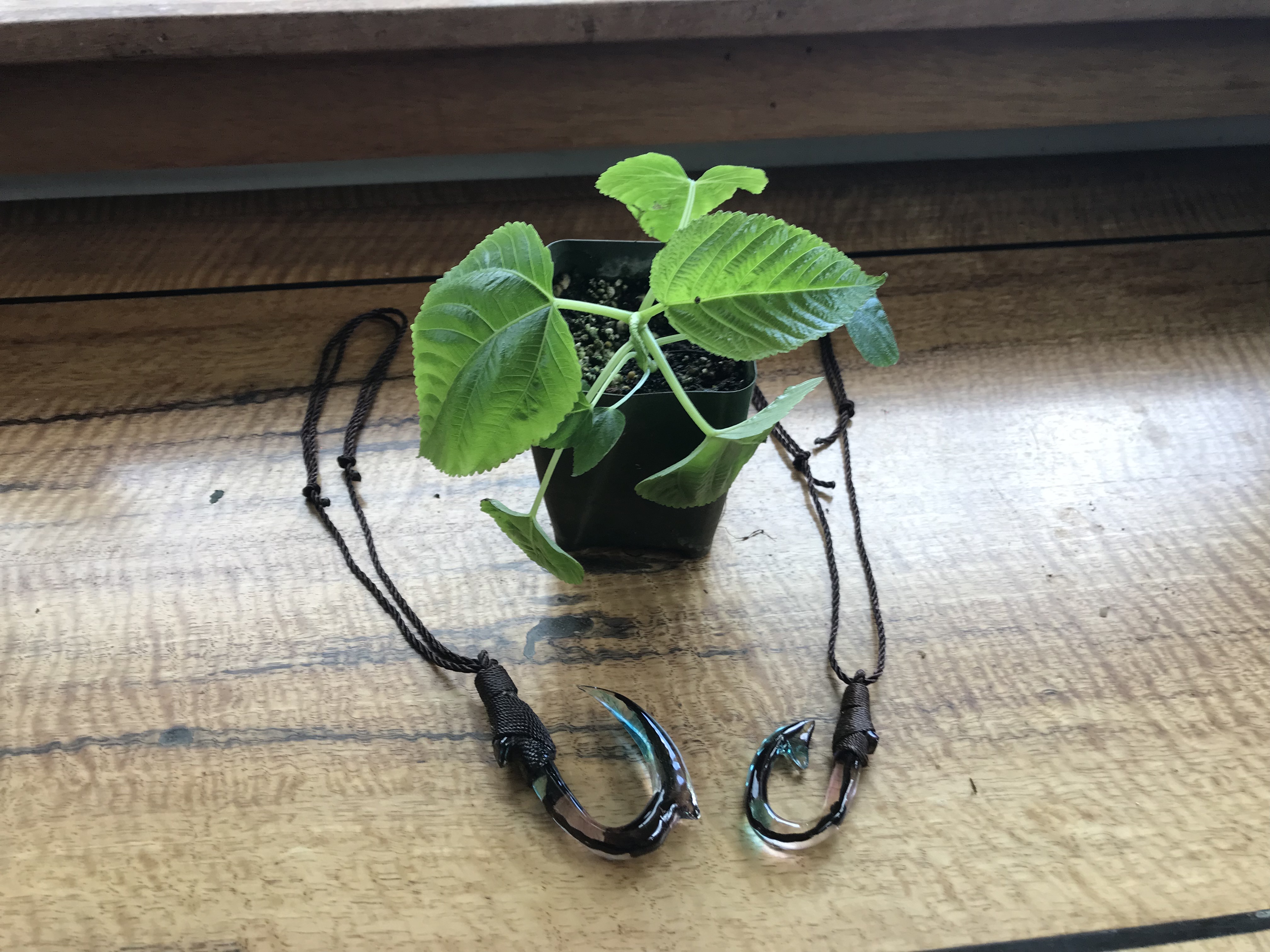
In the 13 years that I’ve run Studia Mirabilium, I may have mentioned olonā (Touchardia latifolia) in passing a few times. Well today, let’s give olonā its due. Olonā, long revered for the high quality cordage it provides, may prove to have an important multi-faceted role in the future.
We were given these old photos by a family acquaintance. I remember rummaging through some old photos albums when I saw one that said Koke`e. I can’t remember if the dates were closer to 1910 or the 1920’s. Some of the photos showed they went up with pack horses if that is telling. Most of the photos were of the camping party itself, but a couple immediately caught my eye.
When I saw this photo, I noticed that they had captured a really nice shot of a mature Haha lua (Cyanea leptostegia). This is the tallest of the extant lobeliads with some individuals up to 30-40 ft tall.
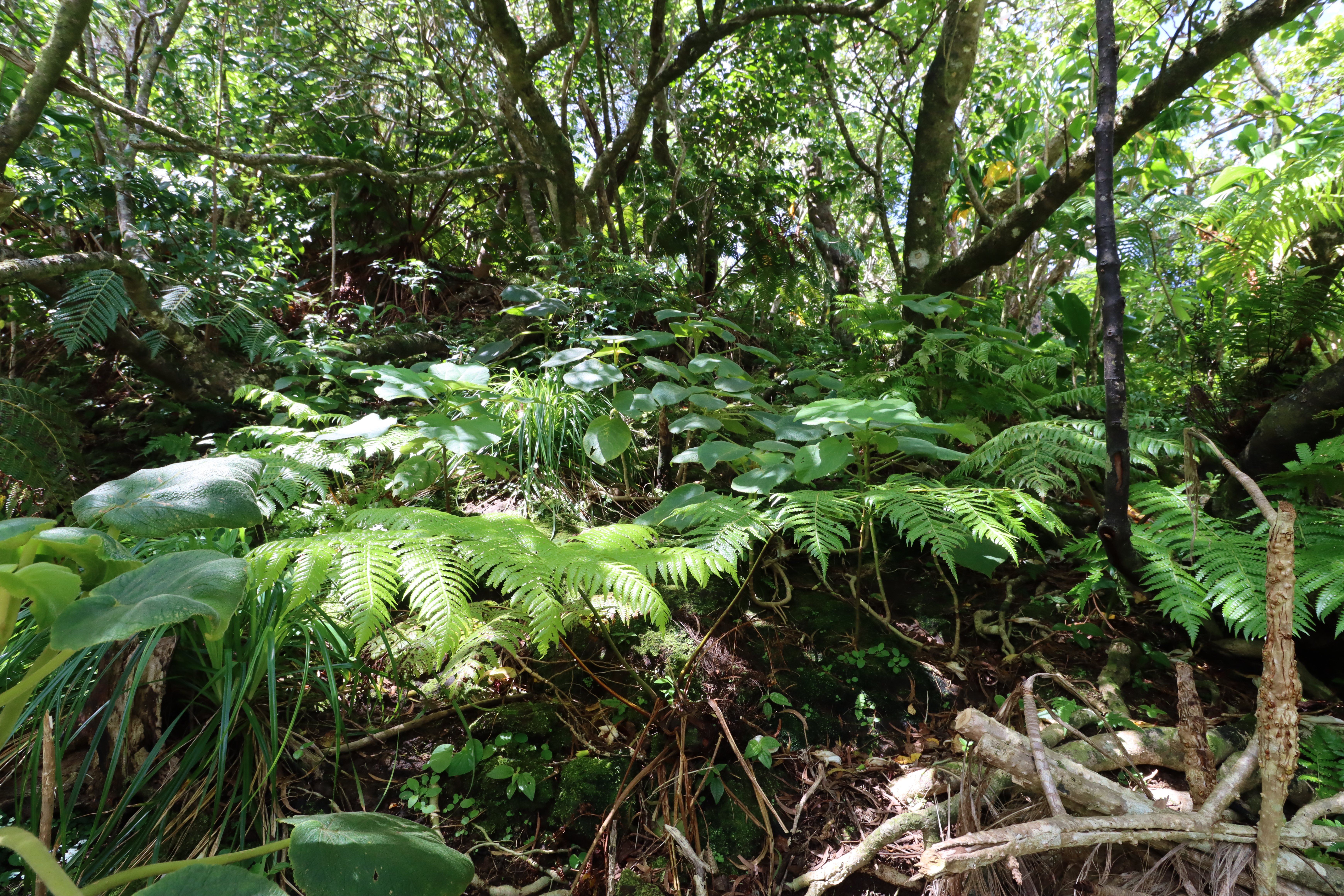
As neat as seeing an old photo of our tallest native lobeliad is, I’m also really happy to get a glimpse into what native forests looked like 100 years ago. Photos like this help give me an image of what we are trying to restore.
April has been deemed Native Hawaiian Plant Month for some years now. While I’ve done posts in the past on various social media platforms, I don’t think I’ve ever done an overview. Indeed, if you do a google search, it is hard to find one.
I think it’s important, especially for people just getting into native plants. Mainly for the folks with an inkling of interest: what is all the fuss about? Why are there so many people out there who care so much about the flora that calls Hawai`i home? To me, it boils down to how distinctive the Hawaiian flora is compared to other regional plant communities. It just wonderfully stands apart.
I’ll break it down into the unique environment plants found in Hawai`i, where they came from, and what they did here.
For folks like me who dream of the fantastic extinct creatures of our recent past, I think we tend to overlook the creatures that are still alive today. I know I sometimes do. For all the marveling we do at the giant sauropod dinosaur fossils we see in museums, probably largest animal ever known (blue whales) still shares this planet with us. It’s one whale watching tour away. And as much as I wonder about the pretty `o`o birds (Moho spp.), Indian peafowl are absolutely stunning birds that I can see everyday at work.
I am luckily that I work at a site where I can see O`ahu `Amakihi every week. Lately I’ve been trying to photograph them more just to share my own encounters with them to a broader audience. For I think they are really neat birds.
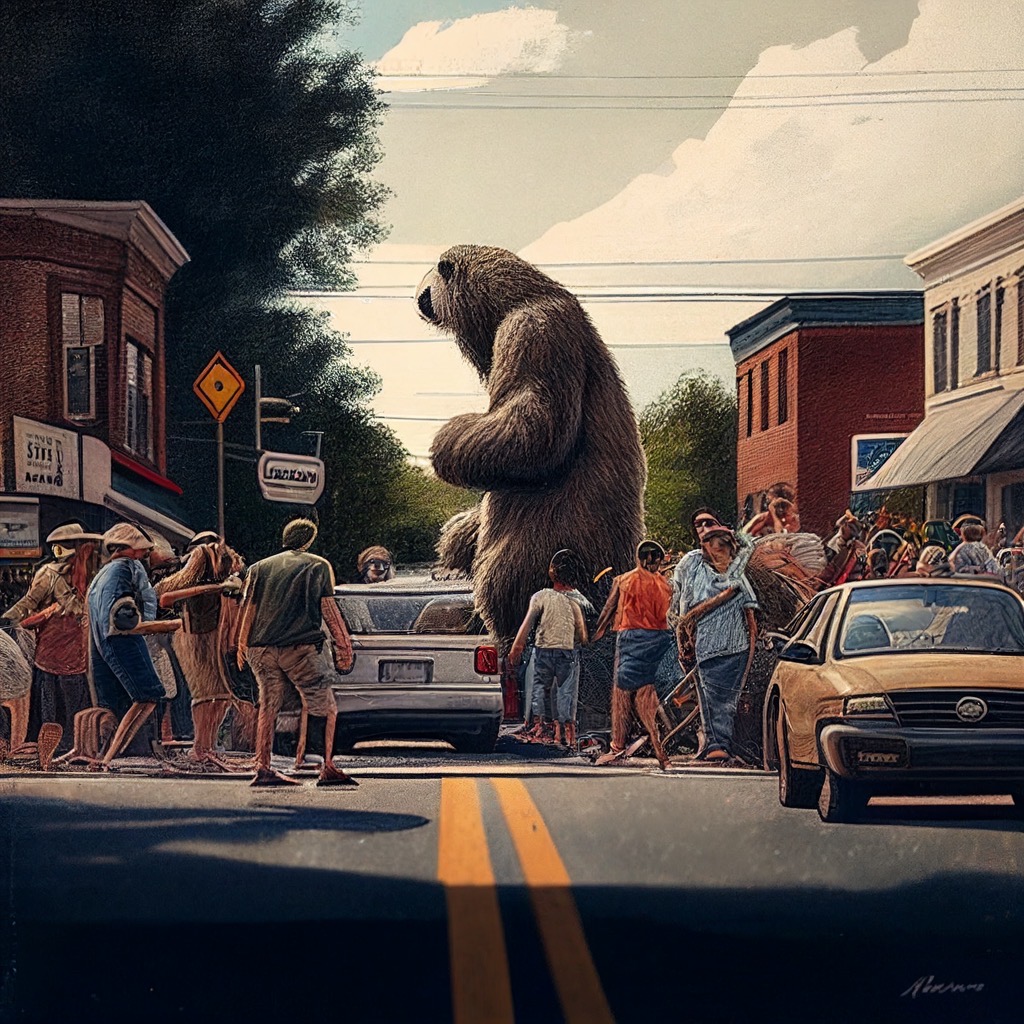
People have viewed the new A.I. generated art with trepidations. While I can see problems moving forward, I immediately started salivating when I heard you can ask a bot a prompt and in seconds it could generate something.
Even though most of this blog is about the current restoration work I’m doing in native Hawaiian ecosystems, it is still influenced by an older passion I have for extinct megafauna. What would the world look like if not only were they still around, but happily coexisting with us?
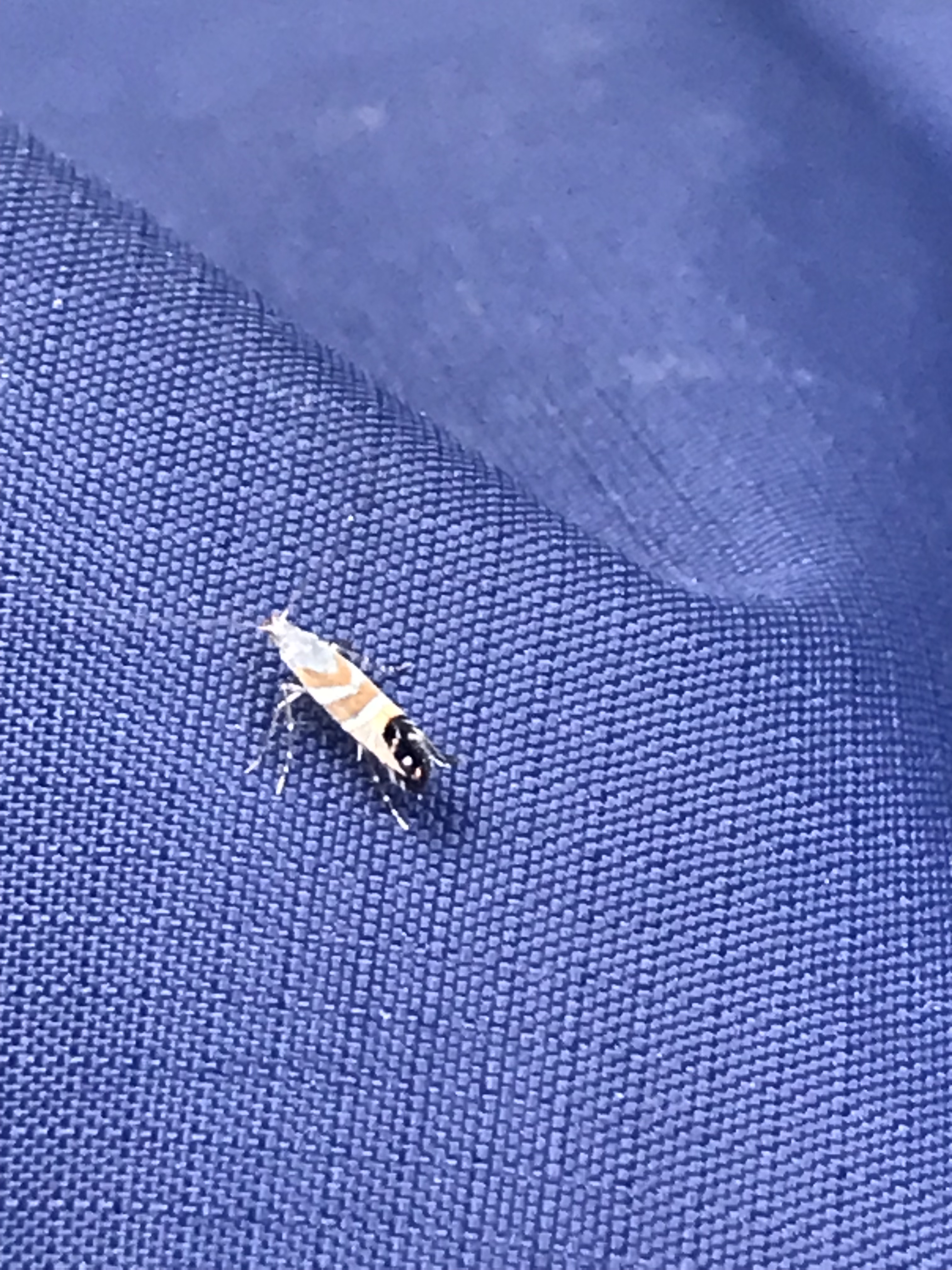
I was working up at the site recently when I came upon one of our neat micromoths. This species (possibly Philodoria splendida) uses `Ohi`a Lehua as a host plant. The larva mine the leaves before emerging as these pretty little moths.
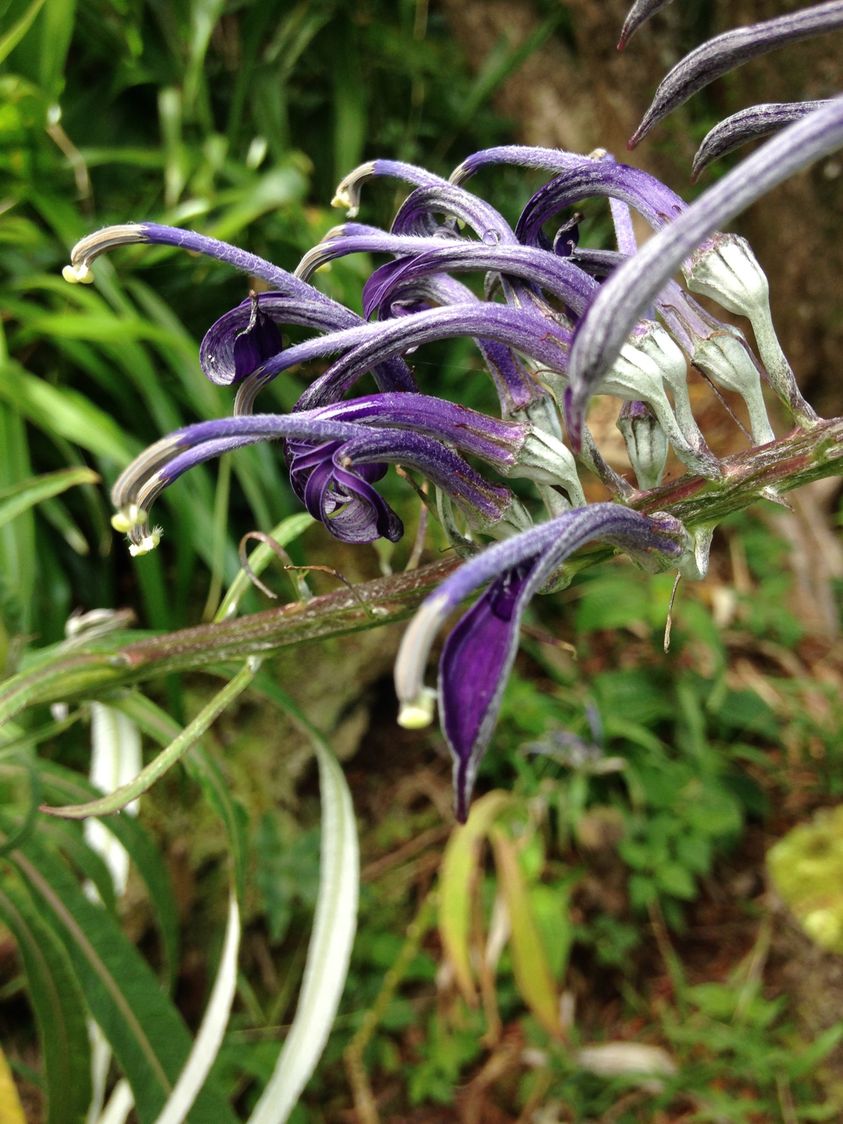
*Identification: : Form– Stems woody, erect, 15-30 dm long, leafy in upper 1/2. Leaves– narrowly elliptic to elliptic, 30-65 cm long, 2-10 cm wide, upper surface glabrous, lower surface densely white tomentose except midrib. Flower– calyx lobes subulate, 4-7 mm long; corolla blue, 28-32 mm long, 3-5 mm wide, pubescent, lobes spirally revolute.
Phylogenetic comments:2022 update — L. hypoleuca appears to be sister to the clade that include L. oahuensis and L. grayana.
My notes: I’ve come across this taxa sporadically, usually near the summits of hikes. It is one of the few taxa of Hawaiian lobeliads that is found through the main Hawaiian islands.
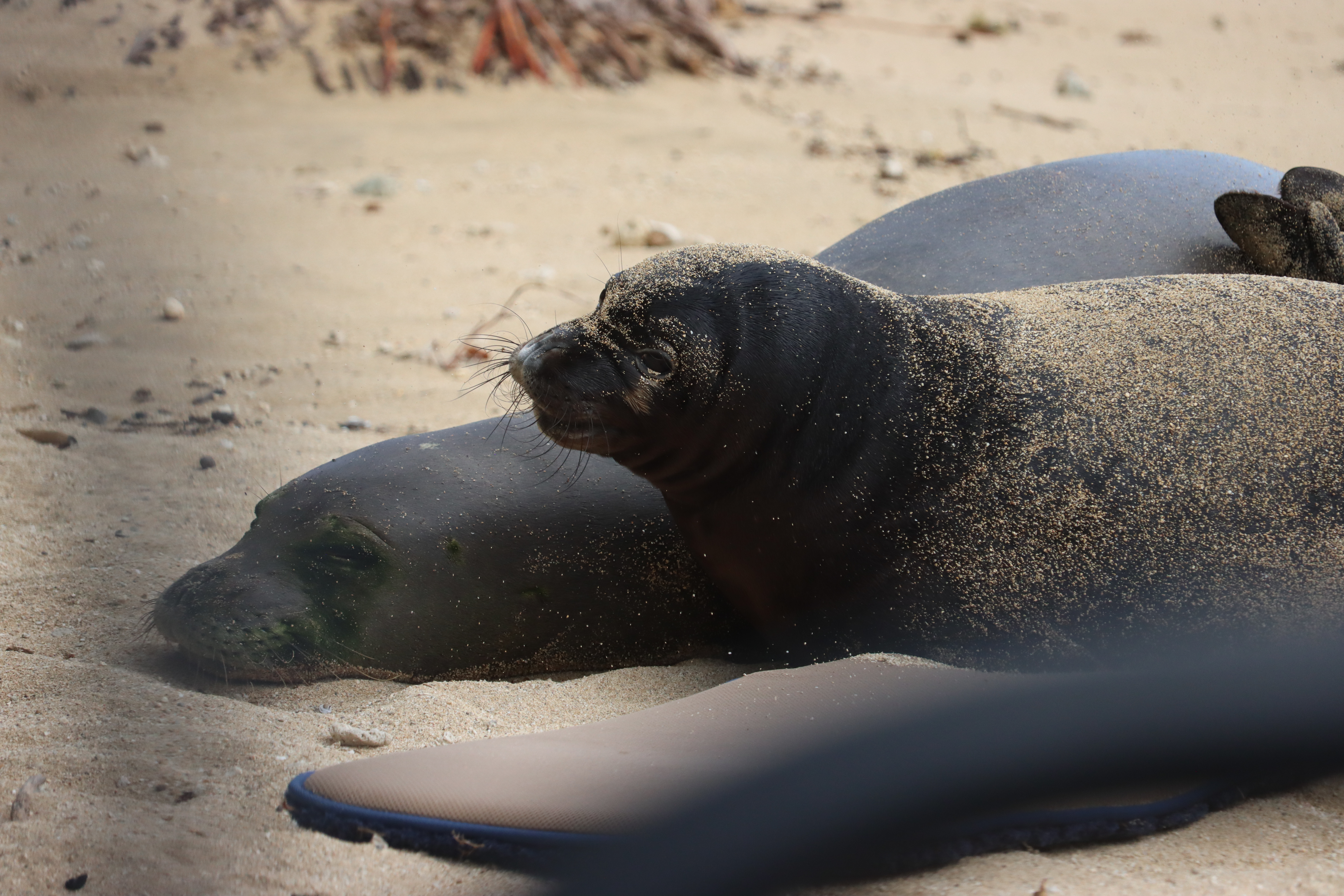
I had the privilege of seeing the monk seal pups in Waikiki the past few years. Seeing the young seals being raised by their mom adjacent to some of the most highly used shorelines in Hawai`i shows the challenges and possibilities of living with our native Hawaiian biota.