Hawaiian damselflies are another neat radiation of invertebrates here in Hawai`i. They evolved to exploit some niches and habitats that aren’t readily available to them elsewhere. Most damselfly elswhere in the world are aquatic, but some occupy other niches here. In this species (Megalagrion koelense), the nymphs live in the leaf axils of `i`e`i`e (Frecynetia arborea). Not being tied to permanent water sources can allow this species to exploit more habitats. I know our restoration site where I took this photo doesn’t have a lot of standing water but there is certainly a lot of `i`e`i`e for these guys to utilize. Many thanks again to Will Haines for the id.
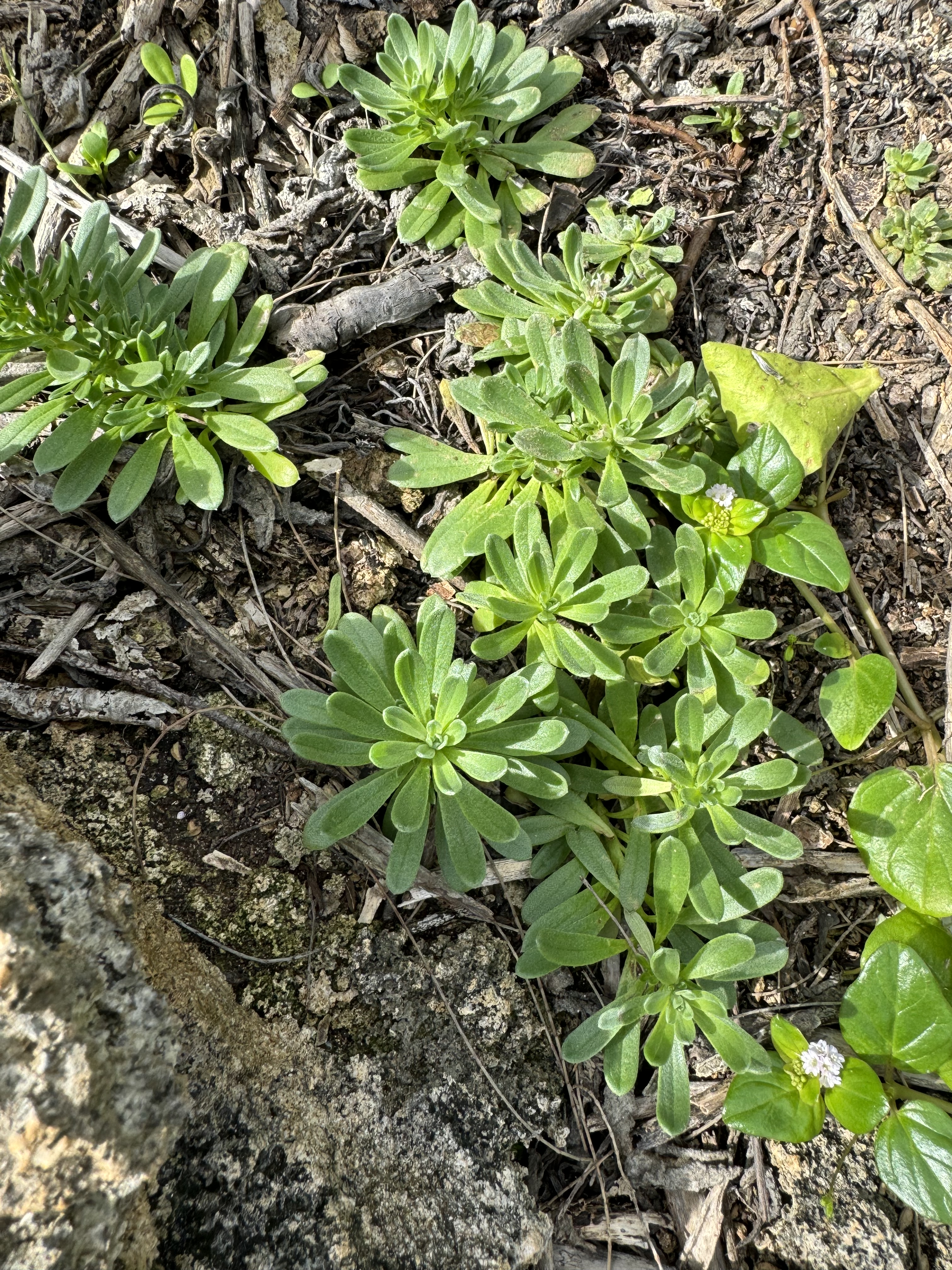
Hinahina (Heliotropium anomalum var. argenteum) is a coastal plant that one can still come across fairly readily in Hawai`i. Many populations have dense silky pubesence, but this varies. The population that I saw at Pounder’s did not have much pubesence; the leaves looked a normal green versus the almost silvery sheen seen on many other. I must really do a post on Pounder’s one of these days. The native coastal plants there are quite impressive.
Takahe (Porphyrio hochstetteri) are another member of New Zealand’s wonderful endemic avifauna. Once thought to be extinct, they are making a comeback and giving us a glimpse of a lifestyle that we don’t really associate with birds.
I wanted to see if I could get a little bit better shots of that native cerambycid beetle I took a few weeks back. They seem to really like rotten koa trees as I rather easily found another one on the same tree as before. I think RCL Perkins had mentioned a century before that one of our native insectivorous honeycreepers (possibly Loxops?) was full of these type of beetles. He marveled at their ability to catch them. O`ahu `Akepa have not been seen since Perkins time, but I’m glad to have glimpses of that food web and imagine extinct little red birds taking interest in this very bug.
In honor of Kahurangi, I will continue to talk about the other awesome birds we came across in Aotearoa. I mentioned in that post that each conservation area we went to had a different bird taxa stand out. Kapiti Island was no different. In fact it might have been my favorite interaction. For it was an interaction that should have happened throughout islands worldwide.
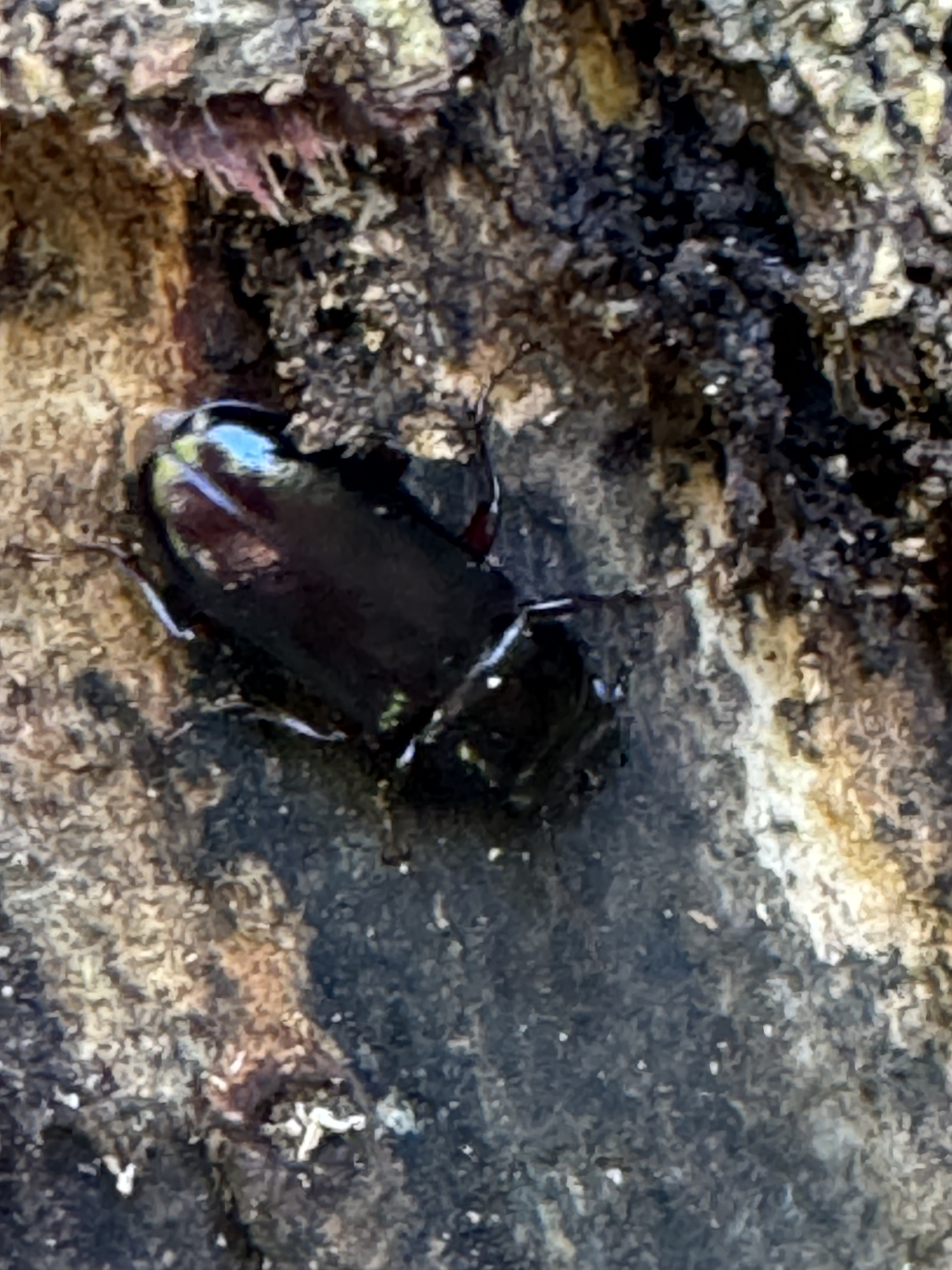
I can across this while randomly picking at the bark of a dead koa tree. It’s a native cerambycid beetle (Parandra puncticeps). I thought it was interesting even though it’s part of the longhorn beetle radiation, it has short antennae. To my untrained eyes, I would have thought it was some kind of stag beetle. Thanks to Will Haines for the ID on this neat native insect.
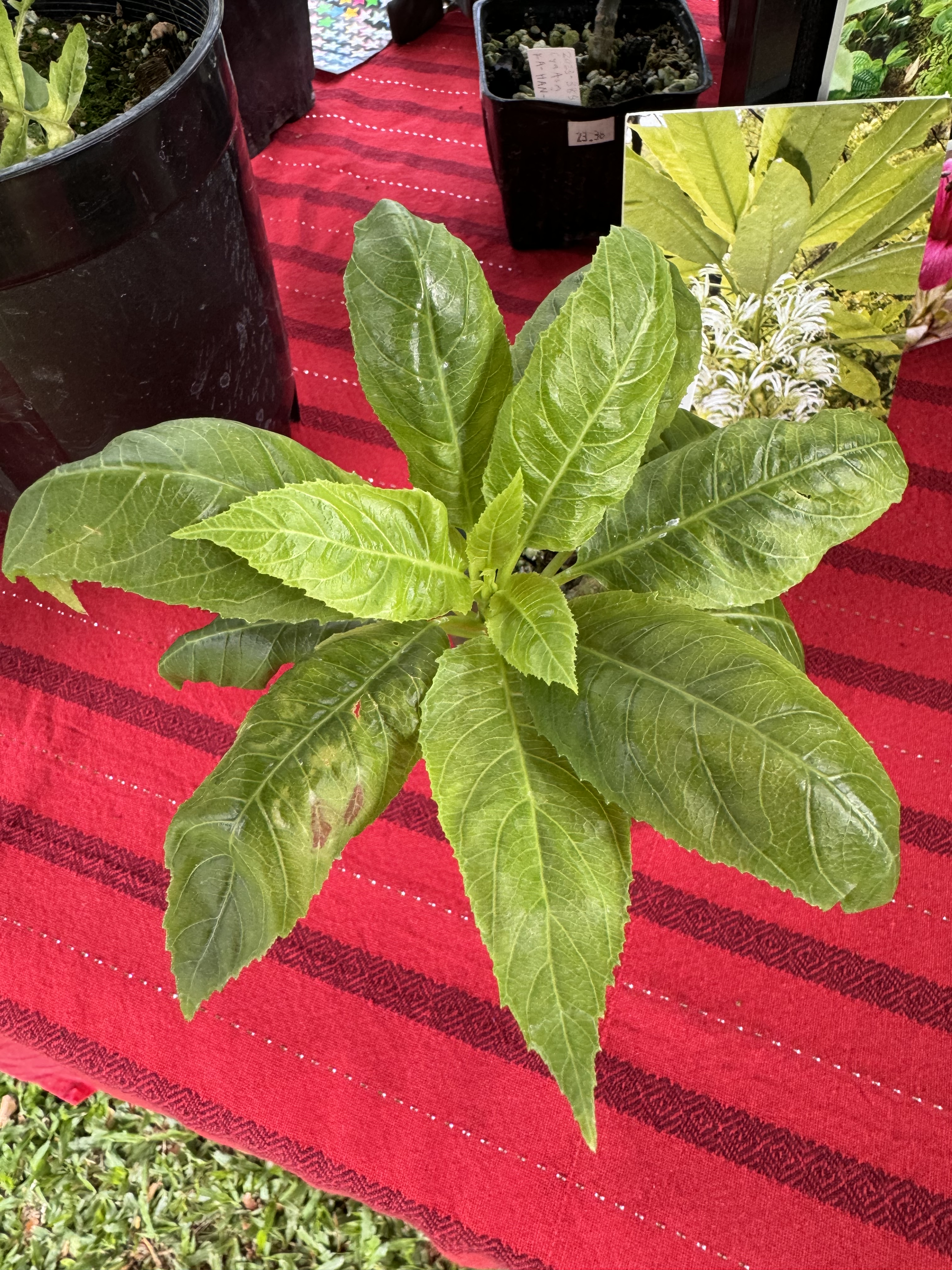
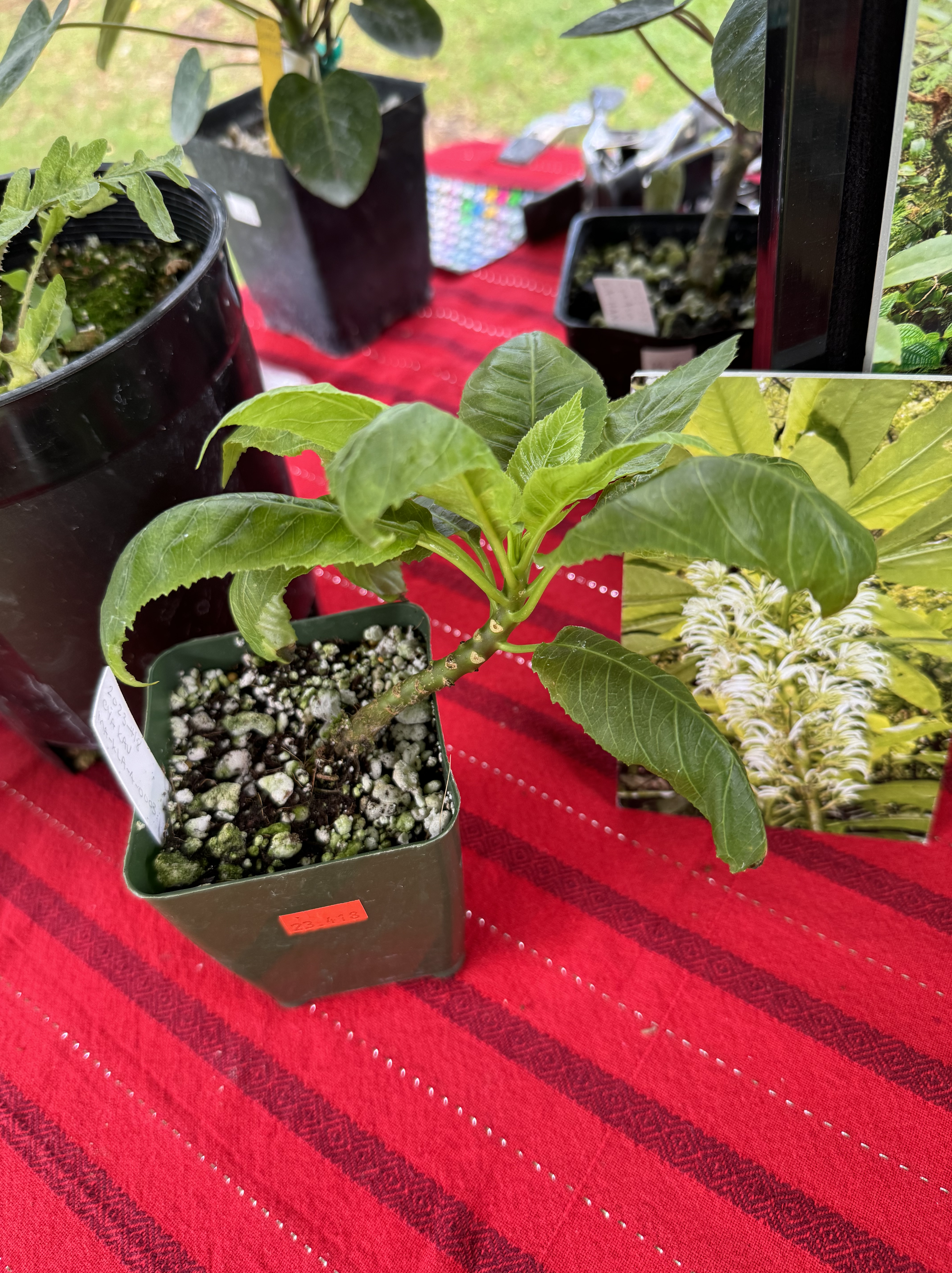
Identification: : Form– Unarmed shrubs 2-4 m high, many branched from base with many basal shoots. Leaves– 19-30 x 5-7 cm, base attenuate to cuneate, apex attenuate to acuminate to cuspidate; petioles 5-10 cm long. Flower– calyx lobes 2-3 x .5-.7 mm lanceolate to linear; corolla white, tubular, gently curved to suberect, 28-35 x 3-4 mm
Phylogenetic comments:2022 update — C. kauaulaensis is nested with the orange-fruited glabra clade; within the clade it is currently thought to be related to a polytomy of species including C. profuga.
My notes: I went to the `ohi`a love fest a few months back and got to check out a seedling of a taxa that I had never seen before. C. kauaulaensis is one of several new taxa either discovered or described out of Maui in the past decade. The original discovery of the plants was thought to be a new population of the previously described C. glabra before later research made it clear that it was something distinct. It is always nice to see the hard work of the folks at PEPP in action. It pleases me that even to this day given all the history and research that has been done on our famed Hawaiian lobeliads, the family continues to surprise and enchant.
So I have also been trying to update the Manoa Cliff website as well. With 17 years of native reforestation under our belt, we have seen areas come a long way. Here is a link to some before and after photos that I uploaded recently. Have a Happy New Year everyone!
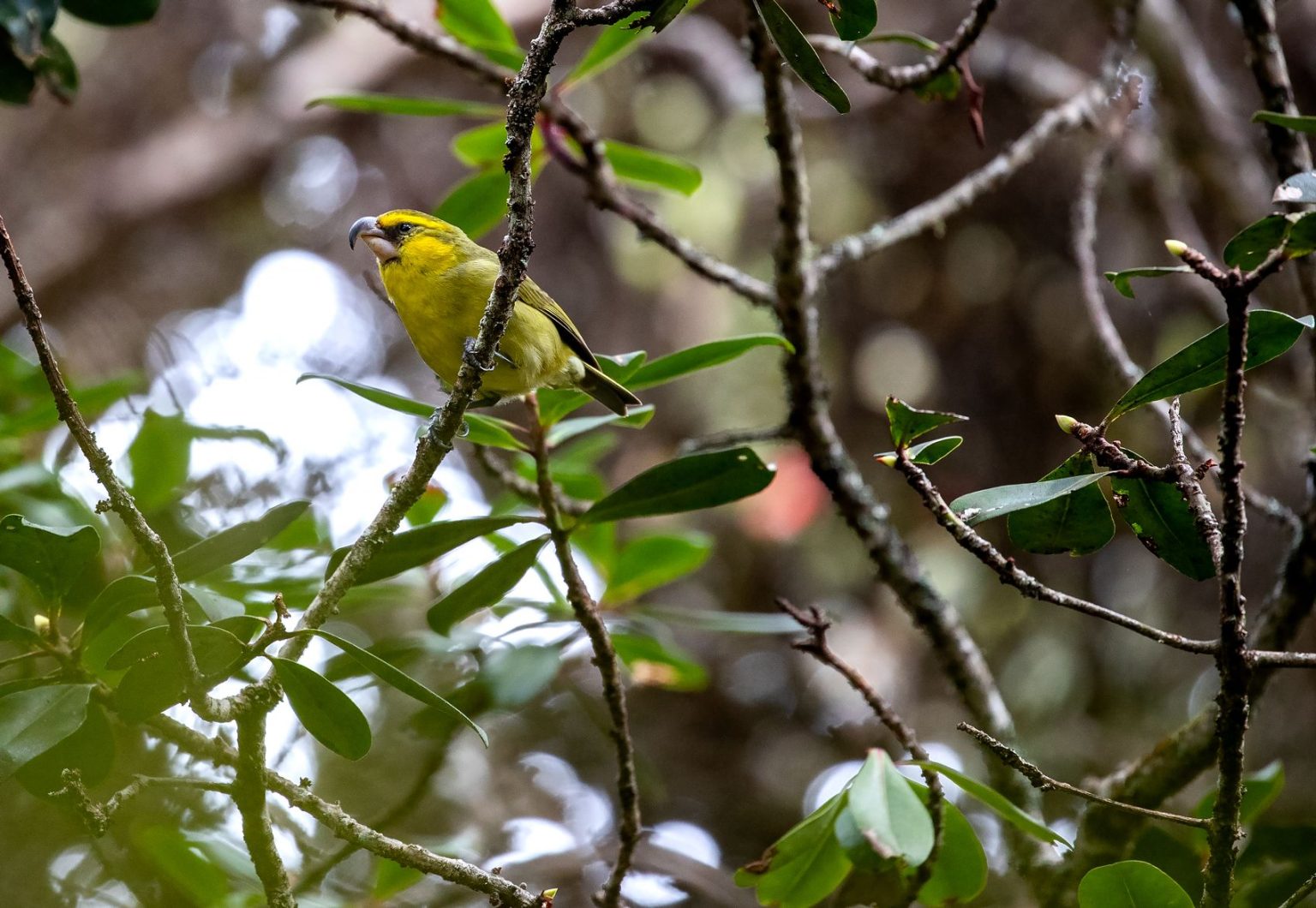
One lone bird flies back to its home range on the other side of a volcano. Seems straightforward enough. Animals making their way back home after an arduous journey are typically feel-good stories that are sometimes made into movies. Homeward Bound comes to immediate mind. But in this case, it highlights the plight of an entire species with a very uncertain future.
We must bear in mind why this bird, designated MAPA1, had to make that extraordinary journey in the first place. Kiwikiu or Maui Parrotbill (Pseudonestor xanthrophrys) are one of the spectacular Hawaiian Honeycreepers. Once found throughout Maui and Moloka`i, their numbers declined precipitously in the face of the human induced changes that occurred throughout Hawai`i. The last wild population is found in a tiny section of remote rainforests on the northeast slopes of Haleakala.
It’s thought that while these northeastern rainforests are their last refuge, they are actually suboptimal habitat for Kiwikiu. So effort was made to restore native forests on the leeward slopes of Haleakala in hopes to start a second population of Kiwikiu in more productive habitat. It would also be an insurance against stochastic events that could rapidly cause decline in a single location.
Unfortunately, the affects of avian diseases were seen far sooner than anticipated. A small cohort of birds, including MAPA1, were captured from that last refugia, given health checks, and spent time in specially built aviaries to help them acclimatize to their new leeward home. Soon after release however, they all disappeared, thought to be felled by avian malaria.
So it came to everyone’s surprise that after a 2 year absence, one of those original birds, MAPA1, was sighted again in that reforested area. But the biggest surprise was yet to come as that same bird that survived the original release made its way back to its original rainforest home. He was also seen with a female; there is a chance that he sired a brood this past breeding season.
So that is MAPA1’s story in a nutshell, a stubborn indefatigable Kiwikiu that has survived all odds. The thing is, his species really needs stubborn individuals like himself at this point. For right now, the movie that would be made of his story wouldn’t been something like Homeward Bound, it would be more like Last of Us. We normally think of barren, nuclear fallout wastelands as the setting for a post-apocalyptic movie but for many of Hawai`i’s birds, gorgeous productive forests are exactly that barren wasteland. All because of the extremely consequential effects mosquitoes have wrought on the landscape.
It is still a very tenuous situation. While it is a nice beacon of hope in a sea of bad news for native birds, it is still a single beacon that could easily be snuffed out. While I can’t be thankful enough that there are dedicated individuals out there, giving their all to give these birds a fighting chance, it’s also why I fight so hard now with common native species. I want to do what I can so they don’t have to rely on stubborn individuals like MAPA1 to ensure their survival.
To learn more of his story please check out the links here and here
I mentioned in my post about A.I. generated artwork that my mindset on the coexistence of people and fauna is partly informed by the images I’ve seen coming out of Indian cities. India is an interesting case study because while it has over 1 billion people, the country and surrounding areas still has a lot of charismatic megafauna. There are large antelope, elephants, rhinos, leopards, tigers, and lions found sometimes shockingly close to urban centers. While it has lead to conflict occasionally, it also points to a tantalizing shared future.
Take lions for example. India is mostly known for its Bengal tigers, but the very last of the formerly widespread Asiatic lions (Panthera leo persica) lives in a single forested area of Gujarat, India. When it comes to the brink of extinction these lions were right there. The last lions in Iraq were seen in 1918, Iran in the 1940’s, and in India were reduced to a mere dozen animals in the early 1900’s. They made it to the present day by the skin of their teeth. With protection and a buy-in from the surrounding communities, the lion numbers have been bouncing back and an interesting dynamic seems to be forming. Lions are increasingly being encountered in urban and semi-urban areas and the local population seems to be taking it in stride.
Here is one of those encounters of a lion crossing the road amongst a bunch of bikers:
This isn’t a one off encounter either; there are plenty of videos on social media showing lions and the people of Gujarat co-existing.
On the other side of the subcontinent in the Terai Arc ecosystem of India and Nepal a similar dynamic with a different species is forming. In Nepal, Greater One-horn Rhinoceros (Rhinoceros unicornis) have been receiving intensive conservation efforts and it seems to be quite successful. With the help of the Nepalese military keeping poaching in check, rhino numbers have been increasing steadily in the last 10 years. Again like the lions, the expanding numbers have seen animals leaving the protected forests and interacting with people in urban environments.
The juxtaposition of wild rhinos and dense urban streetlife is mind-boggling to me. It is impressive for me to see how non-plussed this rhino seems amongst the hustle and bustle. But this next video is probably my favorite:
I timestamped it specifically at the 0:55 mark because of the imagery. In the background there is what appears to be a mom with her kids waiting on the sidewalk as cars and motorbikes whiz pass. It is a scene that could play out just about anywhere in the world. The biggest difference is there is a huge rhino in the foreground, calmly eating some plants on the roadside. It is jaw-dropping and awe-inspiring to me. One of my first posts here at Studia Mirabilium mentioned co-existing with Indian Rhinos. I never thought I’d actually see it.
Now before I go on, I don’t want any of this to be an excuse to let protected places go to pot because animals can just adapt to the human condition. I believe we should mitigate our human footprint and protect and expand the wild places of the world.
But I don’t think we should pigeon-hole animals either. Urban places, while destructive, are themselves habitat for creatures that can take advantage of novel environments dominated by humans. While weeds and pests are found in these areas beyond the control of people, other animals are found in these habitats by the good grace and buy-in of the local communities. Here in the west, we are comfortable seeing familiar animals such as cats, robins, deer, pigeons and the like as co-inhabitants of city life. But are those the only animals that can live peacefully with us in the places we call home?
It is an important question, because as peaceful as both the rhino and lion seem, the potential for a dangerous encounter is still there. And I don’t think it will ever fully go away. But if these places can somehow make it work, then a world where we have successfully moved beyond conservation and into a shared future becomes all the more possible. I’m rooting hard for the lions, rhinos, and the good people of these special places to figure out a path forward. Good luck and lead the way!






 Studia Mirabilium