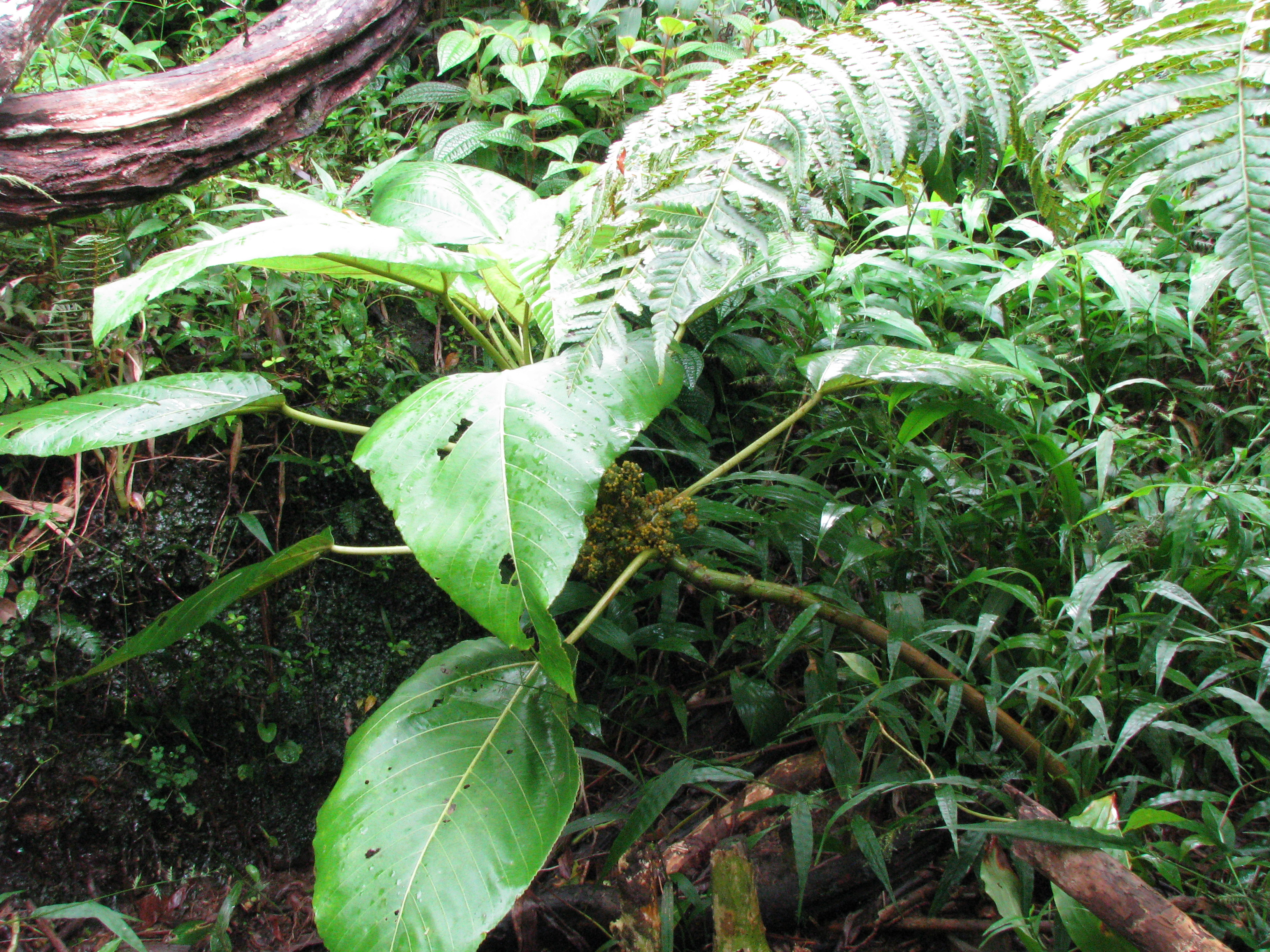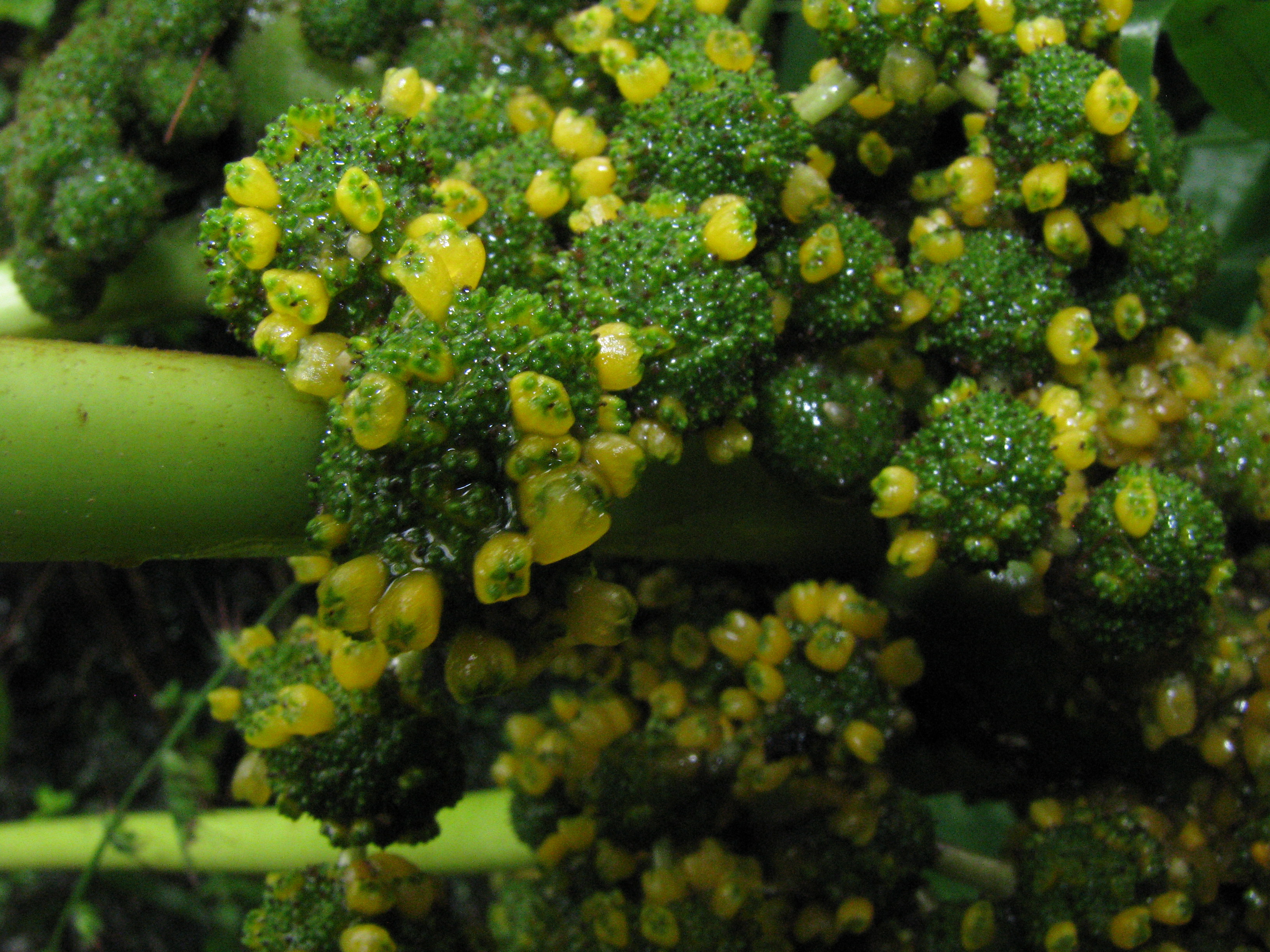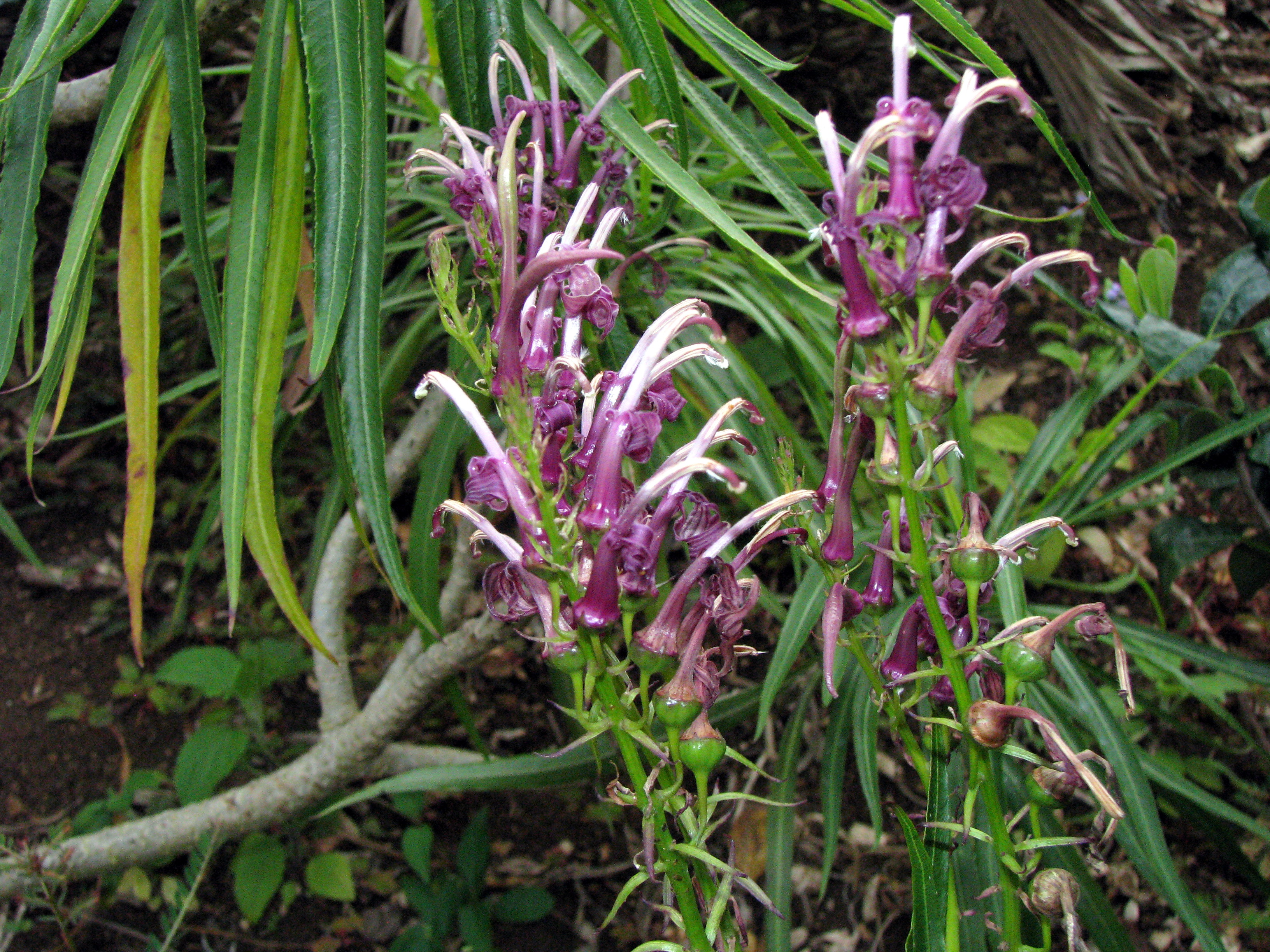
Getting to know your Hawaiian Lobeliads #16: Lobelia niihauensis

Lobelia niihauensis

  • Conservation Status: Rare
  • Distribution: Ni’ihau, Kaua’i, O’ahu (Northern Wai’anae Mts)
  • Date photographed: 8/10/2011
  • *Identification: Form– Stems woody, prostrate, 2-4 dm long. Leaves– Leaves narrowly elliptic or oblanceolate; 7-15 cm long, 0.7-1.8 cm wide; sessile or subsessile. Flower– hypanthium obconical to hemispherical, 2-5 mm long; calyx lobes linear to triangular, 1-5 mm long; corolla magenta, 22-36 mm long, 3-5 mm wide, lobe spirally revolute.
  • Phylogenetic comments: Lobelia niihauensis is thought to be closely related to Lobelia monostachya of the Southern Ko’olau Mts.
  • Links: Smithsonian Flora of the Hawaiian Islands, UH Botany, Native Hawaiian Plants- Lobelia
*From Manual of the Flowering Plants of Hawai’i
Posted in Botany | Tagged , | Leave a comment

Pupukea Redux

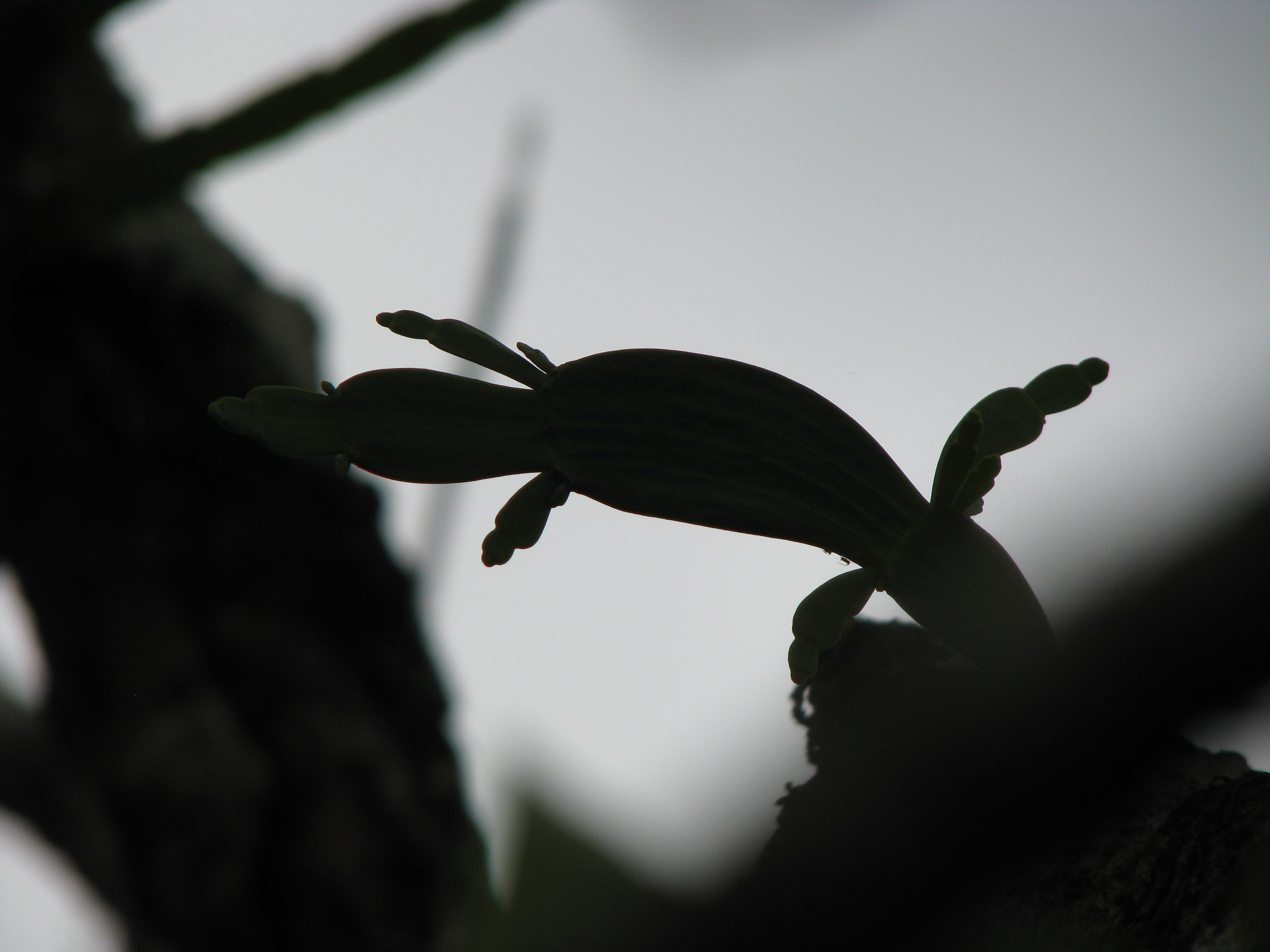
Looking like a lizard...

I had mentioned in my last article about plants that I had seen previously in Pupukea. Only after posting that did I realize that I never uploaded the other half of the Kaunala excursion. Which is a shame because there are some neat plants there that are easy to see. So, after about a 9 month interstitial, here are more plants from the Pupukea area.

Continue reading

Posted in Botany | Tagged , | Leave a comment

Snapshot: Niu Valley’s Papala

Papala (Charpentiera ovata) is still found scattered in many valleys and gulches of Moloka’i, Maui, and Hawai’i. On O’ahu its range is limited to the Southern Ko’olaus. C. ovata is split into 2 different varieties. The more common var. ovata has leaves with the widest point near the base of the leaf.

The other variety, the aptly named niuensis, is only found in Niu and Wailupe Valley. I came across this individual off a side spur of Niu. This population of C. ovata has the widest point near the middle of the leaf lengthwise, giving it a more elliptic overall appearance.

Posted in Botany | Tagged | Leave a comment

Loulu of La’ie

A few weeks back, I had the pleasure of attending Don Hodel’s talk on the native Loulu palms (Pritchardia spp.) found here in Hawai’i. It was highly informative. Mostly, Dr. Hodel focused on the key distinctions between various species. The very next week, as if on cue, the L.I.C.H. Native Plant Initiative was having their Pritchardia hike. Armed with this new found knowledge, I joined them on a hike for Loulus above La’ie.

Continue reading

Posted in Botany | Tagged , | 4 Comments

Snapshot: Gahnia vs. Gahnia

Sedges are a key component of the forest understory. Here, I just wanted to highlight the big difference between 2 native species of Gahnia is Hawai’i. The infloresence for the 2 is quite different. Pictured above is Gahnia beecheyi. It is still a common plant on many trails  on O’ahu. Pictured below is it’s congener, Gahnia aspera.

This was the plant from the Kaunala trail. Notice how much more robust the infloresence is on G. aspera. I don’t believe they are sympatric: G. aspera is typically found in drier areas than G. beecheyi. Keep an eye out for both.

Posted in Botany | Tagged , | Leave a comment

Snapshot: Olona fruit

One of the best feelings when doing restoration work is seeing your efforts paying off. Here, one of the Olona (Touchardia latifolia) has finally come into full infructescence. The Manoa population seems to exhibit some morphological diversity. These mature fruits are a much paler color than usual orange. There are several plants with these lighter colored fruits. Whether there is any genetic correlation for this remains to be seen.


Posted in Botany | Tagged , | Leave a comment

Getting to know your Hawaiian Lobeliads #15: Brighamia insignis

Brighamia insignis

  • Hawaiian Name: Alula
  • Conservation Status: Endangered
  • Distribution: Kaua’i (Napali Coast)
  • Date photographed: 9/30/2011
  • Ease of viewing: Cultivated
  • *Identification: Form– Unbranched stem succulents 1-5 m tall; stems stout, fleshy, thickened toward base. Leaves– Leaves obovate, arranged in a dense apical rosette; 12-20 cm long, 6.5-11 cm wide; sessile to subsessile. Flower– salverform; hypanthium 10-12 mm long, 4.5-7 mm wide; calyx lobes deltate to ovate, 0.2-1 mm long; corolla yellow, tube 7-14 cm long, 0.3-0.4 cm wide, lobes elliptic, 1.3-2.2 cm long, 0.7-1.1 cm wide
  • Phylogenetic comments: The 2 Brighamia species have traits unique among Hawaiian Lobeliads; for a long time they were thought to be a separate colonization. However, studies have shown the genus to be nested normally within the Hawaiian Lobeliad clade; Brighamia and Delissea form a subclade within the group.
  • My notes: The wild populations of B. insignis are highly endangered. Problems such has ungulate browsing, over collection, landslides and hurricanes have reduced the wild populations down to perhaps 1 in the wild. B. insignis does well in cultivation. The individual above is one such cultivated plant.
  • Links: Brighamia insignis SGCN (pdf), Smithsonian Flora of the Hawaiian Islands, UH Botany, Native Hawaiian Plants- Brighamia, Brighamia insignis 5- year review (pdf)
*From Manual of the Flowering Plants of Hawai’i
Posted in Botany | Tagged , | Leave a comment

Book Review- The Information: A History, A Theory, A Flood

If there was a silver lining to the demise of the Border’s bookstores, it’s the new books that I was introduced to during their liquidation sales. One of those books was The Information: A History, A Theory, A Flood, by James Gleick. I was expecting it to be a thought provoking book (which it was). I just didn’t realize how much fun I would have reading it.

Continue reading

Posted in Random | Tagged , , , , , | 1 Comment

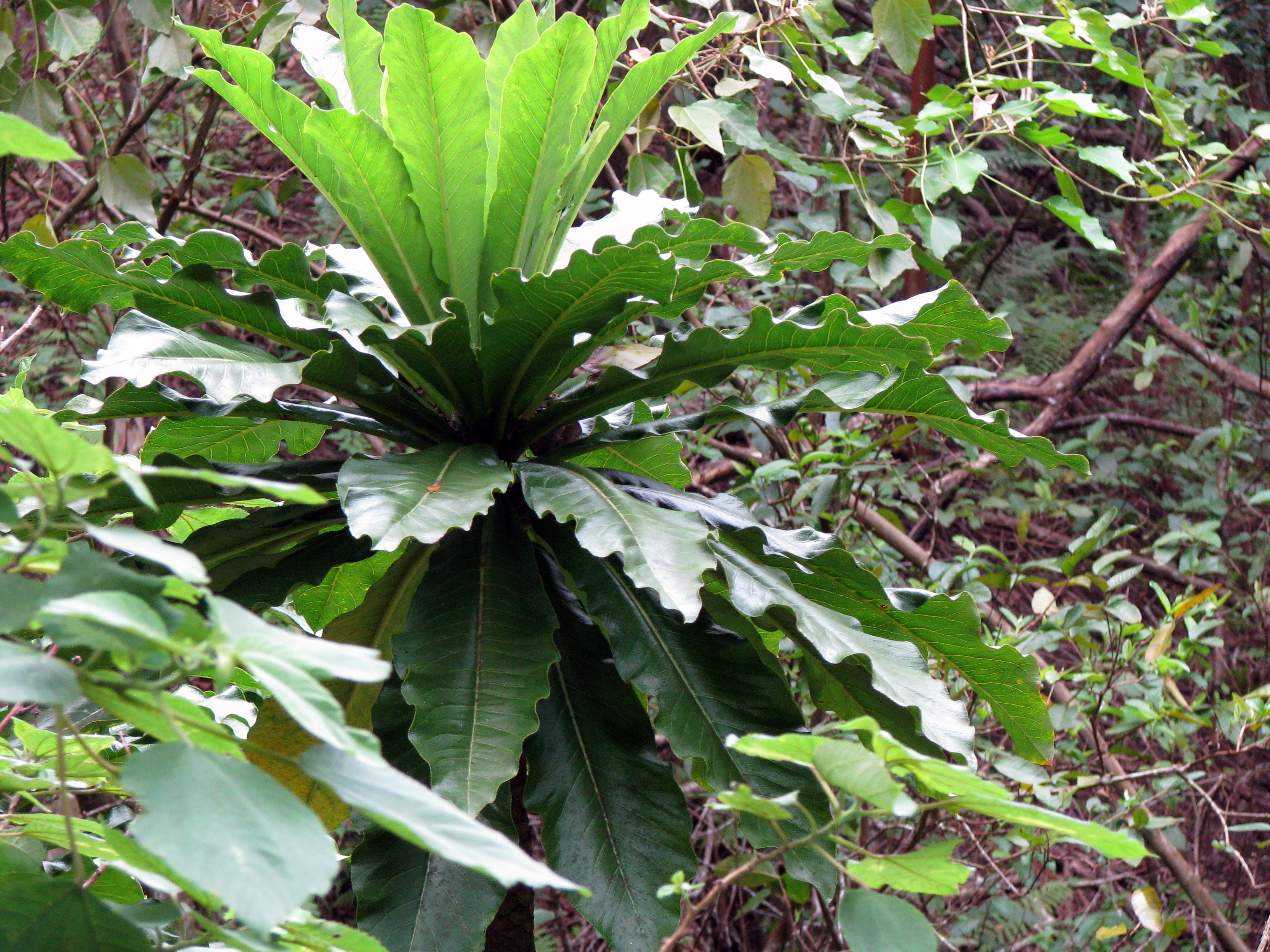
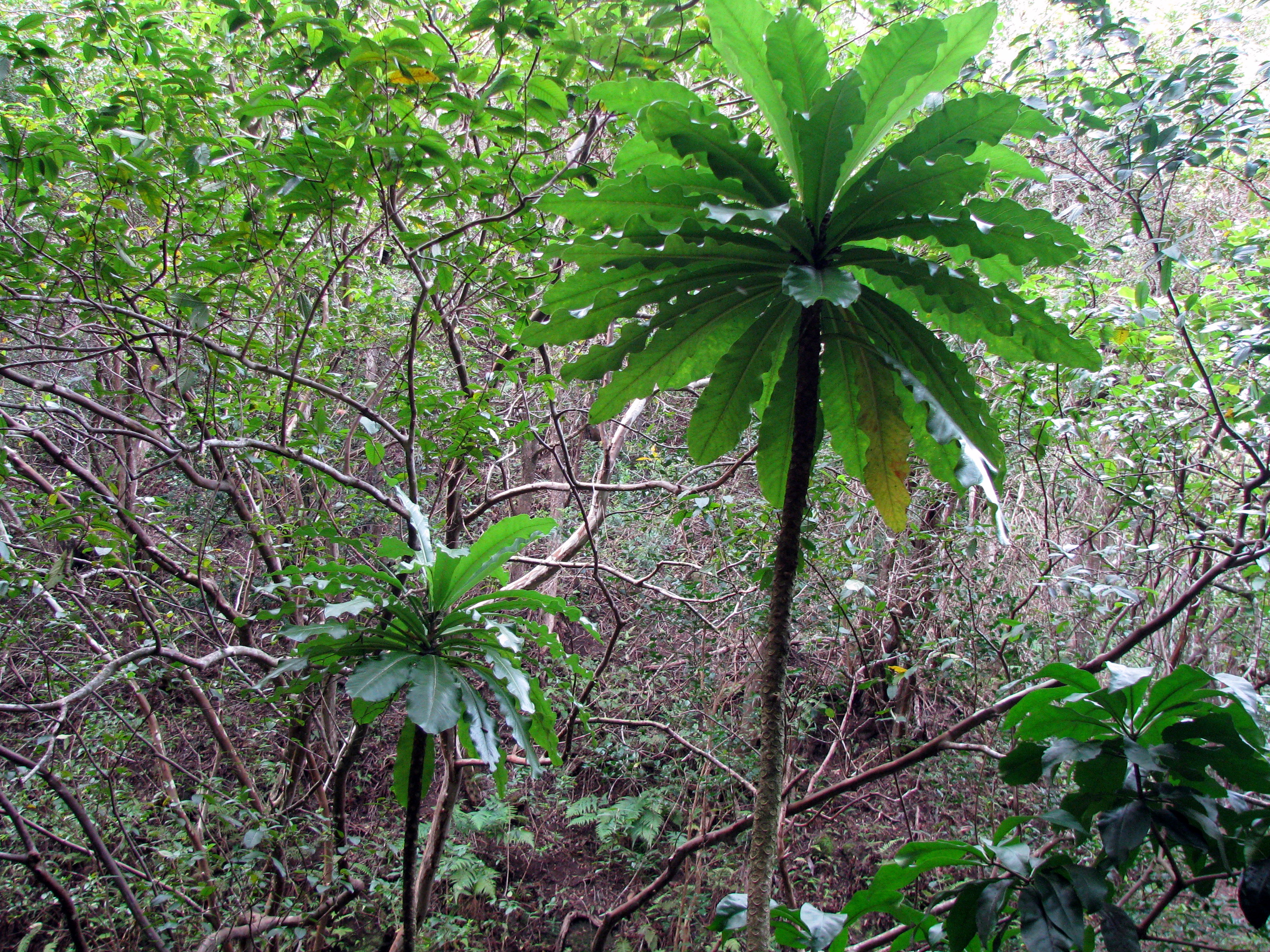
Getting to know your Hawaiian Lobeliads #14: Cyanea superba

Cyanea superba


  • Hawaiian Name: Haha
  • Distribution: O’ahu (Northern Wai’anae Mountains)
  • Date photographed: 2/5/2011
  • Ease of viewing: Moderate
  • *Identification: Form– Palm-like trees 4-6 m tall. Leaves– oblanceolate, blades 50-100 cm long, 10-20 cm wide; margins callose-crenulate; petioles 5-8 cm long. Flower– hypanthium obconical, 10-16 mm long, densely pubescent; calyx lobes narrowly oblong, 6-16 mm long; corolla whitish or cream with purple veins, 55-80 mm long, 7-11 mm wide, densely pubescent, tube curved.
  • Phylogenetic comments: Cyanea superba is split into 2 subspecies: subspecies superba found in the northern Wai’anaes and subspecies regina found on the opposite end in the southern Ko’olaus.
  • My Notes: The Wai’anae population is still extant; there is a nice exclosure next to the Mokule’ia trail with several mature specimens. The Ko’olau population, however, might be extinct. The last individual was known from Pia Valley and last seen in the 1960’s.
  • Links: Cyanea superba SGCN (pdf), Smithsonian- Flora of the Hawaiian Islands, UH Botany, Native Hawaiian Plants- Cyanea, US Fish and Wildlife Cyanea superba 5-year review (pdf)
  • Additional Pics:


Posted in Botany | Tagged , | Leave a comment

An ode to Football with musings from Jaws

It’s that time of year again, when football is welcomed from it’s long respite. Sunday plans are altered, office bets are made and we take our rightful place on couches across America to watch 22 guys battle and battle. I got ready for this season by reading Ron Jaworski’s cool book Games that Changed the Game: The Evolution of the NFL in Seven Sundays.

Continue reading

Posted in Random | Tagged , , , | Leave a comment