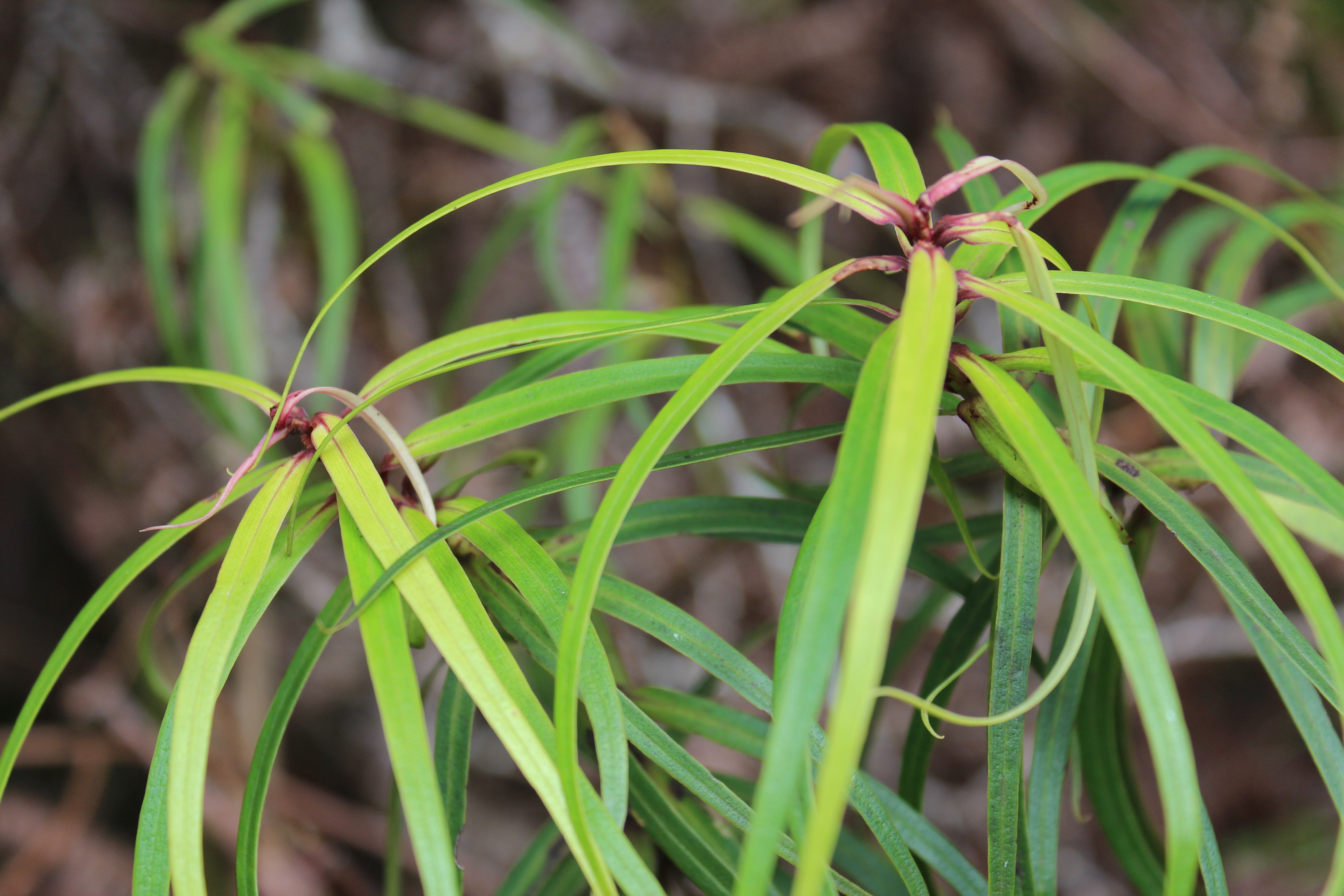
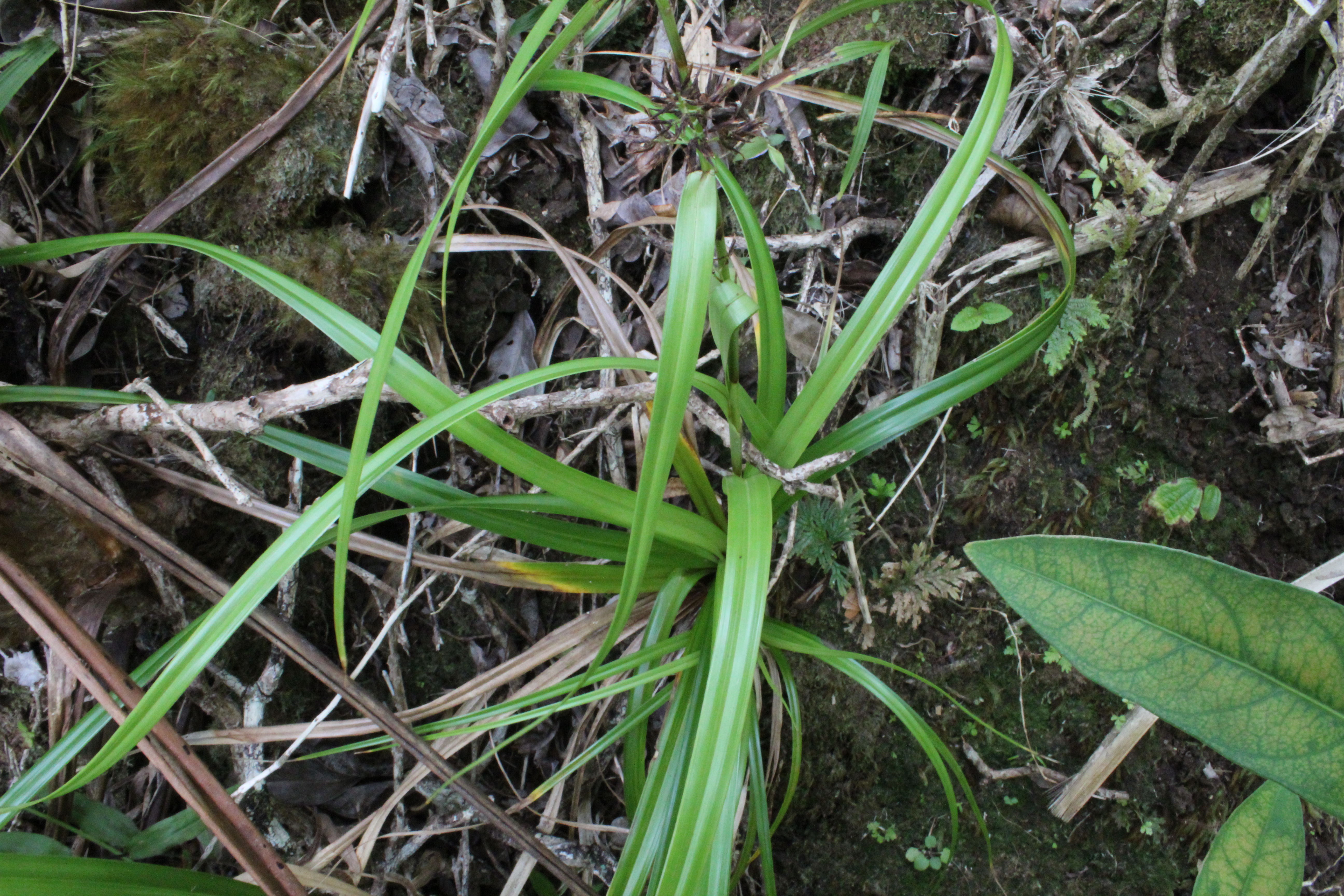
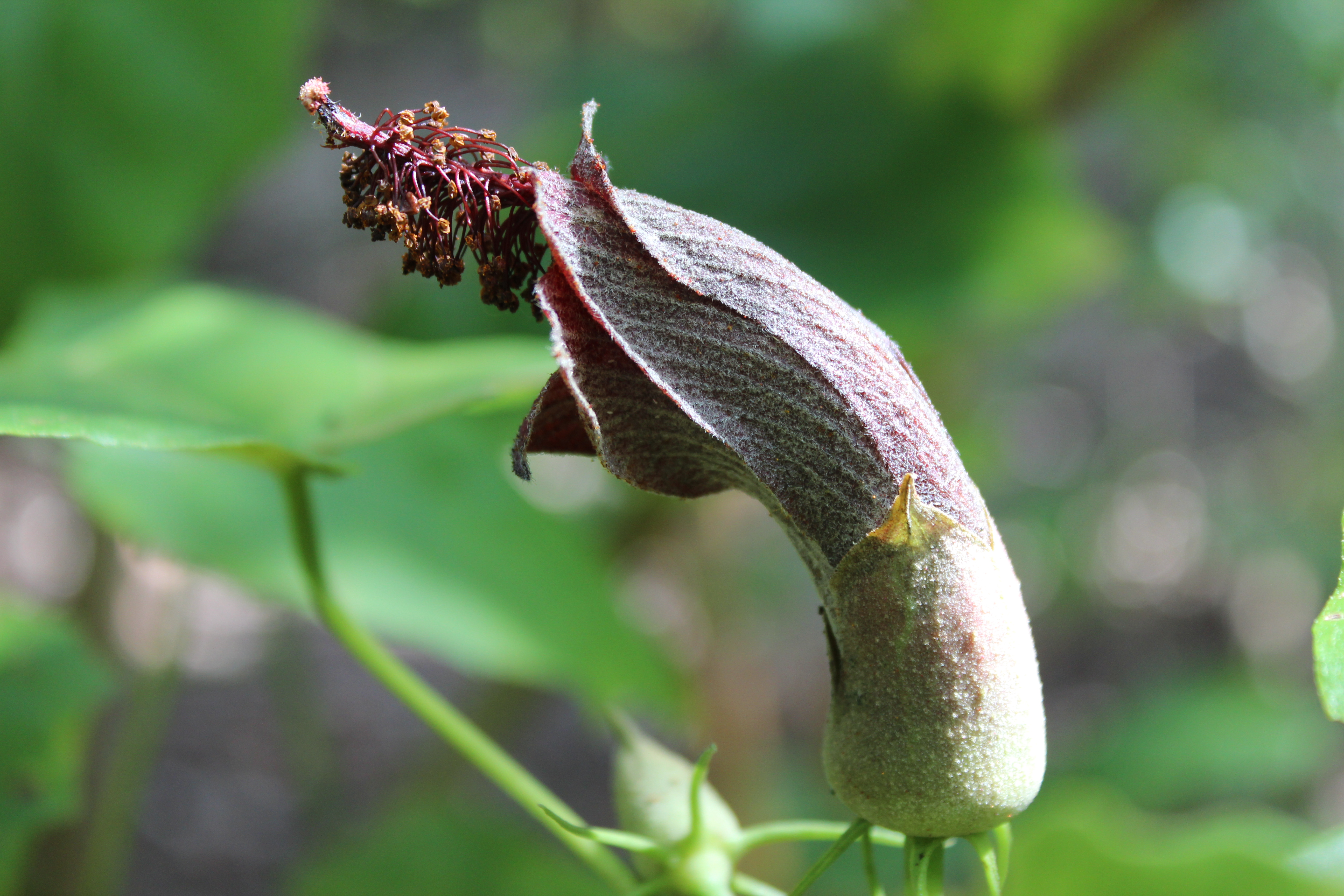
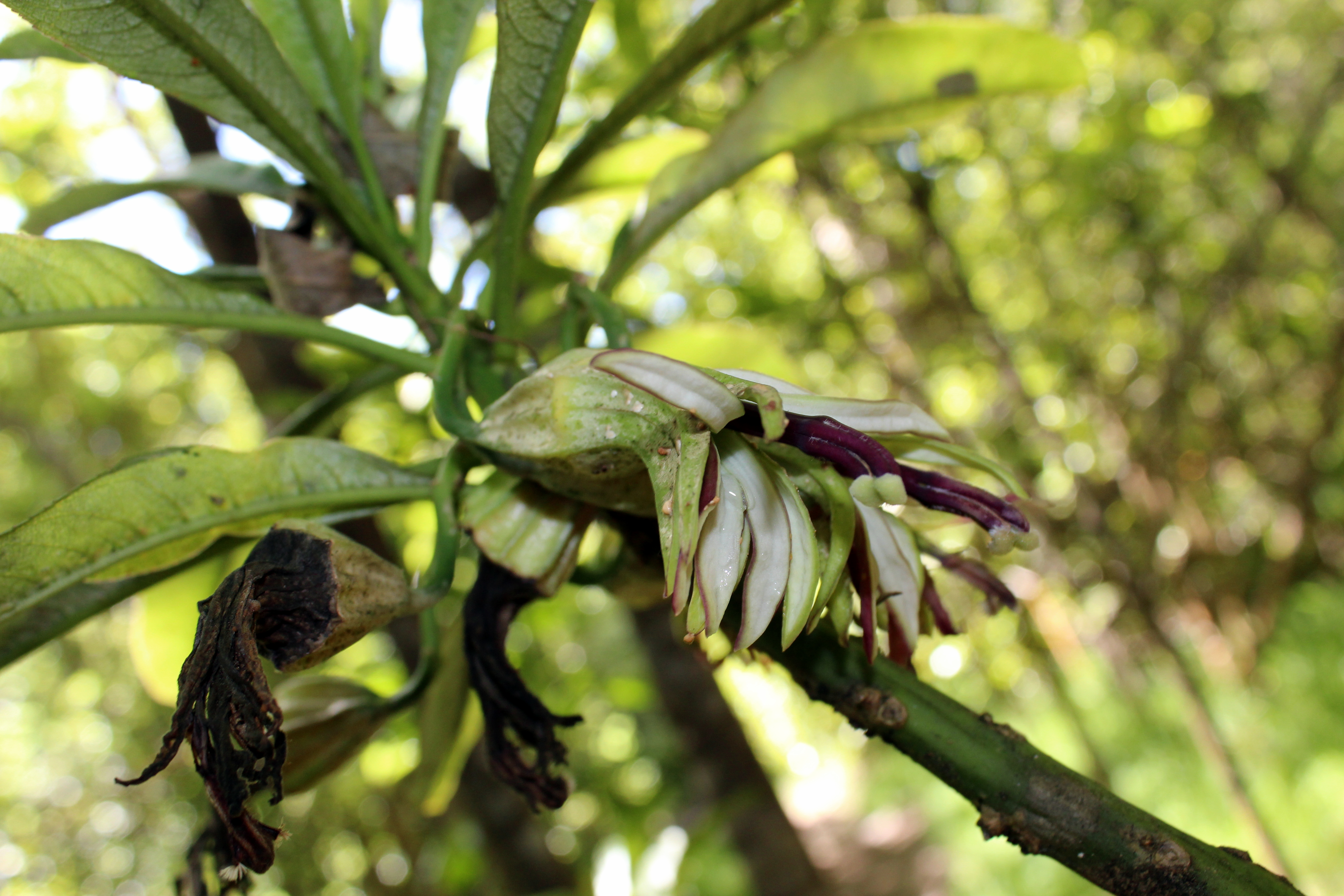
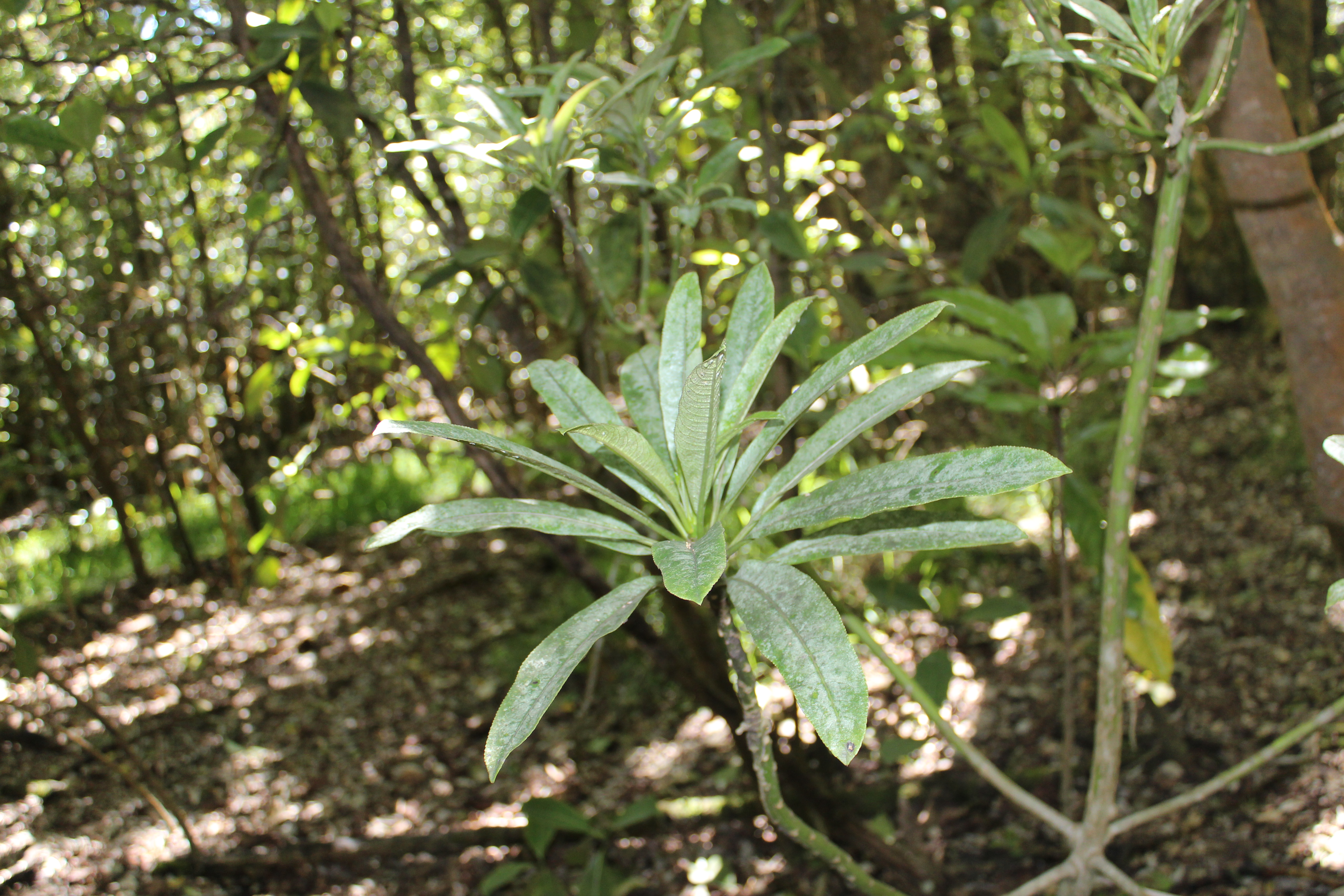
Getting to know your Hawaiian Lobeliads #22: Clermontia hawaiiensis

Clermontia hawaiiensis

  • Hawaiian Name: Oha kepau, Oha wai nui
  • Conservation Status: Vulnerable
  • Distribution: Hawaii (Puna & Kau District)
  • Date photographed: May 28, 2012
  • *Identification: Form– Shrubs 1.5-9 m tall Leaves– oblong to oblanceolate; blades 9-24 cm long by 2.5-6.5 cm wide; margins callose-crenulate; petioles 2-7 cm long. Flower– hypanthium obconical, 17-22 mm long, 11-18 mm wide, prominently 10-ridged; perinath greenish-white, 50-65 mm long, 9-18 mm wide
  • My notes: Something that I missed the first time I went to Kipuka Puaulu, several C. hawaiiensis have been outplanted along the trail. They weren’t looking the healthiest, and judging from the commentary on flickr, these plants haven’t been looking the best for a little while.
  • Links: Smithsonian Flora of the Hawaiian IslandsUH Botany, Native Hawaiian Plants- Clermontia, Flickr -Clermontia hawaiiensis
  • Additional Photos:

*From Manual of the Flowering Plants of Hawai’i
Posted in Botany | Tagged , | Leave a comment

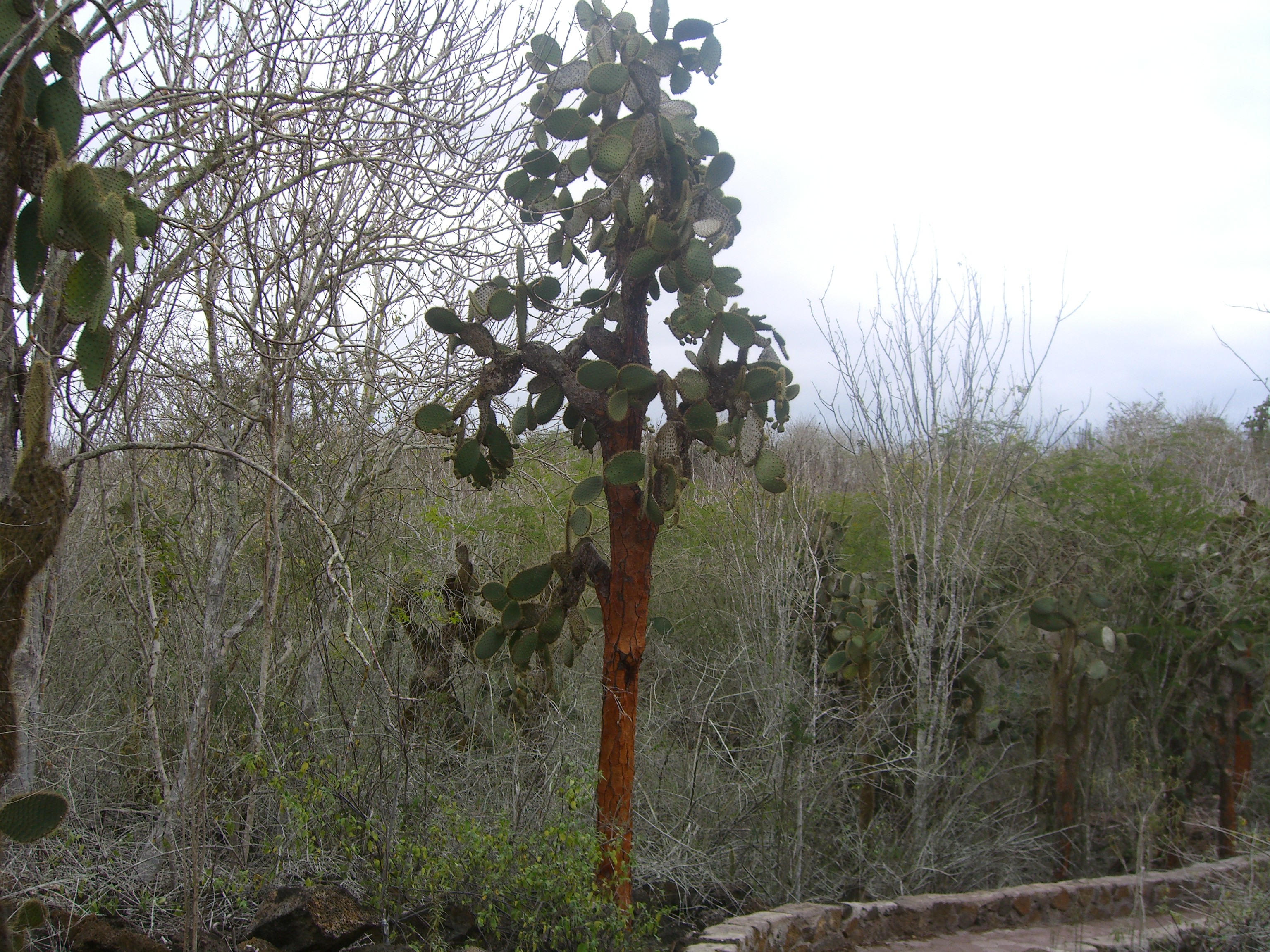
Snapshot: Galapagos Tree Opuntia

When I went to the Galapagos Islands back in 2006, I had not become interested in botany yet. Still, when I saw this arborescent Prickly Pear (Opuntia echios subsp. gigantea?) I was impressed enough to take a picture. It seems arborescence in prickly pears evolved because of browsing pressure from herbivorous giant tortoises. They were common in the forests outside of Puerto Ayora. I finally got around to retrieving these photos from my older, dead laptop; more pictures from this great trip shortly…

Posted in Botany | Tagged , , | 1 Comment

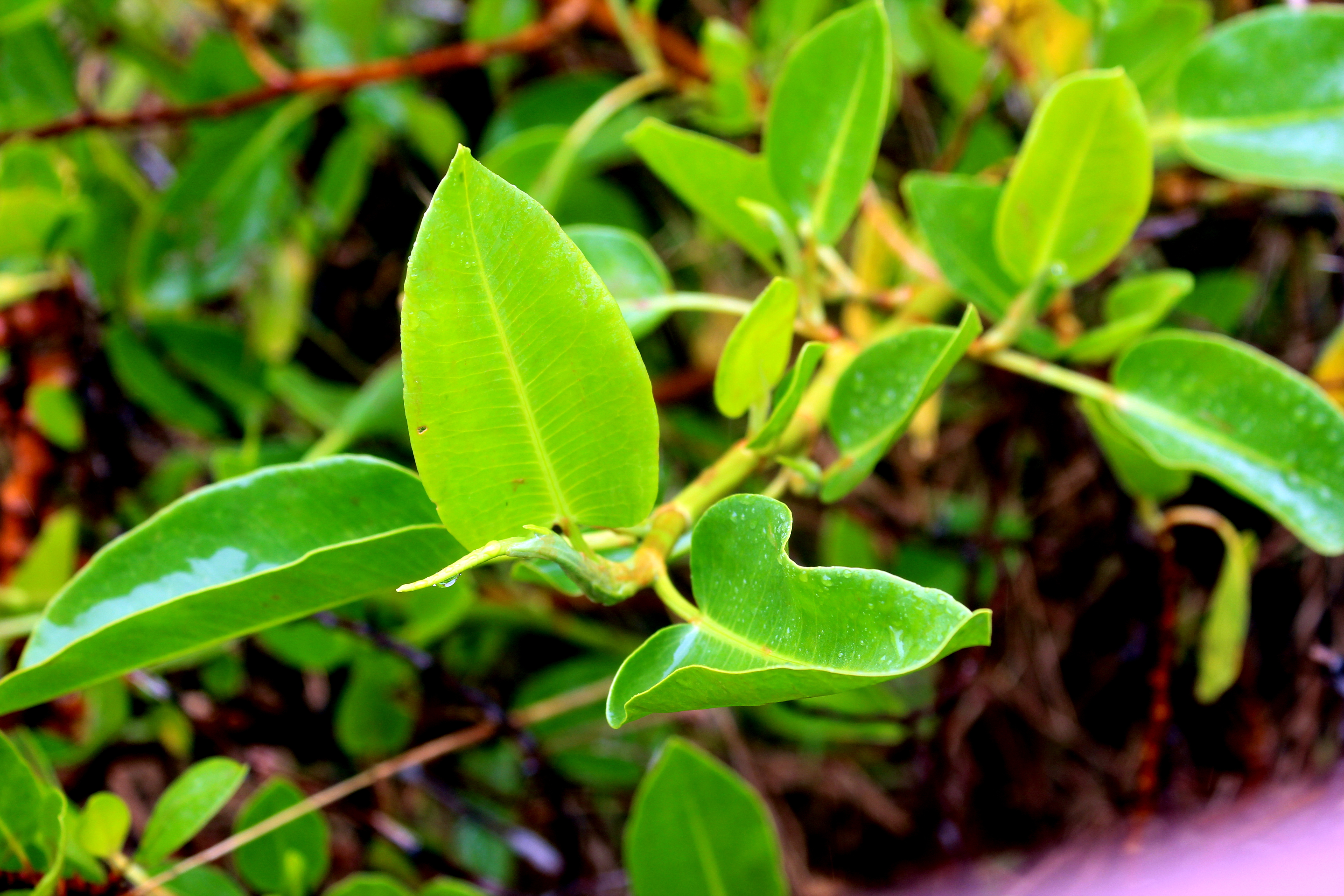
Intro to the plants of Thurston Lava Tube

If you’re brand new to the Native Hawaiian plant scene and happen to be on the Big Island, please check out the Thurston Lava Tube. It is an easy way for someone to get an idea of what native forests are like. That idea is absolute wonderment by the way…
Continue reading

Posted in Botany | Tagged , | Leave a comment

Snapshot: Pawale

Here’s a neat Big Island endemic. Native Rumex are not found throughout the state. Pawale (Rumex skottsbergii) is even more localized. It’s only found in the Kona, Puna, and Kau Districts of the Big Island. Luckily in its habitat, it is a very common plant. Pawale is very easy to see as one of the pioneering species on lava flows. We found many along the Chain of Craters Road in Volcano National Park.

Posted in Botany | Tagged , , | Leave a comment

Getting to know your Hawaiian Lobeliads #21: Clermontia parviflora

Clermontia parviflora

  • Conservation Status: Apparently Secure
  • Distribution: Hawaii (Kohala Mts; Windward slopes of Mauna Kea & Mauna Loa)
  • Date photographed: 4/29/2012
  • Ease of viewing: Extremely Easy
  • *Identification: Form– Terrestrial or epiphytic shrub 1-3.5 m tall. Leaves– elliptic or oblanceolate, 6-18 cm long, 1.5-5.5 cm wide; petioles 1.5-5 cm long. Flower– hypanthium turbinate to obovoid, 5-8 mm long, 3-5 mm wide; perianth green, purple, or white externally, white or pale purple within, 15-28 mm long, 3-5 mm wide, tube suberect.
  • Phylogenetic comments: The genus Clermontia has an interesting natural distribution; it becomes more speciose from older to the younger islands. Kauai only has Clermontia faurei, while C. parviflora is one of at least 11 species found on the Big Island.
  • My notes: This was the first lobeliad that I encountered on the Big Island. It seems like a much smaller and more scandent plant overall than the Clermontia spp. I’m used to on Oahu. This is by far the most easily accessible native lobeliad that I’ve come across: just drive up to the Thurston lava tube and there is a nice healthy population right at either entrance. No 4 hour hike to a summit needed!
  • Links: Smithsonian Flora of the Hawaiian Islands, UH Botany, Native Hawaiian Plants- Clermontia

*From Manual of the Flowering Plants of Hawai’i

Posted in Botany | Tagged , | Leave a comment

Snapshot: Tarictic Hornbill

I’ve previously shown some of the mammals that are native members of the Philippine fauna. But probably the most conspicuous elements are the birds. It’s a very large and diverse assemblage.

Take this Tarictic Hornbill (Penelopides samarensis) that I grabbed a shot of in Bohol. The hornbills in the Philippines have a nice representation with several different lineages. The Penelopides genus itself is a near endemic with one species (P. exarhatus) found in Suluwesi.

Like many birds in the Philippines, Tarictic Hornbills populations have been deceasing. Hunting for meat and the wildlife trade have taken their toll. And of course, there’s the greater issue of habitat destruction. Hard to live in a forest with no trees…

Posted in Animals | Tagged , | 4 Comments

Snapshot: Metrosideros macropus

One of the more divergent taxa of Ohia (Metrosideros spp.) on O’ahu is M. macropus. Here is one of the red flowered form found on Lanihuli. Aside from the bigger leaf and longer petiole, M. macropus is also distinctive in having these strange, persistent bracts and leaf buds that are somewhat sticky. Thanks to Dr. Stacy for pointing this fact out!

Posted in Botany | Tagged , , | 2 Comments

Studia Mirabilium article template

Insert picture here.

Blah Blah Blah Amazing Blah Lobeliad! Blah Blah Blah Blah Awesome! Blah Blah Awesome!! Blah Blah Awesome!!!! Blah Blah Cyanea! Trematolobelia! Blah Blah Blah Blah

Blah Blah Super Awesome! Blah Blah Gnarly! Blah Blah Depauperate 😦 Blah Blah Petiole Blah Blah Blah I’m not sure what this is Blah Blah Blah Clermontia! Blah Blah Blah Ko’olau iz da roxxorz! Blah Blah Blah

!!!! … Blah

Posted in Random | Leave a comment

Gems of Nuuanu

Today’s short post will highlight some of the neat plants we came across hiking the many nooks and crannies of Nuuanu Valley. Even though it is bisected by the Pali Hwy, the plant life is still pretty diverse.

Continue reading

Posted in Botany | Tagged , , , , | 1 Comment

Mahalo Dr. Hume!

The long line at the Kapalama post office on a Saturday morning was absolutely worth it; today I received my copies of Hume and Walters’ Extinct Birds. I’ve been reading it all day and it’s wonderful! It is a great primer on just about every bird species and subspecies that went extinct in *historical times.

*historical in the broad post glacial sense. Some species are only known from subfossils.

The text is thoroughly researched and to top it off, Dr. Hume’s line drawings add so much to the book. I’ve read many technical descriptions of extinct birds but there are some species in the book that I’ve never seen illustrated before. The stout-legged wren (Pachyplichas yaldwyni) was particularly endearing.

While it’s a shame that Hawai’i is so well represented in this book, I hope it helps us treasure the few remaining avian endemics we have left.

On a personal note, I’d like to thank Dr. Hume for the awesome line drawings he added in each copy. The O’ahu Stilt Owl (Grallistrix orion) never looked so regal!

You can find copies available on amazon.com. And check out Dr. Hume’s website at julianhume.co.uk.

Posted in Natural History | Tagged , , | 2 Comments