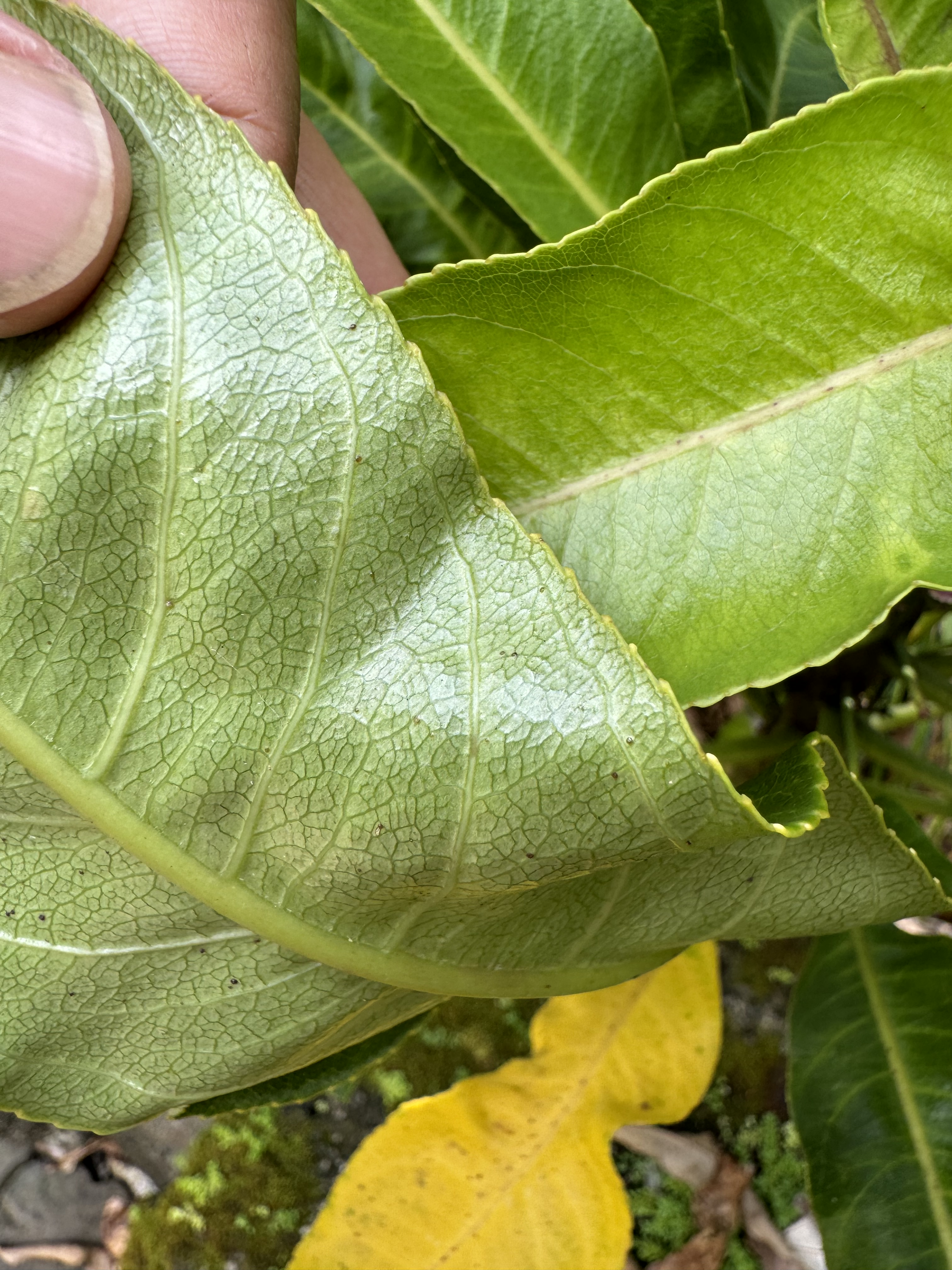
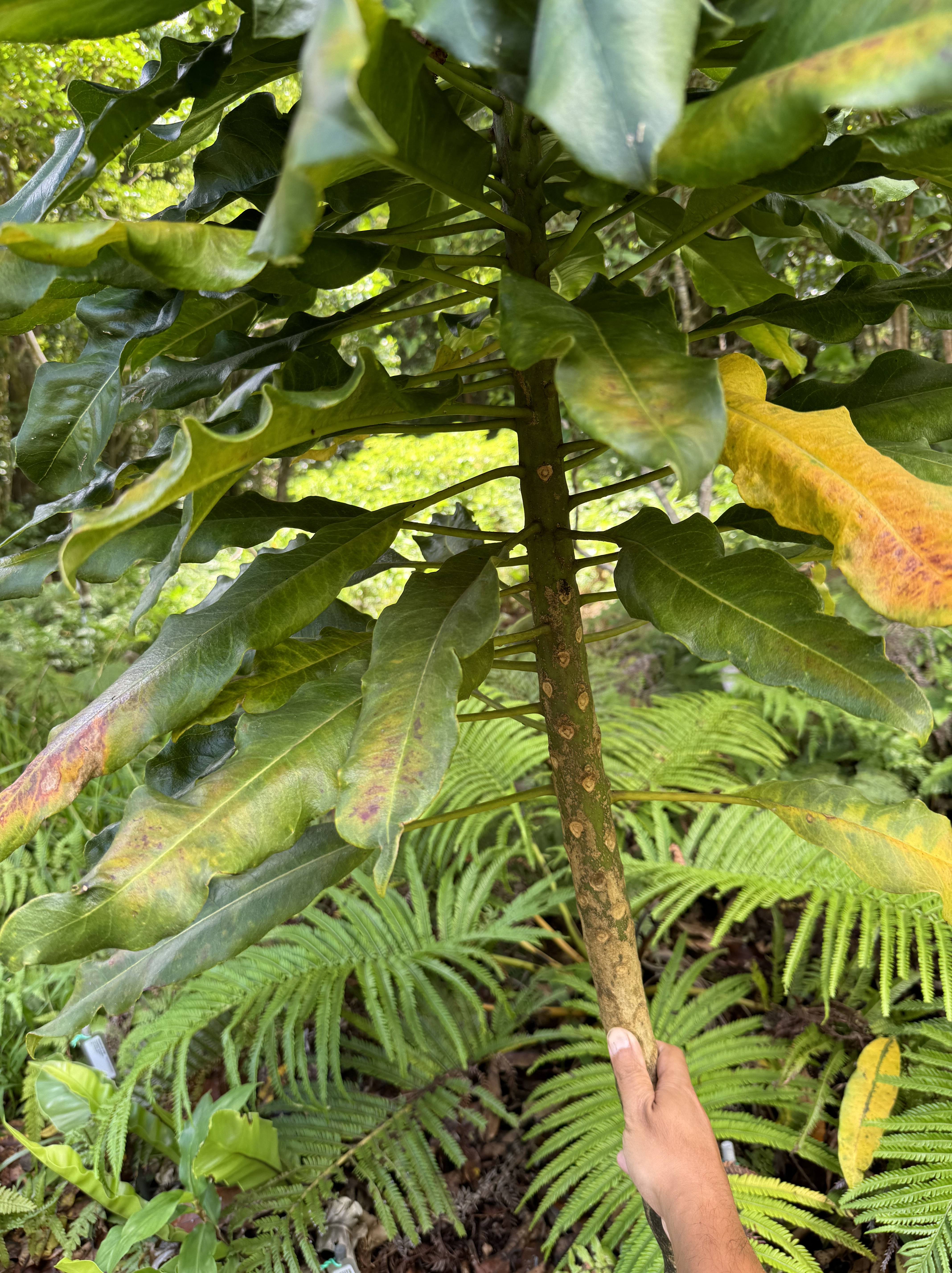
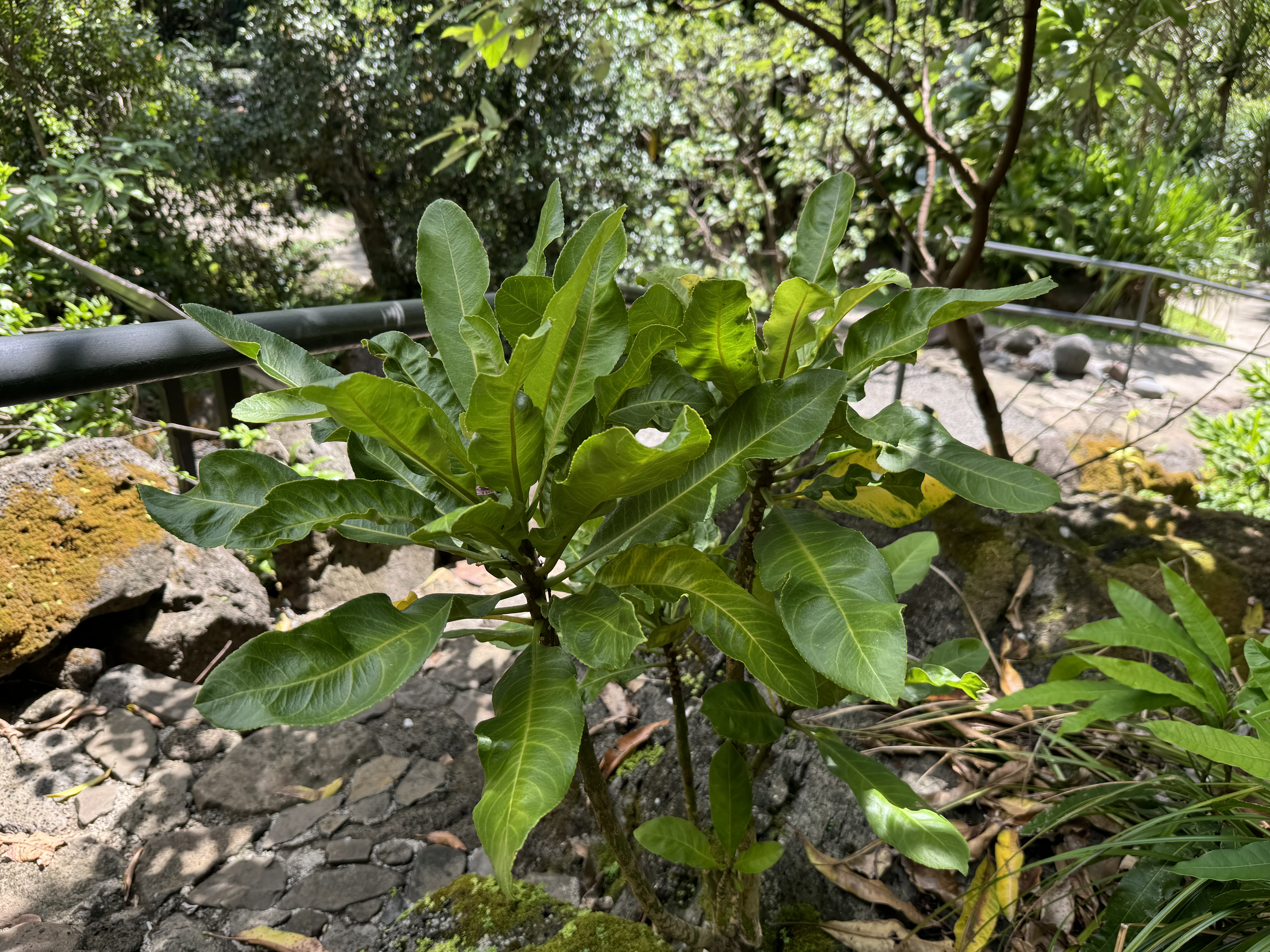
Identification: : Form– Unbranched or sparingly branched shrubs 2.5-3 m tall Leaves– oblong to oblanceolate, blades 20-38 cm long, 6-12 cm wide, glabrous Flower– calyx lobes dentiform, 0.5-1 mm long, pubescent on margins; corolla white tinged purplish, 20-25 mm long, 2-3 mm wide
Phylogenetic comments:2022 update — C. coriacea is the species used to name the Coriacea clade within the purple fruited Cyanea. The clade itself is thought to be of hybrid origin between the Angustifolia clade and the Pyrularia clade. This clade seems to have undergone a rapid speciation, with many species all endemic to the island of Kaua`i.
My notes: I’ll probably do a post shortly on my trip to Limahuli Gardens but one species that has been planted there is this gorgeous member of the purple-fruited clade. The staff has planted numerous specimens throughout the gardens grounds, making this one of the easier native lobeliads for the general public to see. Even though I know in my mind that the purple-fruited Cyanea spp can be found in drier habitats than the orange-fruited clade, it still throws me off to see them at such low elevation as the garden grounds proper. Making the trip to the gardens is always worth it in my book, the fact that you might be able to spend quality time with species such as this is just a lovely bonus.
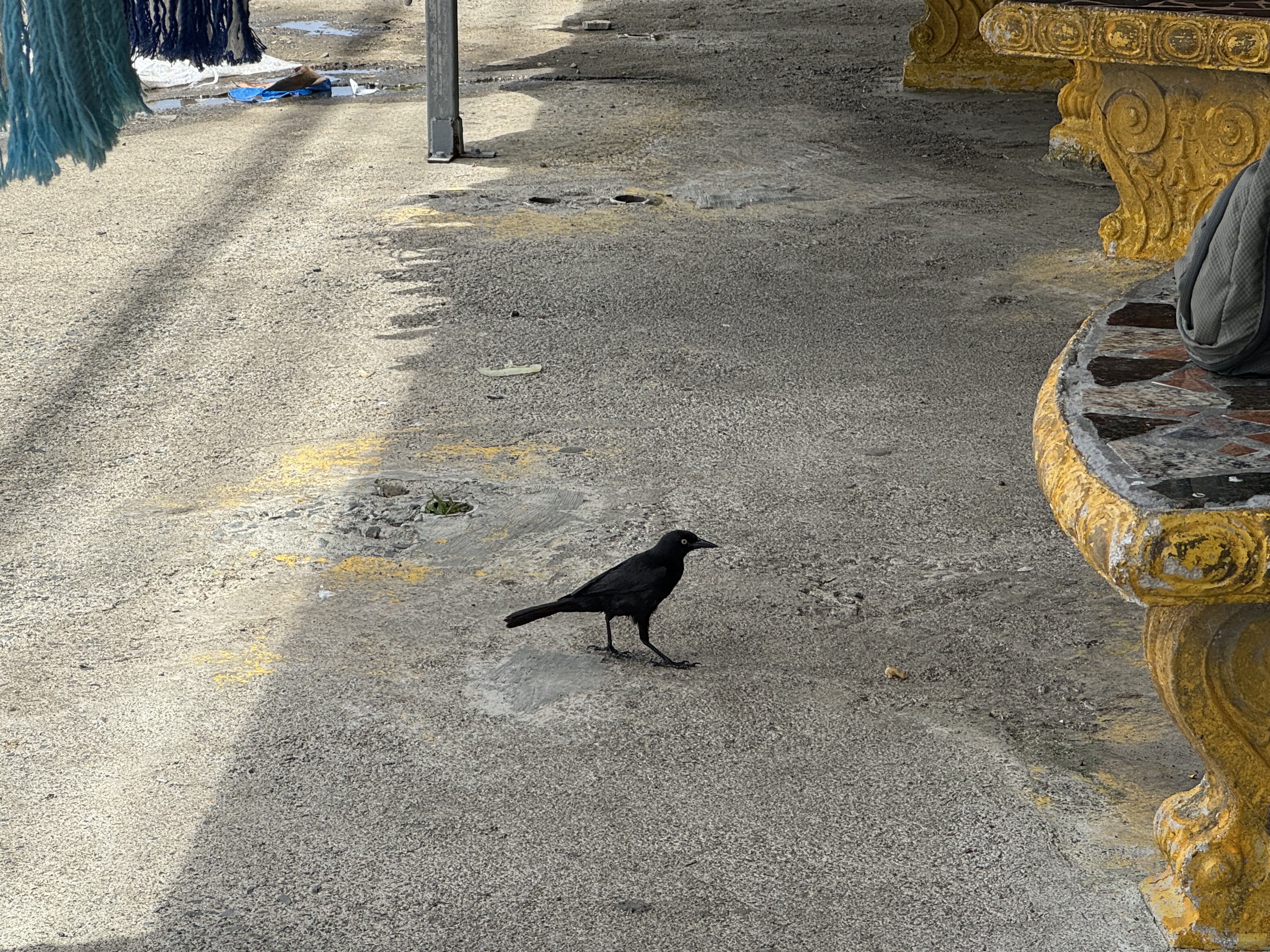
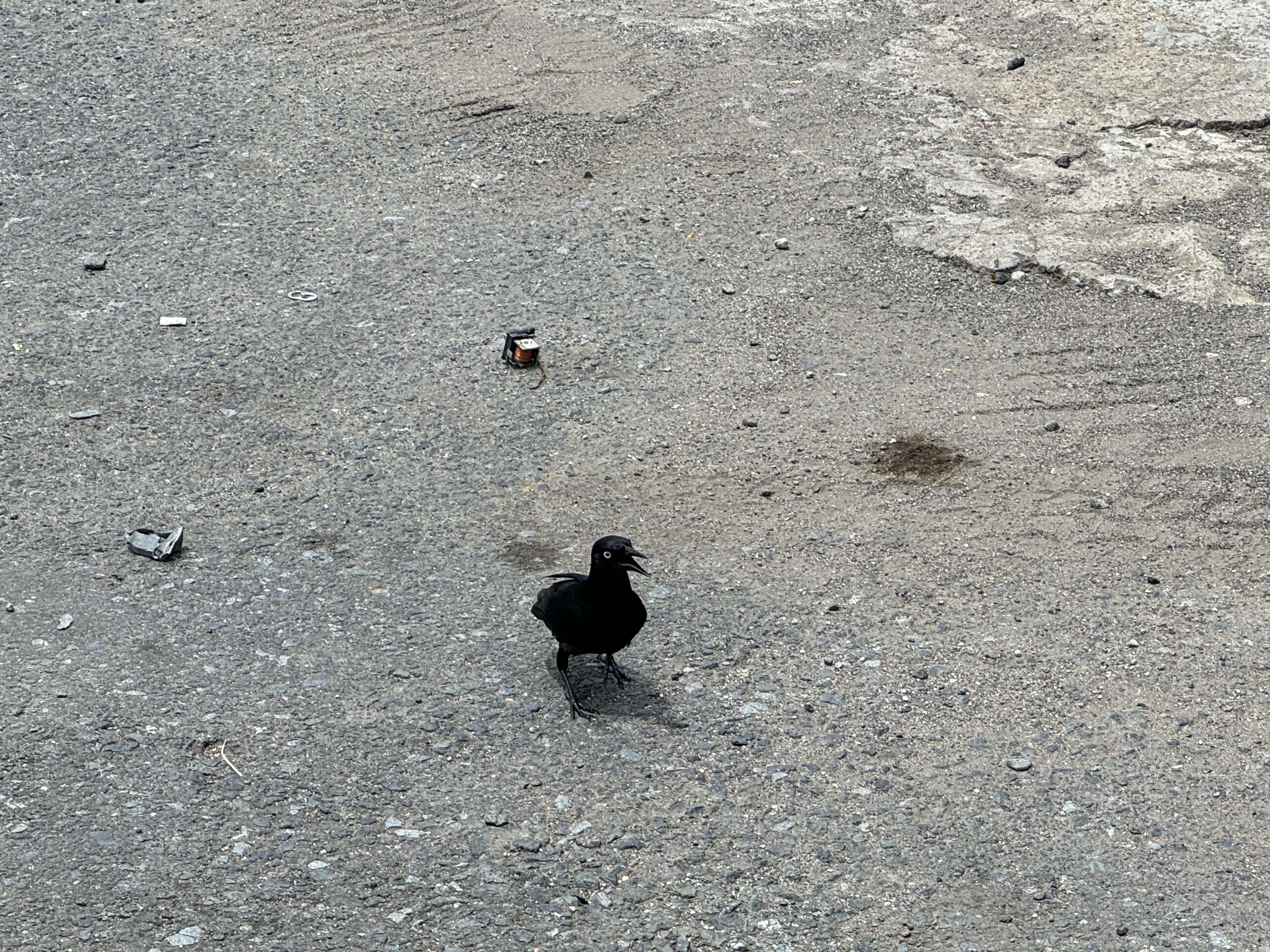
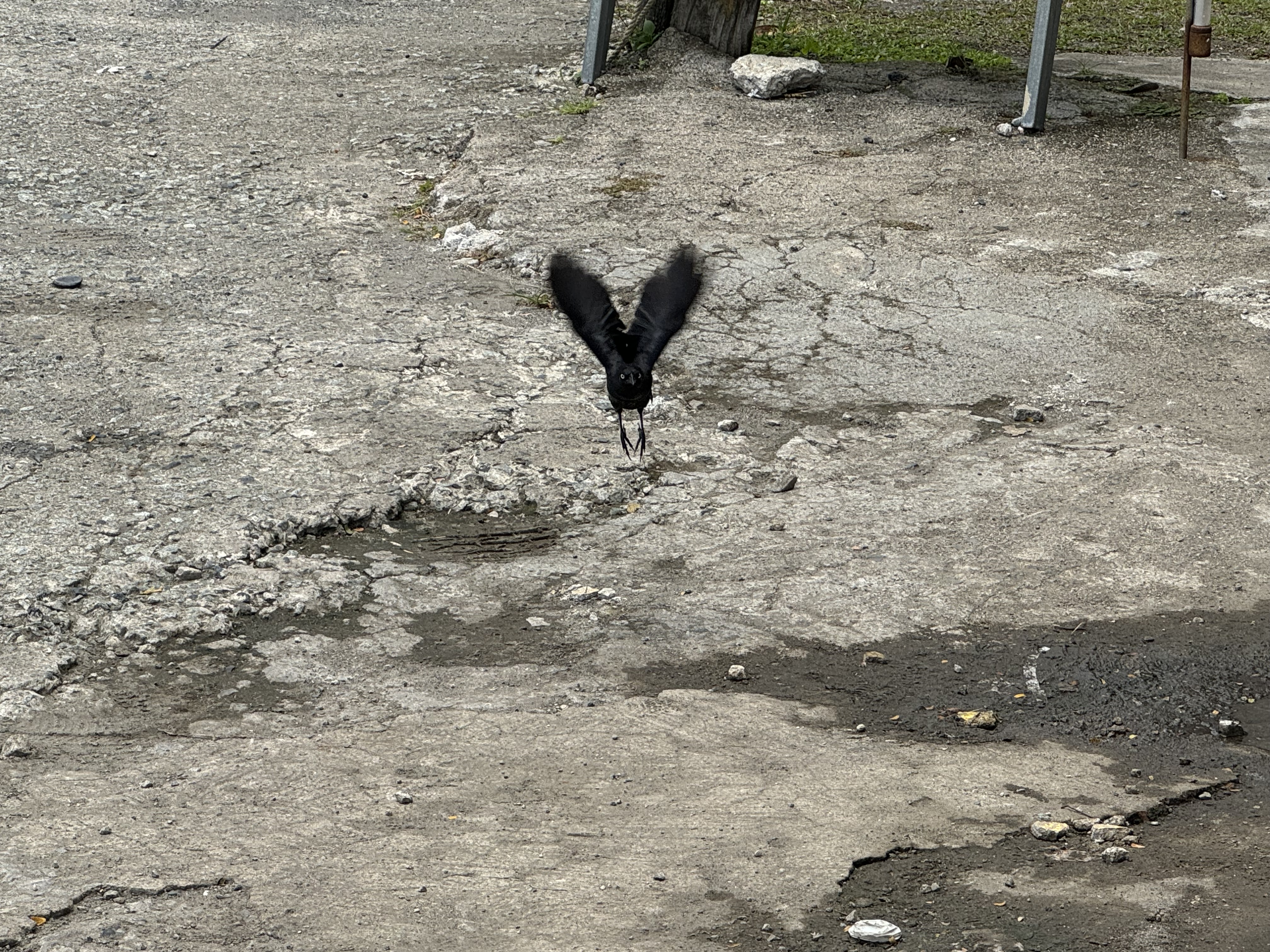
Many species of grackles (Qusicalus spp) have adapted fairly well to the human landscape. I came across them in large numbers in and around San Antonio a few years back. Here on my trip to Puerto Rico it was no different. Greater Antillean grackles (Q. niger) were quite common at roadside stops.
Tonight the role of Aidemedia will be played by:
They are common enough that I doubt the average person gives them a second thought. Or if anything, considers them a nuisance. What I find interesting is they kind of allow one to have a glimpse of Hawai`i of long ago. For it seems one of the extinct Hawaiian honeycreepers evolved into something akin to a grackle like bird.
The bird family Icteridae which grackles are part of, share a trait called “gaping”. Certain skeletal processes are hypertrophied allowing these birds to open their bills with some force. These adaptations in the bill morphology are thought to aid in a feeding strategy where the birds can probe into a substrate and pry it open with their bills to aid in finding food.
One lineage of honeycreeper (Aidemedia spp) seems to have also evolve a bill to allow gaping. These birds are thought to have at least evolved a feeding strategy fairly similar to icterids like the grackles pictured above.
And unfortunately because they are extinct we don’t know what else if anything is similar to a grackle. Hawaiian Aidemedia seems to have gone extinct before Europeans were able to document them so we really can’t say if grackles would be a good analogue for them or not. Certainly there are some similarities. It’s a shame though, if they were similar to modern grackles would they have adapted to the modern world just as readily if they survived?
So while I was appreciated being able to observe Puerto Rican avifauna up close, I couldn’t help but think of another island chain in another ocean and the birds that were once around. When I look at these non-descript photos of the side of the road with a common bird, I can’t help but think of a similar scene at the North Shore shrimp trucks on O’ahu, dream of a alternate future and smile.
While we’ve been lucky to have an intimate knowledge with olonā, there is so much more to this plant that I’m not familiar with, especially culturally. I’ve been lucky to be part of a project to bring more attention to this plant and the people that value it. To find out more information and to support us here’s a link
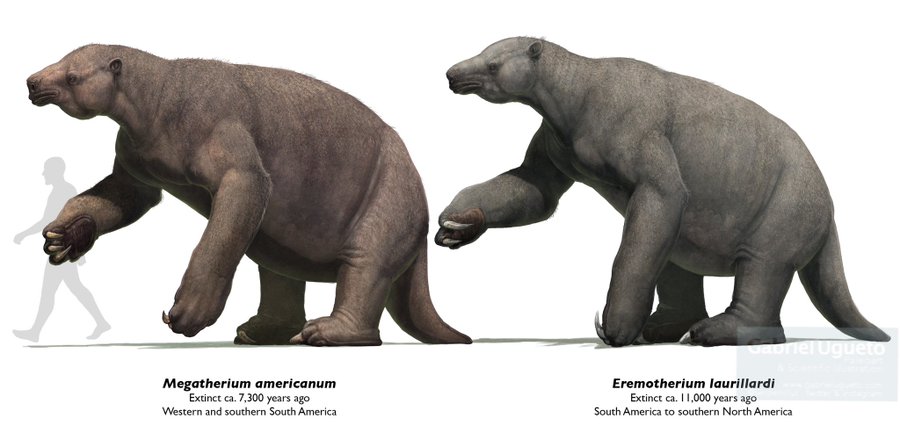
First of please check out Gabriel Ugueto’s artwork. He is an amazing paleoartist that brings to life many obscure taxa one hardly finds quality images of. You can check out his twitter here and his facebook page here
I made a comment on this recent piece he did of two late Pleistocene giant ground sloth taxa that made me pause. People when considering extinct animals typically related it back to something they may already be familiar with. Sabertooth as some sort of large cat, Mammoths are some type of elephant, even an odd-ball like the giraffid Sivatherium can be thought of as some sort of moose-like creature.
For me, I really struggle with imagining the largest of the ground sloths as living breathing animals. For one, their closest living relatives (tree sloths) inhabit such different niches it’s hard to extrapolate behavior from them. No current ecosystem has animals quite like giant ground sloths. Gorillas? Pandas? Perhaps, but even then Megatherium was approaching the size of elephants. Just imaging elephant size pandas or gorillas is strange enough, let alone these extinct beasts.
Were these solitary creatures? Were they social? How were their metabolic rates versus tree sloths? It really breaks my brain to think of a living giant ground sloth.
And yet, for as mysterious as they may be to me, ground sloths died out so recently that for all intents and purposes, they are modern taxa. Many landscapes have living plant taxa that are were shaped by the selective pressures giant ground sloths wrought. These strange animals are geologically and in many ways ecologically speaking are our contemporaries.
Again, like my post on 1884 and deep time conservation, my intimacy with the past informs and shapes my current desires with conservation. I’m lucky to live in a place with taxonomic weirdos. Birds with multi-tools for a beak, arborescent lobelias, damselflies that lay their eggs on land. If these native Hawaiian taxa went extinct, some of them are so novel that it could be difficult to reimagine them as living breathing things. Those brain breaking sloths might be gone, but I will do what I can to make sure these strange Hawaiian plants and animals don’t suffer the same fate. Where one doesn’t have to imagine what they might have been like, one can just visit them and bask in their presence.
Hawaiian damselflies are another neat radiation of invertebrates here in Hawai`i. They evolved to exploit some niches and habitats that aren’t readily available to them elsewhere. Most damselfly elswhere in the world are aquatic, but some occupy other niches here. In this species (Megalagrion koelense), the nymphs live in the leaf axils of `i`e`i`e (Frecynetia arborea). Not being tied to permanent water sources can allow this species to exploit more habitats. I know our restoration site where I took this photo doesn’t have a lot of standing water but there is certainly a lot of `i`e`i`e for these guys to utilize. Many thanks again to Will Haines for the id.
Hinahina (Heliotropium anomalum var. argenteum) is a coastal plant that one can still come across fairly readily in Hawai`i. Many populations have dense silky pubesence, but this varies. The population that I saw at Pounder’s did not have much pubesence; the leaves looked a normal green versus the almost silvery sheen seen on many other. I must really do a post on Pounder’s one of these days. The native coastal plants there are quite impressive.
Takahe (Porphyrio hochstetteri) are another member of New Zealand’s wonderful endemic avifauna. Once thought to be extinct, they are making a comeback and giving us a glimpse of a lifestyle that we don’t really associate with birds.
I wanted to see if I could get a little bit better shots of that native cerambycid beetle I took a few weeks back. They seem to really like rotten koa trees as I rather easily found another one on the same tree as before. I think RCL Perkins had mentioned a century before that one of our native insectivorous honeycreepers (possibly Loxops?) was full of these type of beetles. He marveled at their ability to catch them. O`ahu `Akepa have not been seen since Perkins time, but I’m glad to have glimpses of that food web and imagine extinct little red birds taking interest in this very bug.
In honor of Kahurangi, I will continue to talk about the other awesome birds we came across in Aotearoa. I mentioned in that post that each conservation area we went to had a different bird taxa stand out. Kapiti Island was no different. In fact it might have been my favorite interaction. For it was an interaction that should have happened throughout islands worldwide.
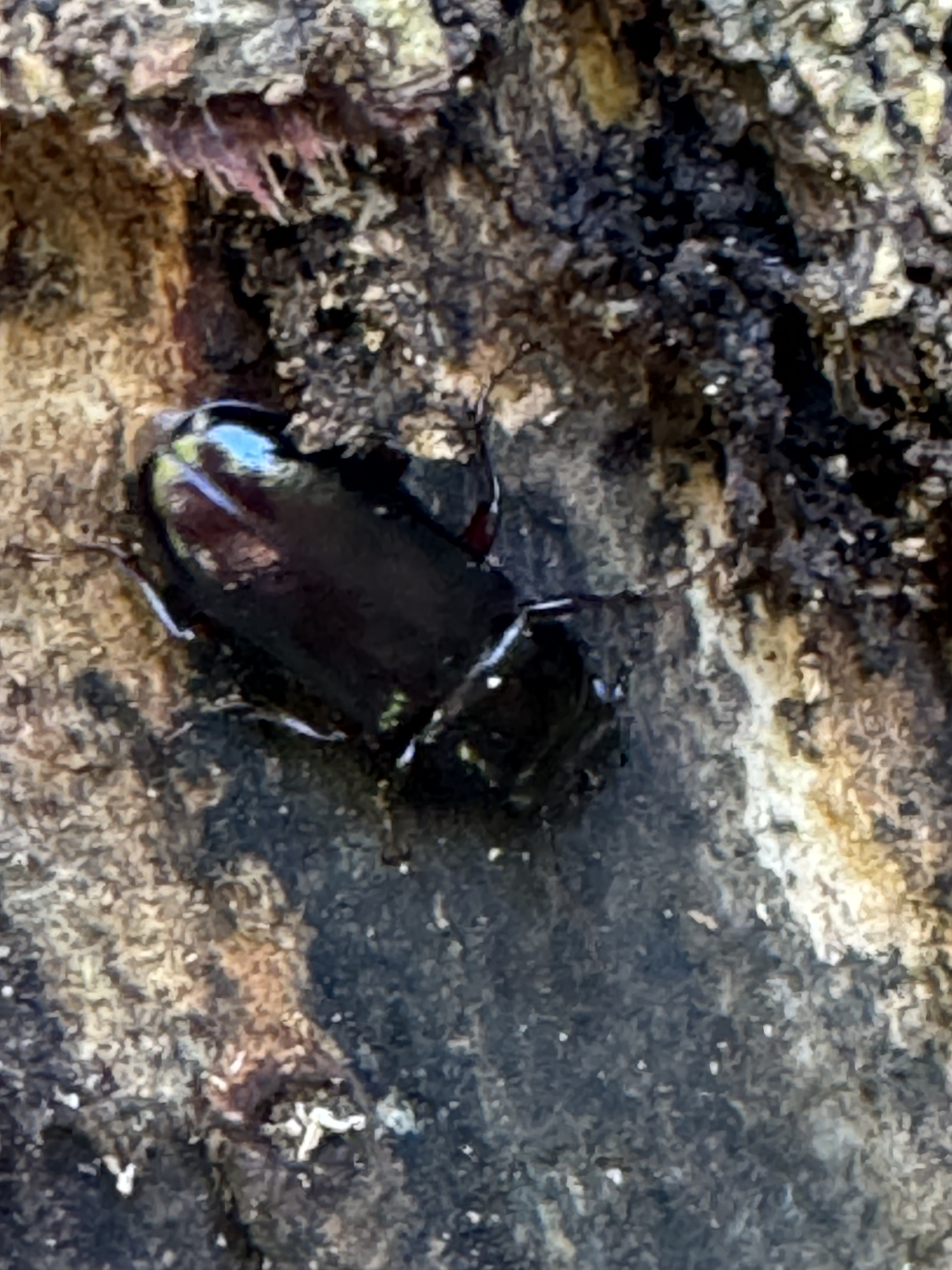
I can across this while randomly picking at the bark of a dead koa tree. It’s a native cerambycid beetle (Parandra puncticeps). I thought it was interesting even though it’s part of the longhorn beetle radiation, it has short antennae. To my untrained eyes, I would have thought it was some kind of stag beetle. Thanks to Will Haines for the ID on this neat native insect.





 Studia Mirabilium