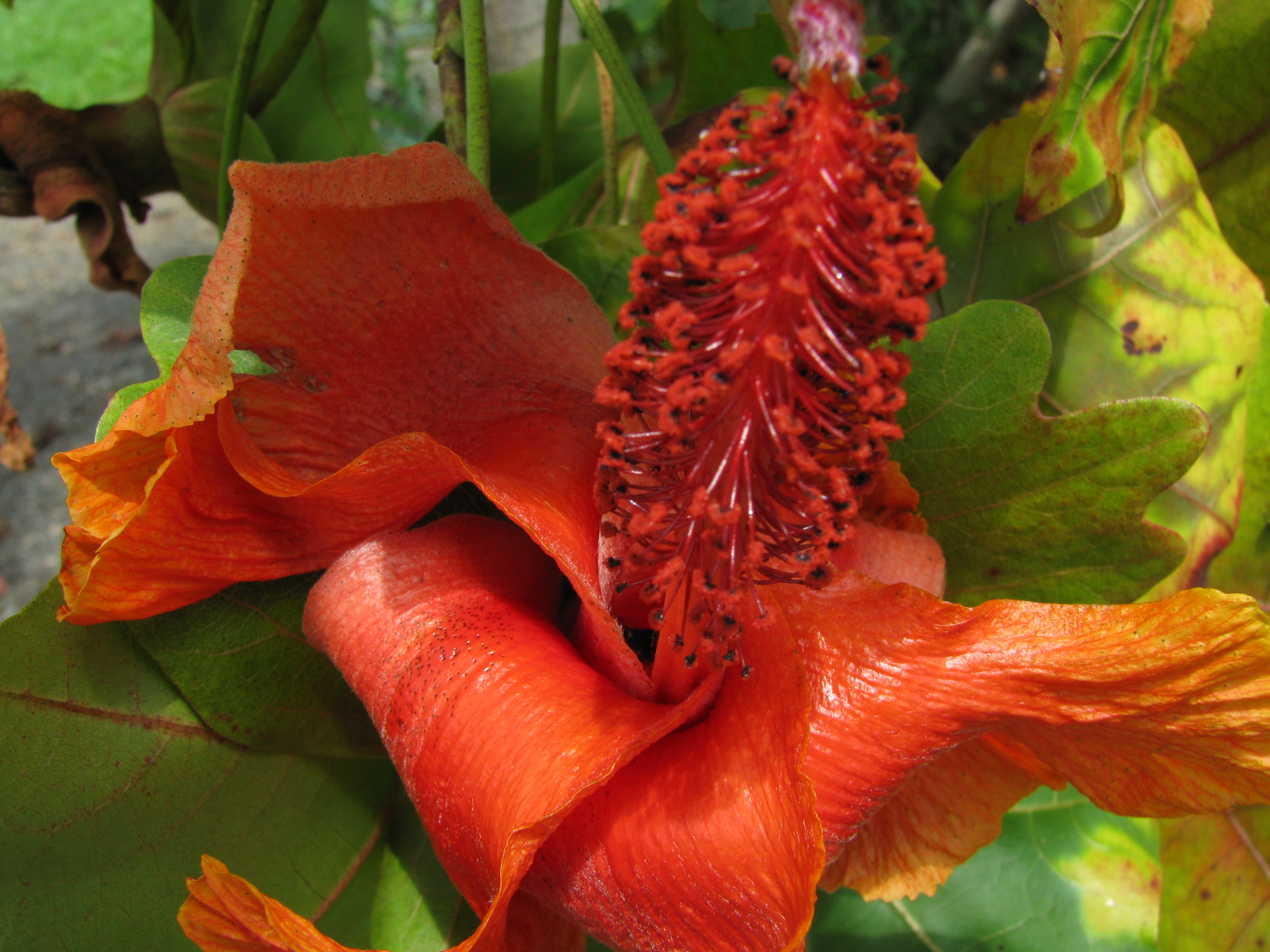
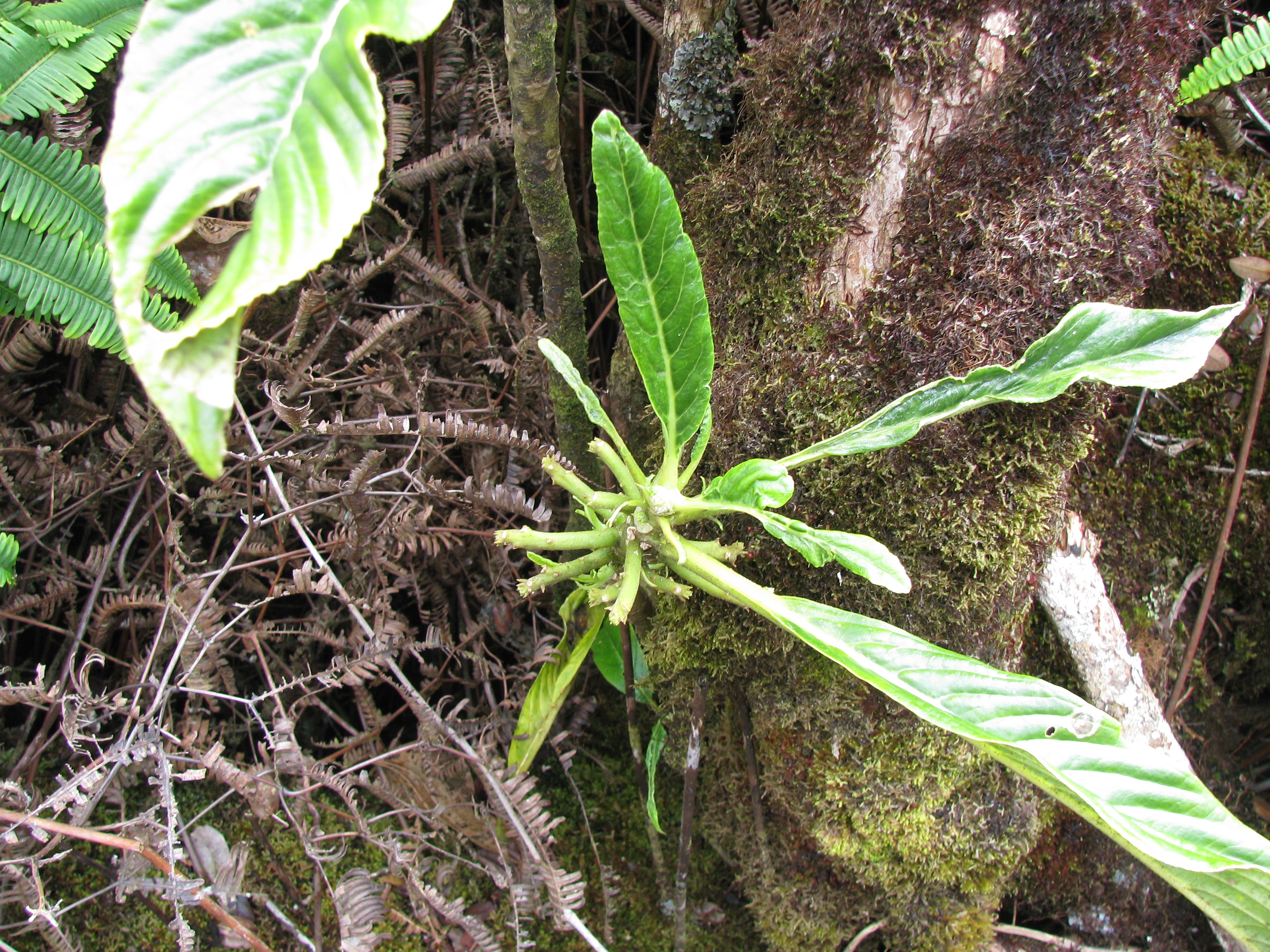
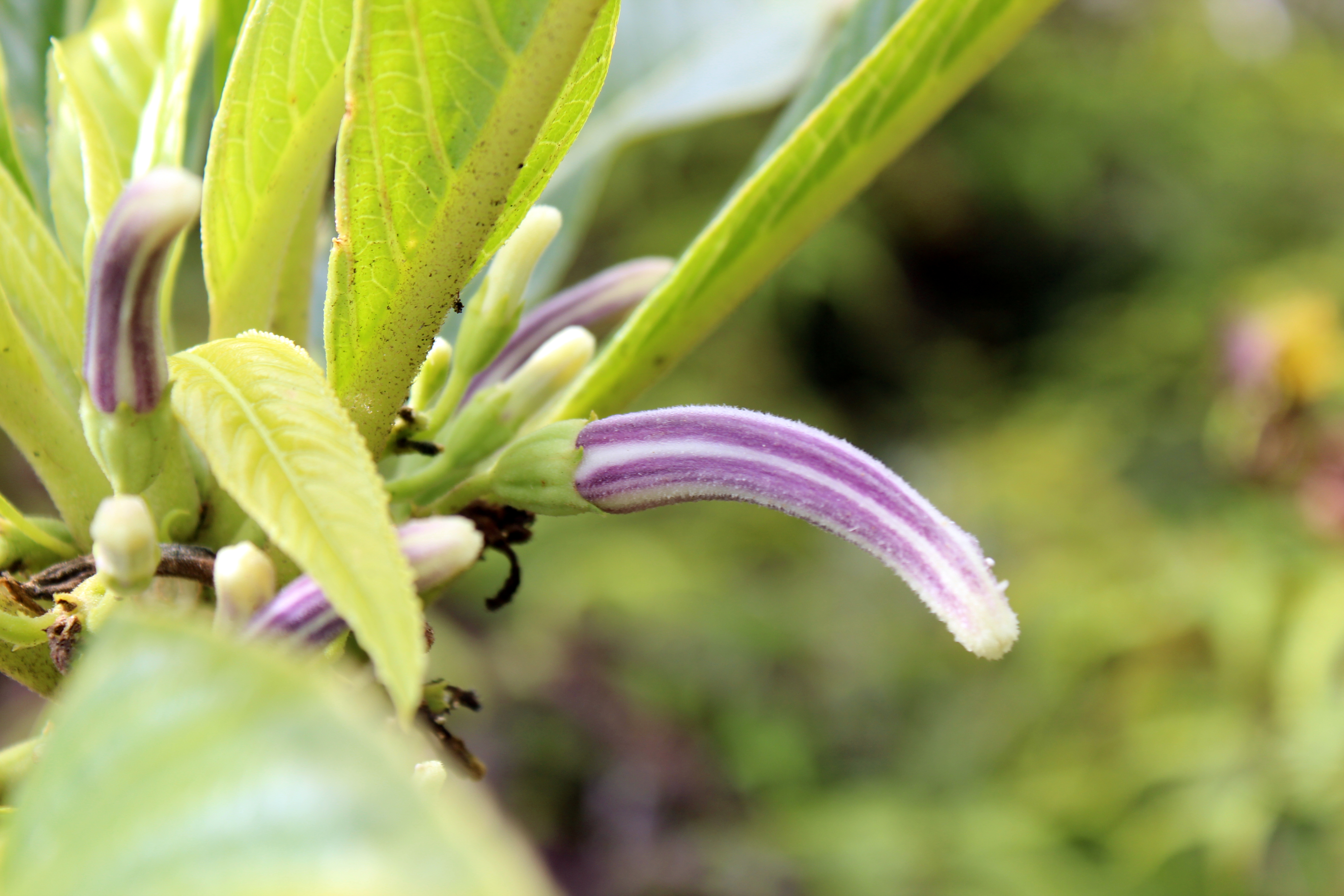
Big Island Part 1: Darwin’s Leafy Rockstars

Whew! New apartment, new computer… sometimes life jolts forward in well-demarcated iterations. Heck, it’s even a new day now that there isn’t a new Harry Potter movie to look forward to anymore. In the midst of all this upheaval, I did manage to sneak away to Big Island for a friend’s weekend wedding. Of course I crammed in as much nature sightseeing as I could…

Continue reading

Posted in Botany | Tagged , , , | 3 Comments

Radio Silence

Hi everybody, just letting you know that I won’t be able to update the blog for a while. I hope to be back up by mid-July.

Posted in Random | 5 Comments

Adventures over the Misty Mountains

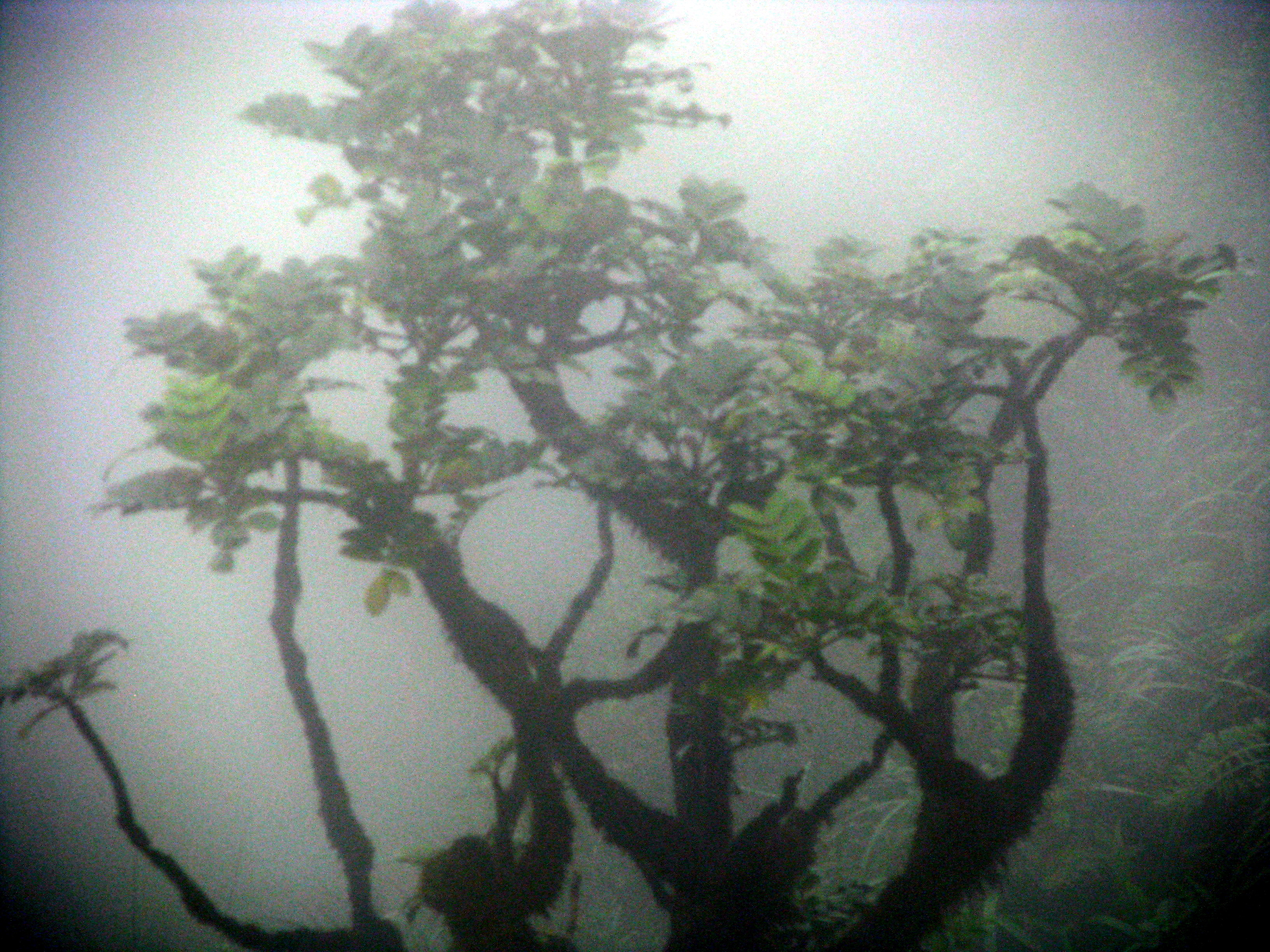
Tetraplasandra in the clouds

Now I understand, Frodo. No wonder your Fellowship would rather risk the Mines of Moria than the extreme weather over the Misty Mountains. This prolonged stretch of heavy rain and thunderstorms has curtailed many a hiking excursion, but this weekend we decided to chance it anyway and hike to the misty summit of Konahuanui and check out the plant life. Will songs be sung throughout Middle-Earth about our adventures? Let’s find out…

Continue reading

Posted in Botany | Tagged , , | 1 Comment

Snapshot: Philippine Flying Lemur

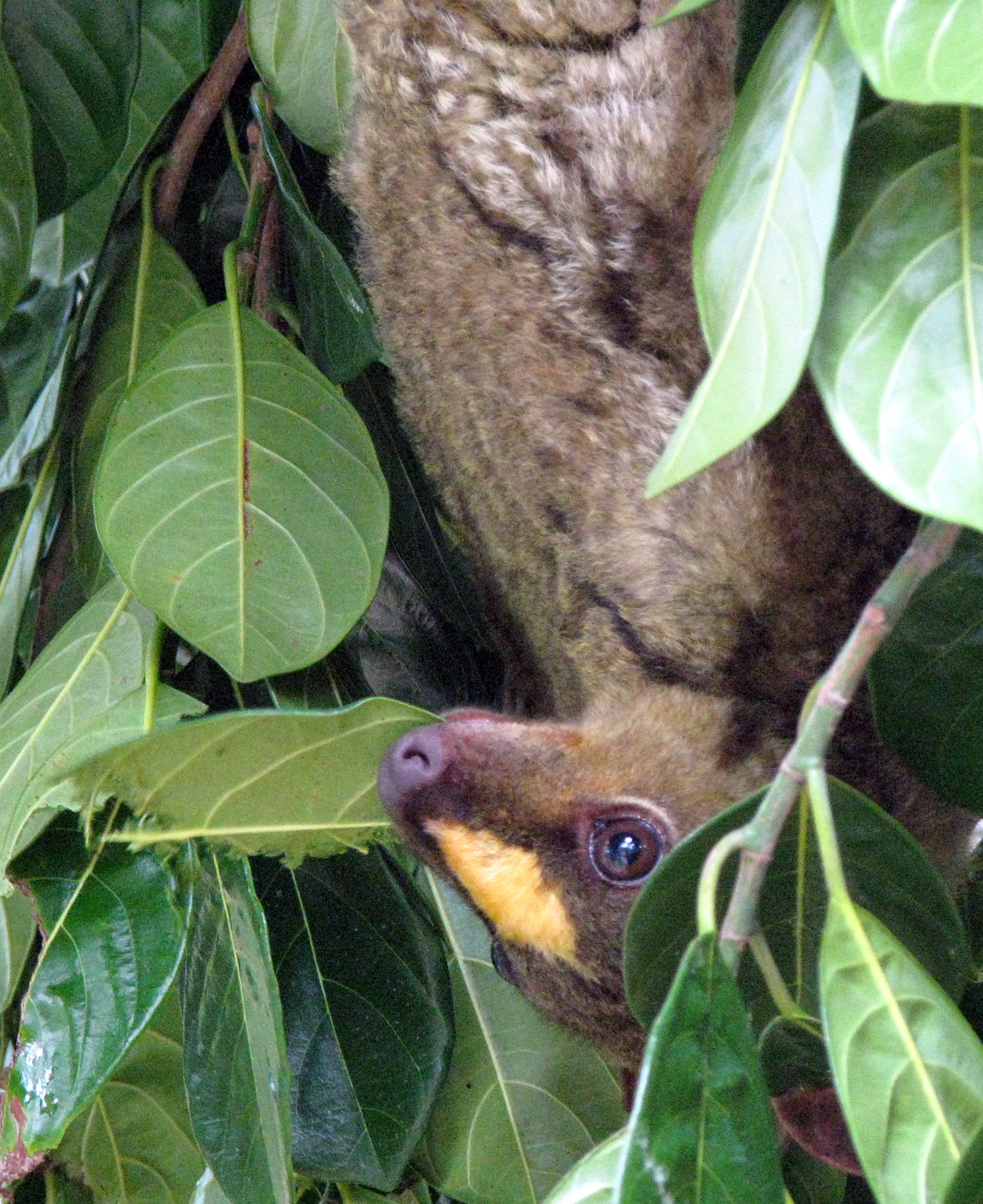
Here’s a picture I took when I was in Bohol of a captive Philippine Flying Lemur (Cynocephalus volans). They are not usually active during the day but I was lucky enough to capture this guy while he was feeding. Look at the mastication pattern on the leaf; it doesn’t just chomp away from one side, it chews its way around the perimeter, spinning the leaf as it goes. I wonder if it spins every leaf it eats in the same direction.

Flying Lemurs are mostly known in the public eye as the mammals with the most developed gliding ability. Flying Lemurs have extensive patagiums and while gliding, they have been described as looking like “furry kites”. They are typically placed in their own order, Dermoptera, which is not very speciose. Aside from C. volans, there is only one other extant Dermopteran, the Sunda Flying Lemur (Galeopterus variegatus).

I didn’t find much technical information on C. volans, but I did come across a paper discussing their foraging behavior. Apparently, compared to other dedicated arboreal folivores like sloths and koalas, flying lemurs are much more active. Hopefully more information will come out on these unique treasures of Southeast Asia.

Links-

Wischusen E.W. & Richmond M.E. (1998) Foraging Ecology of the Philippine Flying Lemur (Cynocephalus volans). Journal of Mammology, 79(4): 1288-1295 (pdf)

Ducrocq S. et al. (1992) First Fossil Flying Lemur: A Dermopteran from the Late Eocene of Thailand. Palaeontology, Vol. 35, Part 2, 373-380 (pdf)

Flying Lemurs are the closest relatives of Primates

Posted in Animals | Tagged , | Leave a comment

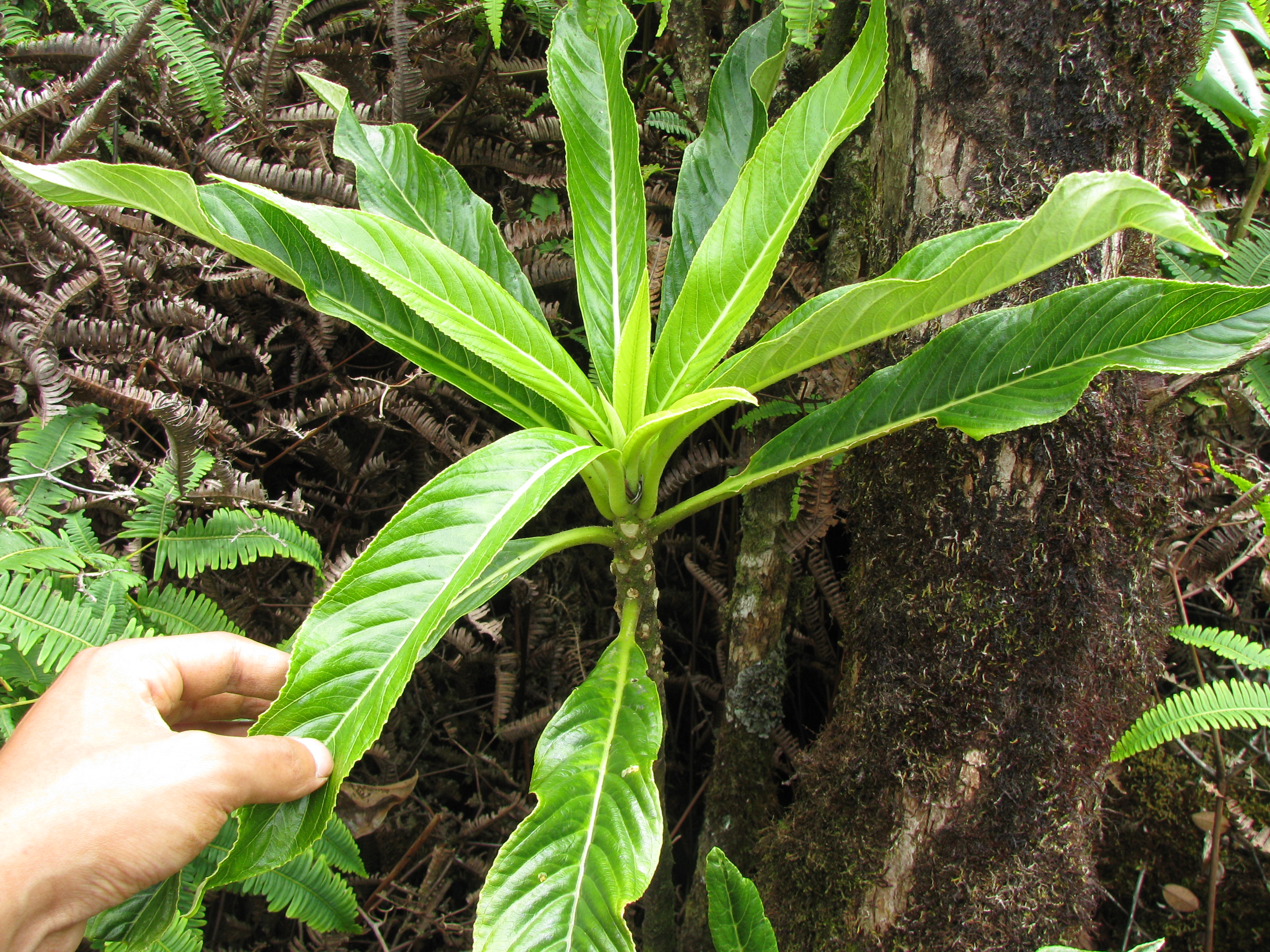
Getting to know your Hawaiian Lobeliads #13: Cyanea truncata

Cyanea truncata

  • Conservation Status: Endangered
  • Distribution: O’ahu (Windward Ko’olau gulches)
  • Date photographed: 4/1/2011
  • Ease of viewing: Difficult
  • *Identification: Form– Shrubs 0.3-2 m tall; stems unbranched or sparingly branched from base; muricate. Leaves– obovate, blades 22-60 cm long, 10-26 cm wide; margins callose-denticulate; pubescent and sparsely muricate; petioles 8-25 cm long. Flower– hypanthium obconical, 5-6 mm long; calyx lobes narrowly oblong, 4-10 mm long, 2-4 mm wide, pubescent, apex obtuse; corolla white, striped or suffused with magenta, 32-42 mm long, 5-9 mm wide, pubescent.
  • Phylogenetic comments: 2022 update Cyanea truncata appears to originate from one of several hybridization events between the rollandia clade and the grimesiana clade on O’ahu.
  • Links: Cyanea truncata SGCN (pdf), Smithsonian Flora of the Hawaiian Islands, UH Botany, Native Hawaiian Plants- Cyanea, US Fish and Wildlife Cyanea truncata 5-year review (pdf), PEP- Cyanea truncata

*From Manual of the Flowering Plants of Hawai’i

Posted in Botany | Tagged , | Leave a comment

Snapshot: Wedge-tailed Shearwater

Wedge-tailed Shearwaters or ‘Ua’u Kani (Puffinus pacificus) are some of the most common seabirds here in Hawai’i. But seeing them amongst human habitation, well I just had to make a post about it.

There are many nesting sites in the northwest islands and smaller islets. There are few colonies on the main Hawaiian Islands themselves. However at Black Point, on the South Shore of O’ahu, a small colony persists right in the middle of an upscale neighborhood. Birds and people coexisting, always a good story. And, thanks to the donated land by the Freemans, the colony has a bright future.

Links – Hawaii Audubon Society April 2011 (pdf), Star Bulletin Oct. 2007

Posted in Sharing the planet | Tagged , | Leave a comment

Movie Review: African Cats

I can’t even count the number of wildlife documentaries I’ve seen over my lifetime. Heck, I was sadden when John Forsythe passed away; he played a big part in my childhood. Not for Dynasty, but for his role as narrator in the television series The World of Survival. So when I found out that Disney was coming out with an animal documentary, African Cats, I had to check it out.
Continue reading

Posted in Nature | Tagged , | 1 Comment

Books & Tangents

Tangents are a marvelous thing. Specifically, tangential thoughts and discussions. We’ve all been there, something comes up in discussion that takes the conversation on a completely different track. And, with the internet, that is even easier to do. For instance, you were searching for great pirogi recipes and ended up reading about Napoleon III’s blundering in the Franco-Prussian War. While bing has made humorous commercials on this very fact, I think tangents are great for finding interests in areas you might have never come across before.

So, in the spirit of finding tangents, this post is going to be a list of memorable books I’ve read in the past few years. Perhaps you will find things of interest in different areas, or perhaps my tastes are dull and predictable. We’ll soon see.

Continue reading

Posted in Random | Tagged | Leave a comment

Getting to know your Hawaiian Lobeliads #12: Cyanea hirtella

Cyanea hirtella

  • Conservation Status: Apparently Secure
  • Distribution: Kaua’i
  • Date photographed: 9/22/2010
  • Ease of viewing: Easy
  • *Identification: Form– Unbranched or sparingly branched shrubs 1-6 m tall. Leaves– oblanceolate to oblong; blades 10-27 cm, 2-6 cm wide; margins minutely callose-denticulate to callose-serrulate; petioles 2.5-6 cm long. Flower– hypanthium obconical to to obovoid; 6-11 mm long, 4-5 mm wide, pubescent; calyx lobes narrowly triangular, 1-3 mm long, 0.5-1 mm wide; corolla pale white to pale purpulish with purple longitudinal stripes, 30-40 mm long, 3-4 mm wide, densely pubescent
  • Phylogenetic comments: 2022 update — Cyanea hirtella is part of the hirtella clade; a monophyletic group endemic to the island of Kaua’i. This group is sister to all the other Cyanea sect. orange fruited clade.
  • My Notes: I saw this plant off the side of the Pihea Trail. Unfortunately, I had just missed the infloresence. From interacting with the good folks on Flickr, it appears this individual had flowered in June.
  • Links: A Monographic Study of the Hawaiian Species of the Tribe Lobelioideae Family Campanulaceae
  • Additional Photos:

cyanea hirtella

*From Manual of Flowering Plants of Hawai’i

Posted in Botany | Tagged | Leave a comment

My Favorite Gentian

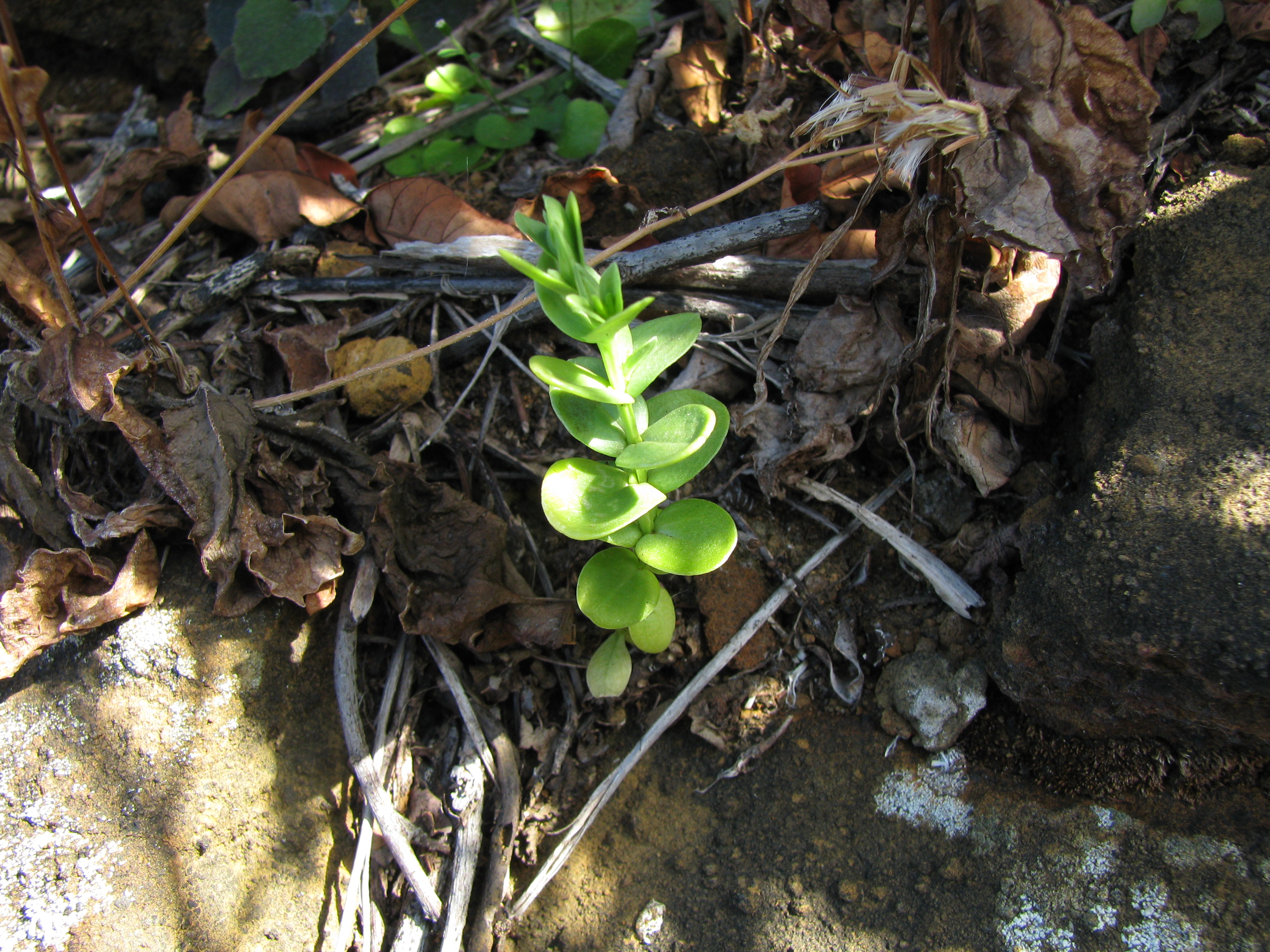
The far Southeast of O’ahu is known for its surf. Whether it’s Hanauma Bay, Sandy’s, Makapu’u, there are plenty of places to get outside and enjoy the ocean-side of nature. But what of hillsides? Well, there is still a ghostly plant that makes its appearance from time to time when conditions are right. It is one of the few annual plants native to the islands. So join me on a quest for G: the Gentian, Schenkia sebaeoides that is.

Continue reading

Posted in Botany | Tagged , | Leave a comment