
Plant blindness can be quite the challenge for the botanical community. Getting people to care can be a difficult thing: plants for a lot of folks tend to disappear into the background whilst people focus on something else. Some plants do break through the backdrop every now and then. While I was in Australia I figure I would try and look for one of these infamous plants. I didn’t realize that I would also end up with a spectacular image of Hawai`i better than I could have imagine…
The nettle family (Urticaceae) is known worldwide for their stinging hairs. One particular plant native to Australia, the Gympie Gympie Tree (Dendrocnide moroides), is well known for delivering a very painful and long lasting sting. It can be severe enough to occasionally cause hospitalizations and there has been one reported fatality. These accounts have been sensationalized in the media and parts of the general public supposedly making Gympie Gympie “one of the most dangerous trees in the world”.
While the strange morbid novelty really doesn’t interest me too much, I did want to see the plant because it seems to be such an antipode to Hawaiian flora. Hawaiian plants, for the lack of a better word, are fairly benign. Numerous native Hawaiian plants have lost their conspicuous defenses, whether it’s thorns, toxic latex, or stinging hairs. That couple with the lack of things like chiggers, ticks, fleas, or even venomous snakes makes exploring Hawaiian forests rather comfortable. I have no reservations jumping through a dense thicket to touch and explore the biota. Hiking on Hamilton Island in Queensland on the other hand, I would have to take more precaution.
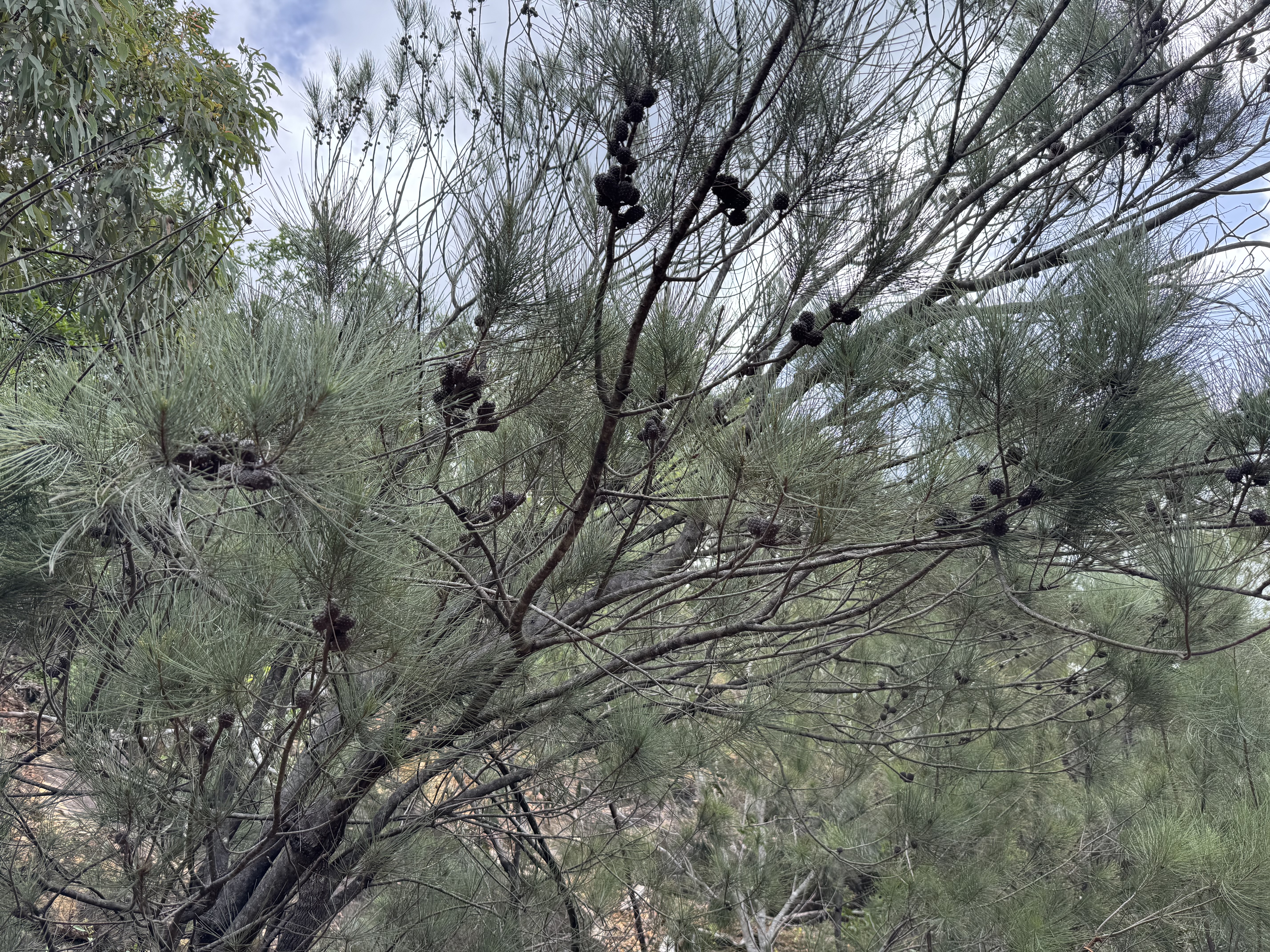
Unsurprisingly, some of the first native plants we came across out hike on Hamilton Island were She-Oaks (Casuarina spp). In Hawai`i, they have been planted as windbreaks and are now a quite common sight on our shorelines. Though it was nice to see them in their native habitat in a similar setting.
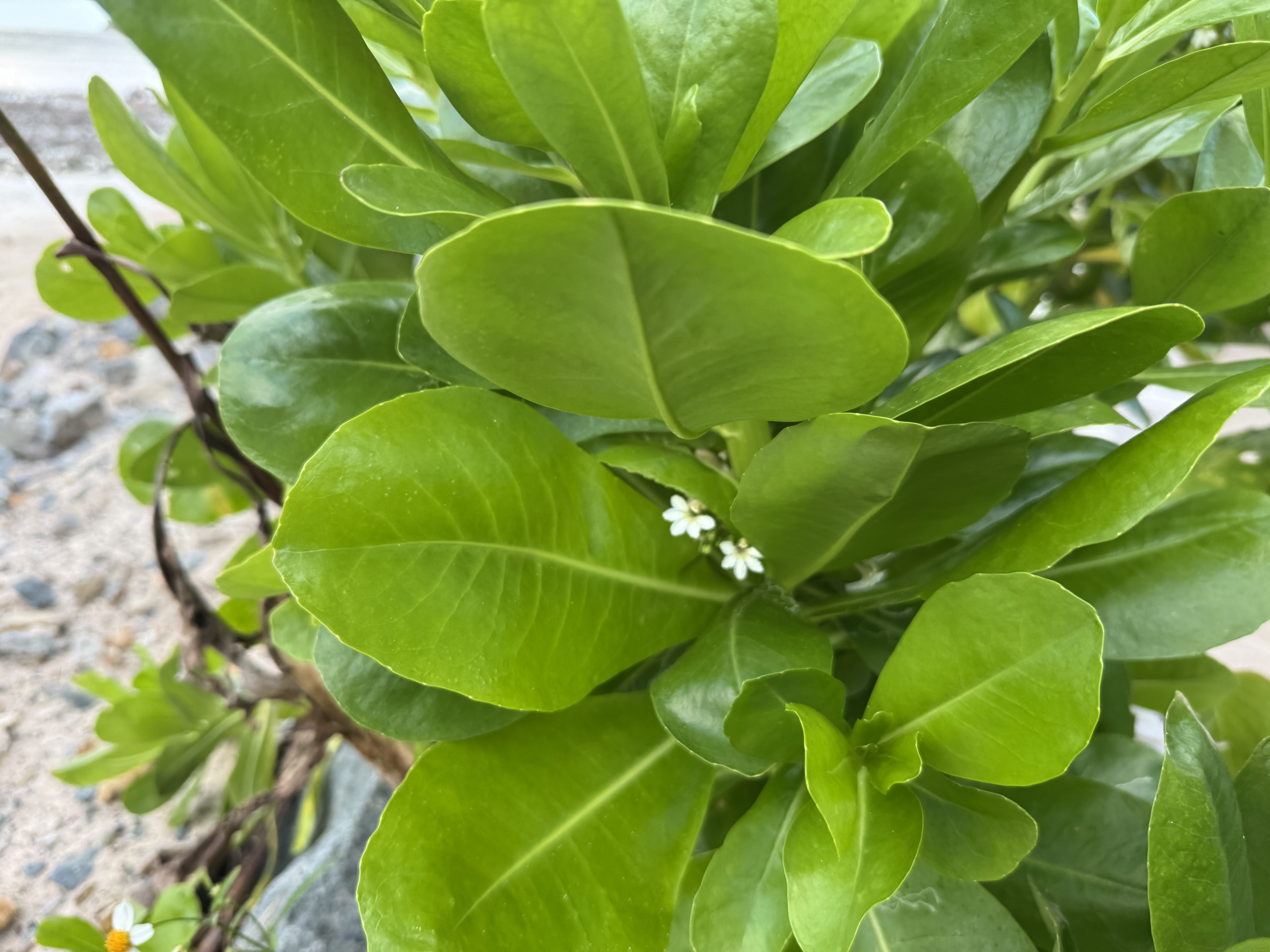
But as we kept hiking, I was coming across more and more familiar faces. A number of native Hawaiian taxa share affinities with Australasian populations, especially wide ranging strand flora. Here is a population of Scaevola taccada, naupaka kahakai back home.

Even as we gained elevation, We saw plants with Hawaiian ties. `A`ali`i (Dodonea viscosa) as currently circumscribed has a huge native range, encompassing most of the subtropics, tropics and warm temperate regions of the world. Here in Australia, I believe these plants are either called hopbush or akeake.

It led to very cool scenery like this for me. If it wasn’t for the iconic grass tree (Xanthorrhea johnsonii), looking at all these Dodonea one could be forgiven to think this was on any day hike in O`ahu.
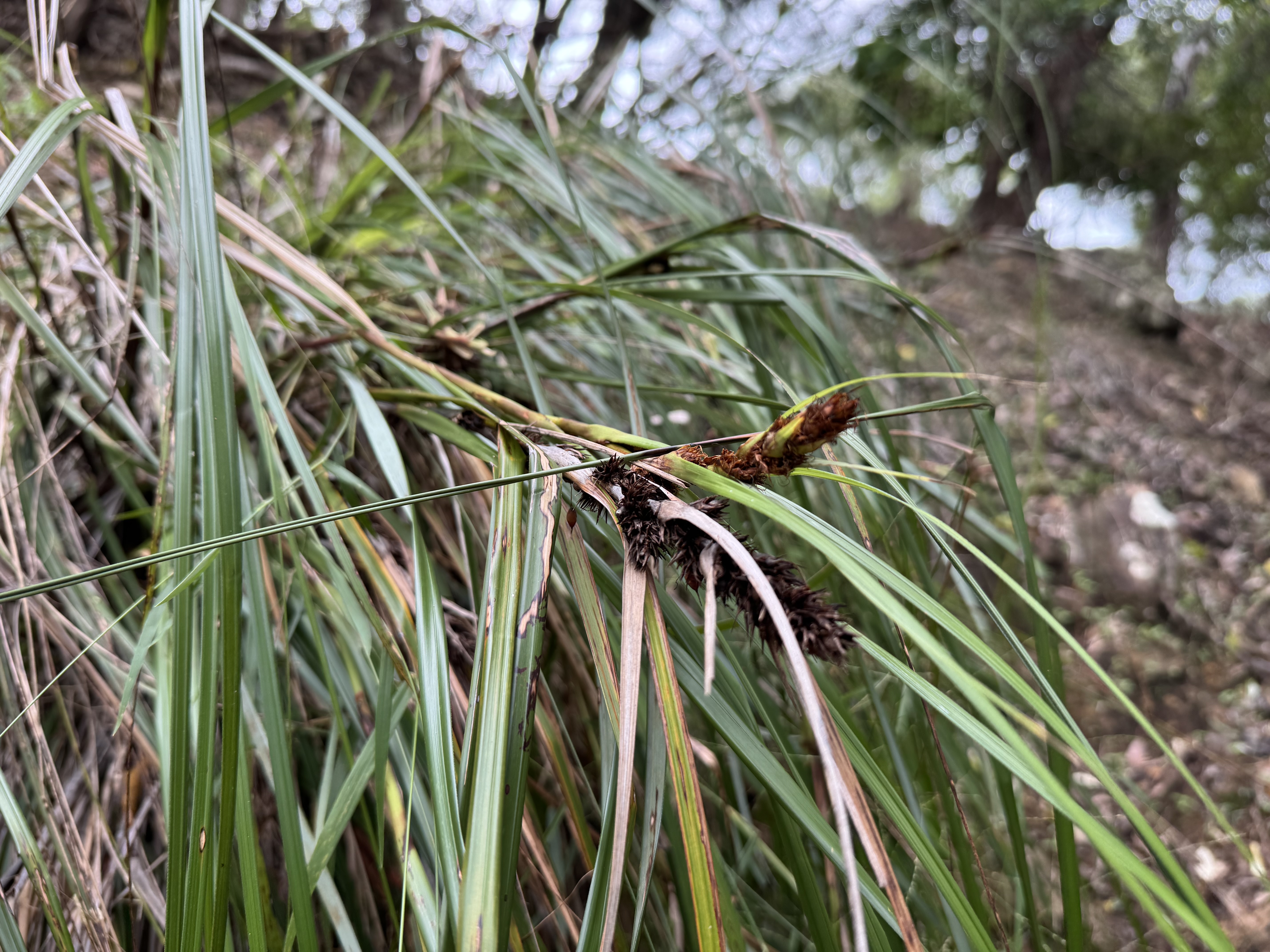
Another familiar face was this Gahnia. It looks to be Gahnia aspera but I’m not entirely sure. If it is, I’ve come across this taxa in Hawai`i before.

Even on these open rock faces we saw some other wide ranging taxa. This Peperomia possibly P. blanda is quite similar to what I’ve seen back home.
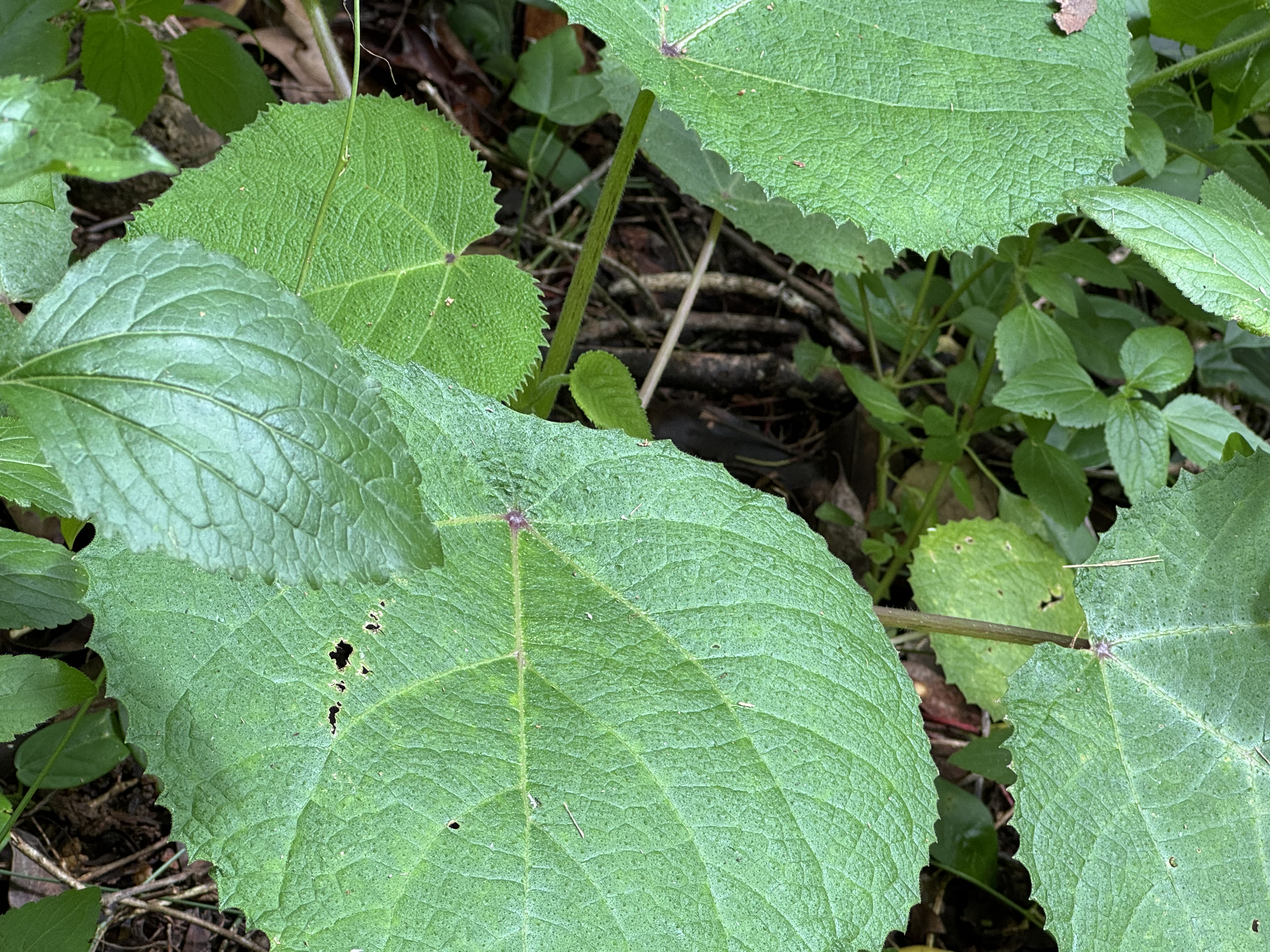

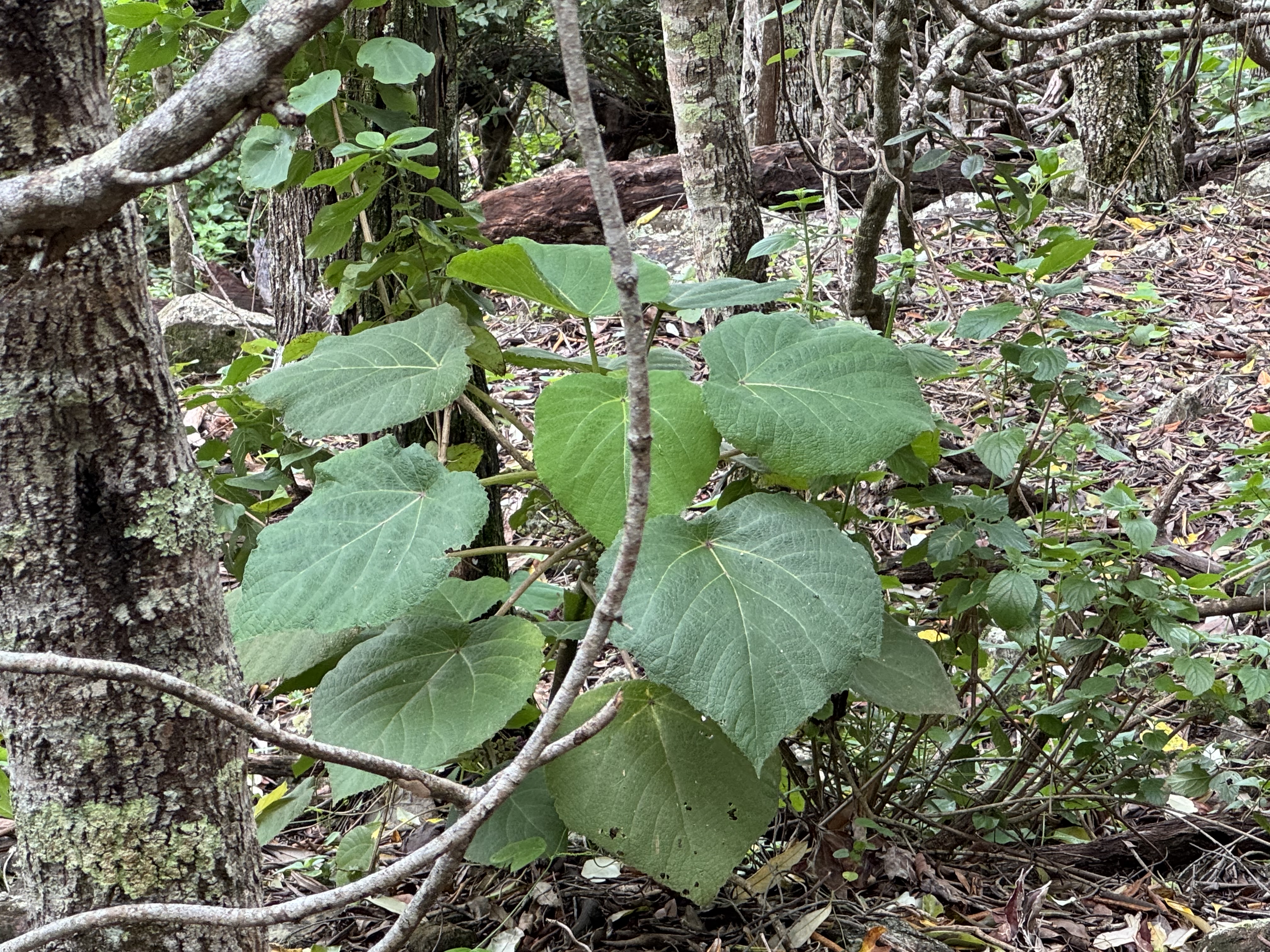
But this plant could never be mistaken for anything native to Hawai`i. Near the saddle junction, we started coming across individuals of the Gympie gympie tree. We were lucky to see one reproductive.

This D. moroides in the let foreground was growing near a young bleeding heart (Homalanthus populifolius), a plant that is sometimes mistaken for it.
Out of an abundance of caution, we admired these plants from afar. I certainly did not want to experience the urticating hairs firsthand. For me it was neat to come across this interesting member of Australia’s native biota. There’s that running joke online that everything in Australia is trying to kill you even the plants, but it was important for me to remember that forests elsewhere are not like Hawai`i and how competitive pressures shape the landscape in different and possibly dangerous ways. Having a healthy respect of the outdoors is always a good thing.
While seeing Dendrocnide moroides was certainly a highlight, we later came across part of the forest that was a pleasant and welcoming surprise.

Right along the beach was this wattle forest with Pandanus tectorius mixed in. The leafless little bush in the right caught my attention.

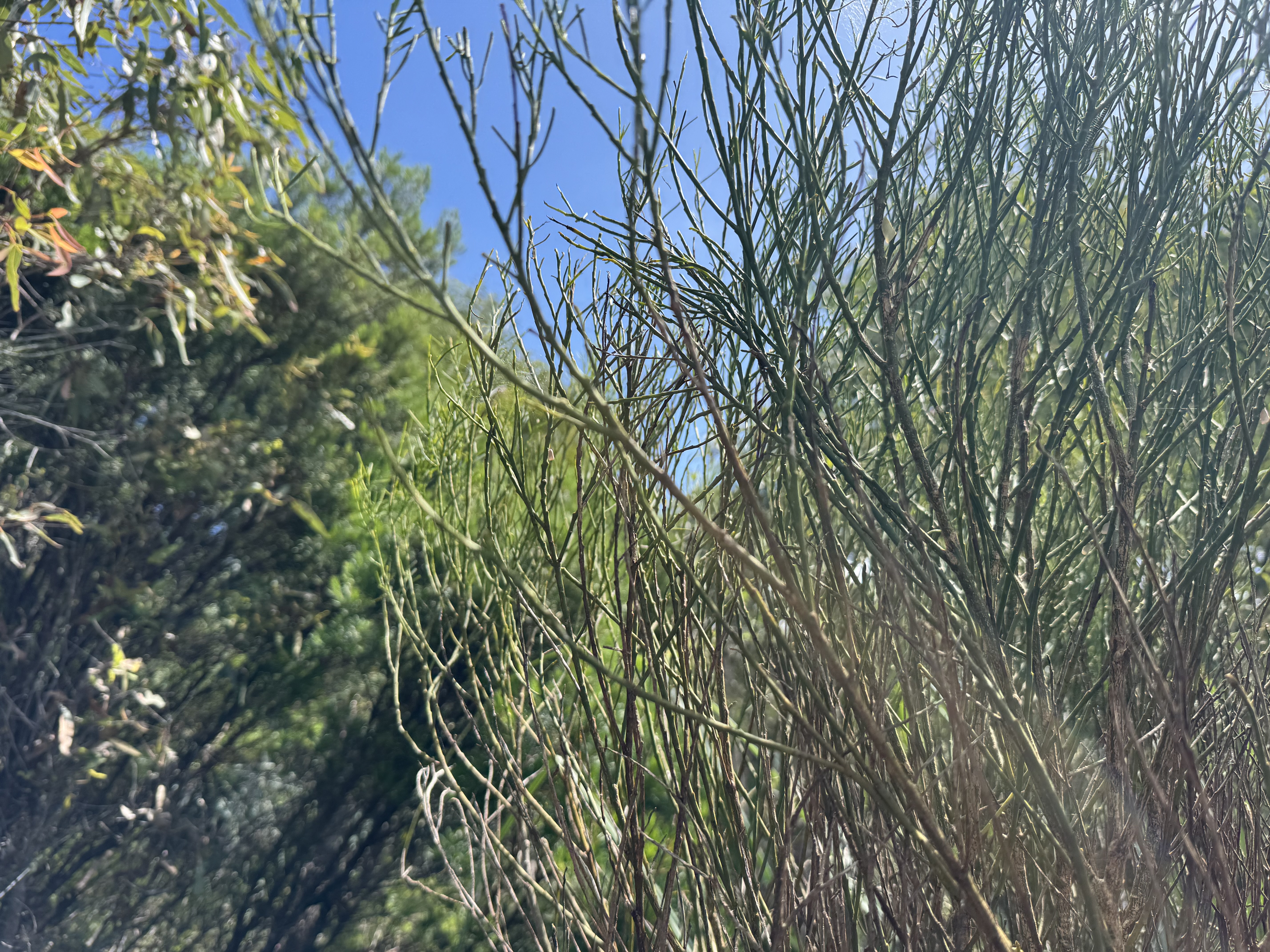
It’s Exocarpos! Known as Cherry Ballart is Australia, this genus of sandalwood relatives are known for having very reduced leaves with their green stems taking over photosynthesis. This gives the entire plant a sort of broom like appearance.
Perhaps in Australia, coming across Exocarpos cupressiformis is no big deal. But from my perspective it most certainly is. In all my hikes on O`ahu, I’ve come across our native E. gaudichaudii exactly one time. The plants are not doing well so seeing healthy populations was very impressive to me.
And if I take a step back, this whole part of the forest was a neat tease. I’m not sure which species of wattle (Acacia spp.) I was seeing, but the phyllodes were shaped very similar to our Acacia koa That combine with the Pandanus and the Exocarpos meant for me, this could have looked like a forest in Hawai`i. Except that nowadays, one would never see an intact healthy koa forest like this right above the high water line at the beach.
Is this what Hawai`i looked liked a thousand years ago? If we worked on it, is this what Hawai`i could look like a thousand years from now? Searching for a dangerous plant to satisfy my own interests and then to come across this image of potential for Hawai`i made coming to this part of Northeast Australia all the more memorable for me. So while some in the general public may have plant blindness, I’d like to thank the Whitsundays forests for such an eye opening experience.

 Studia Mirabilium