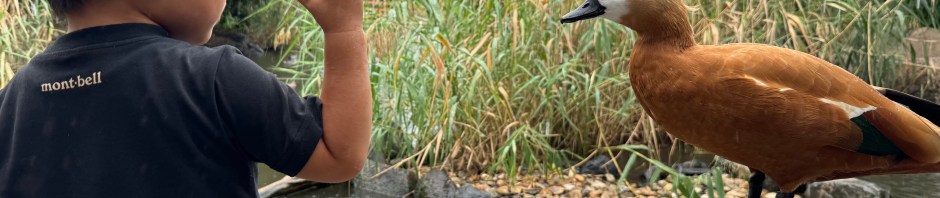

Sometimes there is magic in the air. And while a lot of that comes from one’s own perspective, it is a neat feeling whenever it hits you. On our second trip to Japan, my wife and I checked out the Kobe Animal Kingdom. I wasn’t expecting it, but the visit gave me one of the most hopeful visions for the future.
In my second post on this blog, I tried to articulate what my main focus was. I say try because after 15ish years, I still don’t have a concise term to describe it (This is why I’m not in marketing!) It’s the world beyond conservation. But in a good way. I remember back in the mid-2000’s speaking to some folks about how they went to a conservation conference in Asia and were blown away that India was drafting a 500 year elephant conservation plan. While I was impressed and glad they were planning long term in the back of my mind I was thinking “If elephant still need conservation 500 years from now, we failed them.” For me it’s more what would the world look like if we did save all the endangered things? How would we share it? I’ve called it Sharing the Planet, maybe one can call it Eco-Rehabilitation, but for me zoos have offered a glimpse into what that world can look like.
At least one vision anyway. Interacting with creatures in a highly control environment with safety barriers between us might not be the most ideal but for me it’s a start. And in Japan, with a mostly respectful public, there presents an opportunity for some of those barriers to be removed. What does this zoo look like?
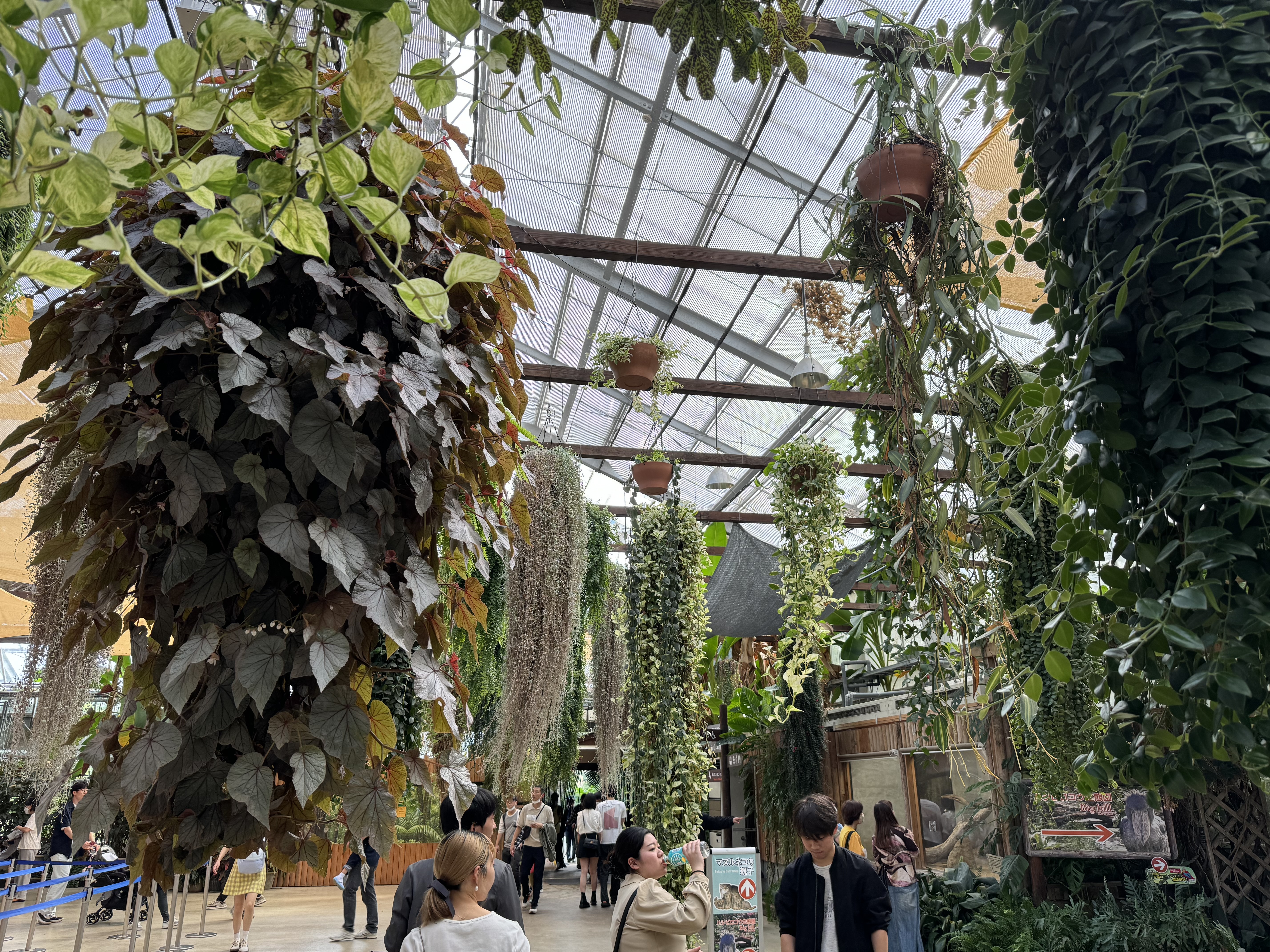
The Kobe Animal Kingdom is situated in the middle of a redeveloping waterfront district in Kobe, Japan. It seemed that many industrial waterfront areas in the country were in the midst of a renaissance with much development going on. I particularly liked that the zoo was right next to the metro stop, making for easy access and also blurring the line between the urban jungle and wildlife.
As you can see from the photo above, the zoo grounds mainly consist of what appeared to be commercial greenhouse buildings modified to house their animal collection. It might not be everyone’s aesthetic but I really liked the blend of urbanism and nature.
The zoo was celebrating it’s 10th anniversary and a huge portion of the advertising was of this taxa: a Shoebill! (Balaeniceps rex). Shoebills are a very distinctive lineage of bird endemic to the swamps and wetlands of Africa. Their massive bill is quite distinctive making the shoebill unmistakable. This was the first time I got to see this species and I was really happy to be in its presence.
Since it was already enclosed within a larger structure, the Kobe Animal Kingdom seemed to make a choice to minimize the barriers between the public and its collection wherever it could do so responsibly. There was no glass barrier between these red panda (Ailurus fulgens) and the zoo going public making for pretty spectacular viewing.
There is a lot of trust that needs to happen for the decision to limit the barriers. The design team has to trust their data and husbandry that they can house the animals safely and comfortably to modern zoological standards even with minimal barriers. But they also have to trust the other side, that the general public will be respectful of the animals and interact with them appropriately. In many parts of the world, that’s a difficult ask. Indeed it might be impossible. But in Japan, the public has shown themselves to be up to the task. And for me, that opens up so many possibilities.
The South American section was a prime example of that. The staff had set up branches directly over the public pathway where several of their two-toed sloths (Choloepus spp.) and Tamandua (Tamandua mexicana) used as means of egress.

I mentioned Patagonian Mara briefly in a previous post. Well, here they are again and for me they really stole the show. Two were resting quietly in the middle of the public walkway where one can really appreciate just how large a rodent they are. And how strangely proportioned too.
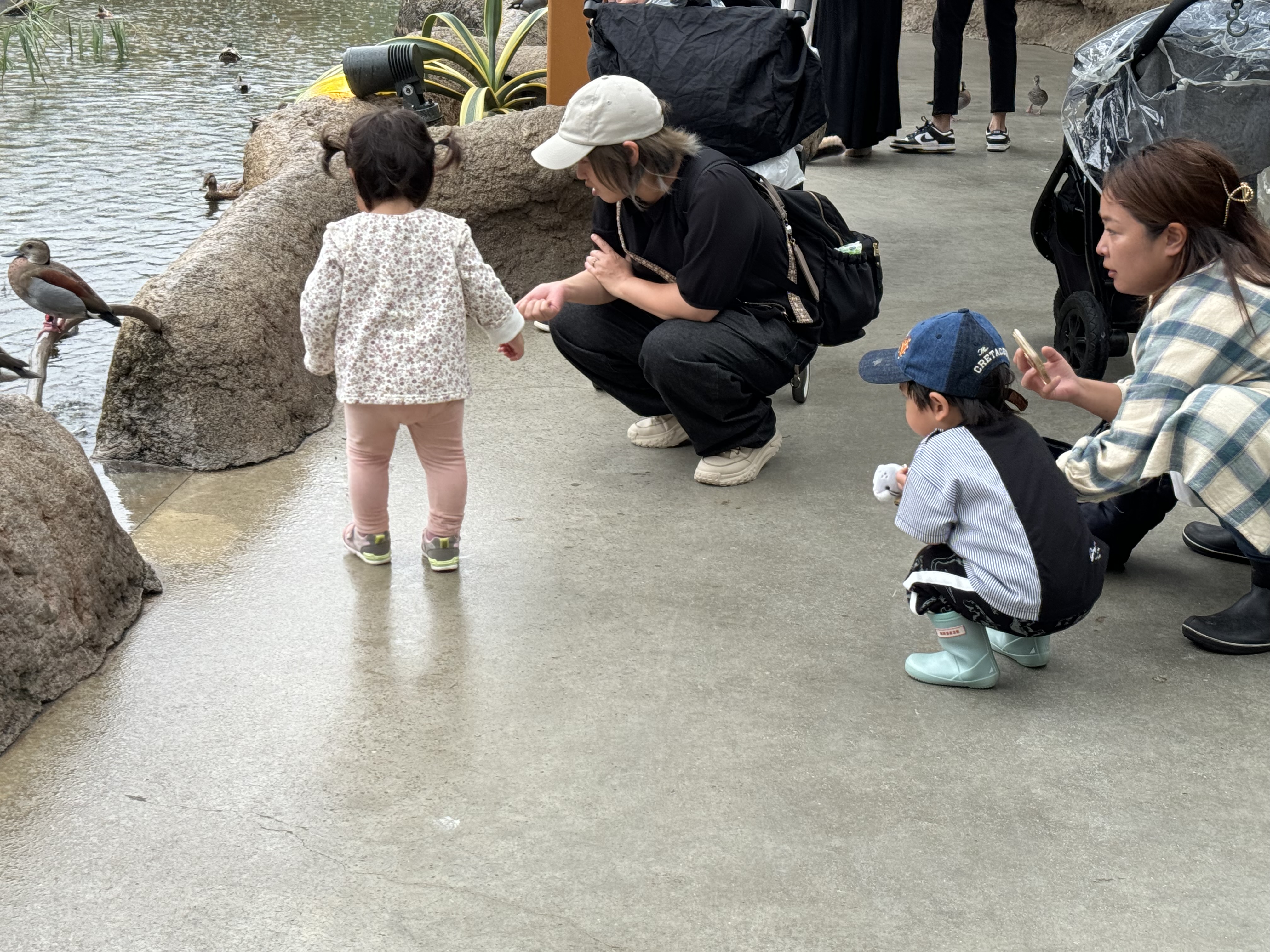
So what kind of possibilities can you get when you take away the barriers between humans and animals safely and responsibly? Well you get this. This right here is that hopeful vision of the future. In the African wetlands area, my wife and I happen to be near a few young moms with their very young children. The kids looked to have been maybe a year and a half old. Babies basically. But they were not acting up or chasing the birds aggressively. In fact they were enthralled, experiencing wildlife up close and personal. We talk so much of getting kids to engage with nature, to appreciate a wider world. In this splendid little zoo in Kobe, Japan, I got to see a splendid glimpse of this future with my very own eyes.
I’ll leave you with this short video of a marmoset I took; which clearly saw it’s own reflection in my camera lens before calmly looking around as if I wasn’t there. Oh for a world where animals regard the rest of humanity in the same calm manner.

 Studia Mirabilium