
Here’s another post from our trip to New Zealand in 2019. My wife and I made a point to check out Sanctuary Mountain, the wildlife reserve situated on Maungatautauri, a dormant volcano just outside Hamilton on the North Island. It was awe-inspiring and all together a wonderful experience.
The forested slopes of Maungatautauri were seen as a refuge for native forests for a long time. (Since the early 1900’s if I recall correctly). While much of the surrounding countryside was put to the plow and transformed to agriculture and pasture land, much old growth forest was saved on the mountain. Indeed, as you can see in the intro video, the trees are quite large. Even though we work on a remnant native forest up at Manoa Cliff, it doesn’t have the development or stature as these forests on Maungatautauri.
As such, it was always a prime spot for conservation and rewilding. Aotearoa long had been able to protect their vulnerable native wildlife with island reserves; protected offshore habitats with the ocean providing a barrier against invasive species. But what of mainland areas with established alien predators? Can protected habitat be created for native wildlife? Would properly designed fences be enough? With the spectacular results of the first urban fenced project in New Zealand (Zealandia in Wellington), folks got to thinking of other potential spots while also becoming more ambitious. At Maungatautauri, they thought, “What about fencing and protecting an entire volcano” Thus, Sanctuary Mountain was born.
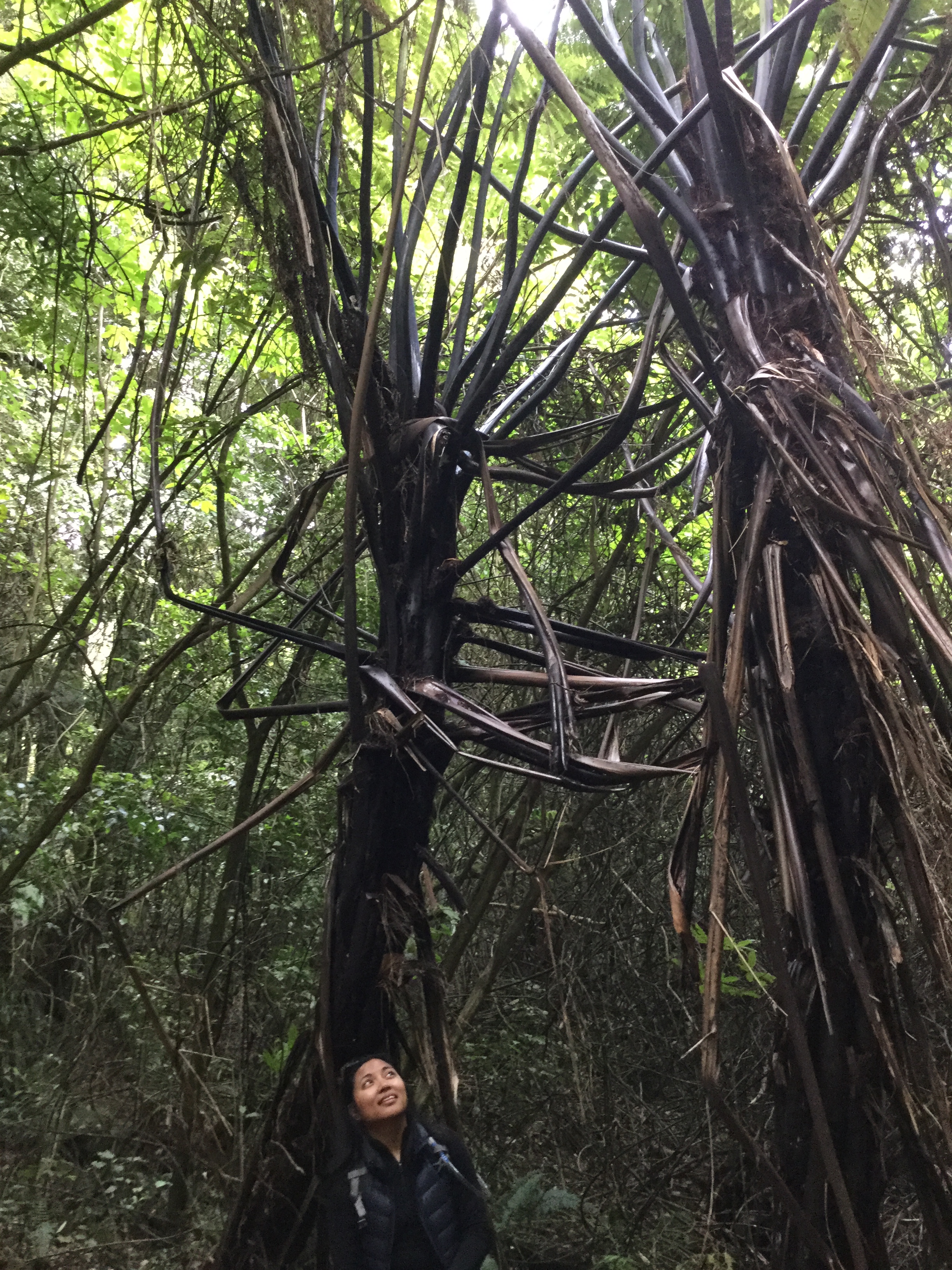
So it was neat for us to visit the forest in Nov. 2019 and check out what an old growth, lowland New Zealand forest looked like, protected and free of predators. One thing that struck me immediately was how viney it was. Sure Hawaiian forests have `ie`ie, but the structure here was so different. Norther Rata (Metrosideros robusta) roots and Supplejack (Ripogonum scandens) abound, draping everything in a large liana-like manner. It felt so different from the O`ahu forests I’m accustomed to.
This type of growth must have been a boon to the local birdlife and it afforded us spectacular viewing of the star of the show, New Zealand Kaka (Nestor meridionalis). The southern continents were a hotbed of Psittaformes radiation after the Cretaceous-Paleogene Extinction, with diversities centered around South America and Australia. A very ancient lineage made it to Aotearoa, leading to the evolution of Kaka, Kea, and Kakapo.
We were at a supplementary feeding station when this Kaka came down to check us out. It will never fail to amaze me to see wildlife so non-plussed by our presence. Spending time with this member of the New Zealand wildlife was a memorable experience. Kaka and their ancestors have been moving through the New Zealand forests in this manner for a long, long time.
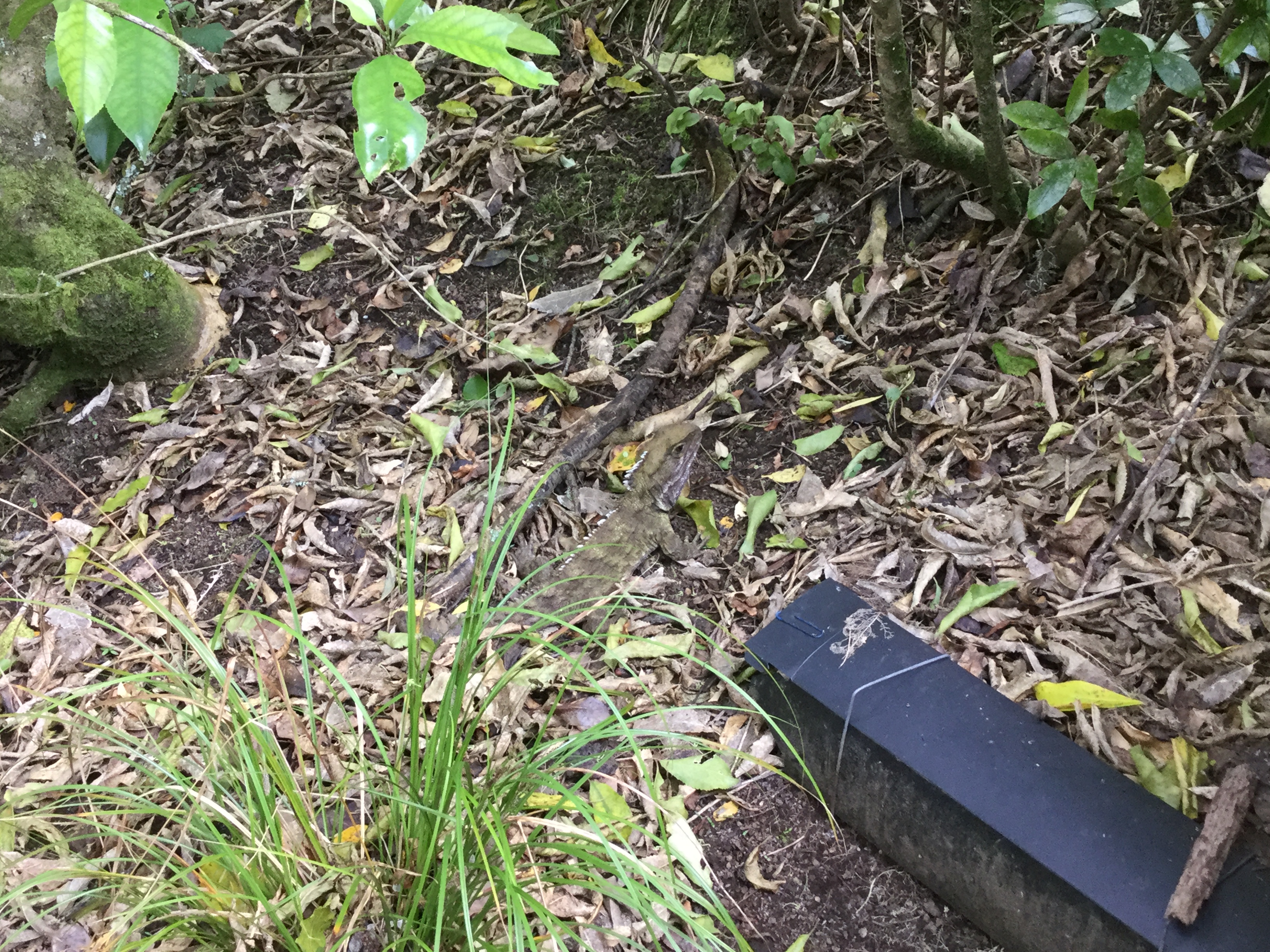
And to top it off, the forest was healthy and protected enough to support a population of Tuatara (Sphenodon punctatus). Much has already been said about the uniqueness of this last lineage of Rhynocephalia. But tuatara for me personally highlight my relationship with the evolving internet.
Sure back in the 80’s and 90’s, I was one of those kids that had all sorts of dinosaur books and animal books and watched whatever nature documentaries were available on PBS. But the internet was a game-changer in the way I was able to access data. Around the turn of the millennia, during the haphazard transition from dial-up to broadband one of the sites I used to frequent was a site called palaeos.com. Back then websites were still mostly a collection of static webpages. Nothing fancy to capture the user’s attention. Yet their writing and editing drew me in. They described the African craton slamming into Europe as (I paraphase) “A hippo trying to hide under the covers, one is bound to encounter bumps and folds” or Antarctica in the Oligocene as “off on it’s own, becoming addicted to glaciers”. I will readily admit that they’ve influenced the way I written my blog posts.
And what they said about Tuatara always stuck with me. The website basically said something along the lines of “Tuatara are, anatomically, kinda boring. They don’t have very many interesting derived traits. Paradoxically, that is what is interesting about them. They’re as close an image to a basal reptilia as one can get.” Perhaps the science has changed since I read that 25 years ago, but my take away was before lizards, snakes, birds, crocodiles and turtles evolved, their ancestors in the Permian could very well have looked something like these Tuatara at Sanctuary Mountain.
It’s funny around the same time I was using that website, I was digesting all I could about conservation in New Zealand. I learned about the plight of the Kakapo. I read about the story of Tiri Tiri Matangi. And I heard about this ambitious project to fence off a mountain called Maungatautari. This trip to New Zealand to see all these places was a 20 year dream come true. Hopefully it won’t be another 20 years before I visit again.


