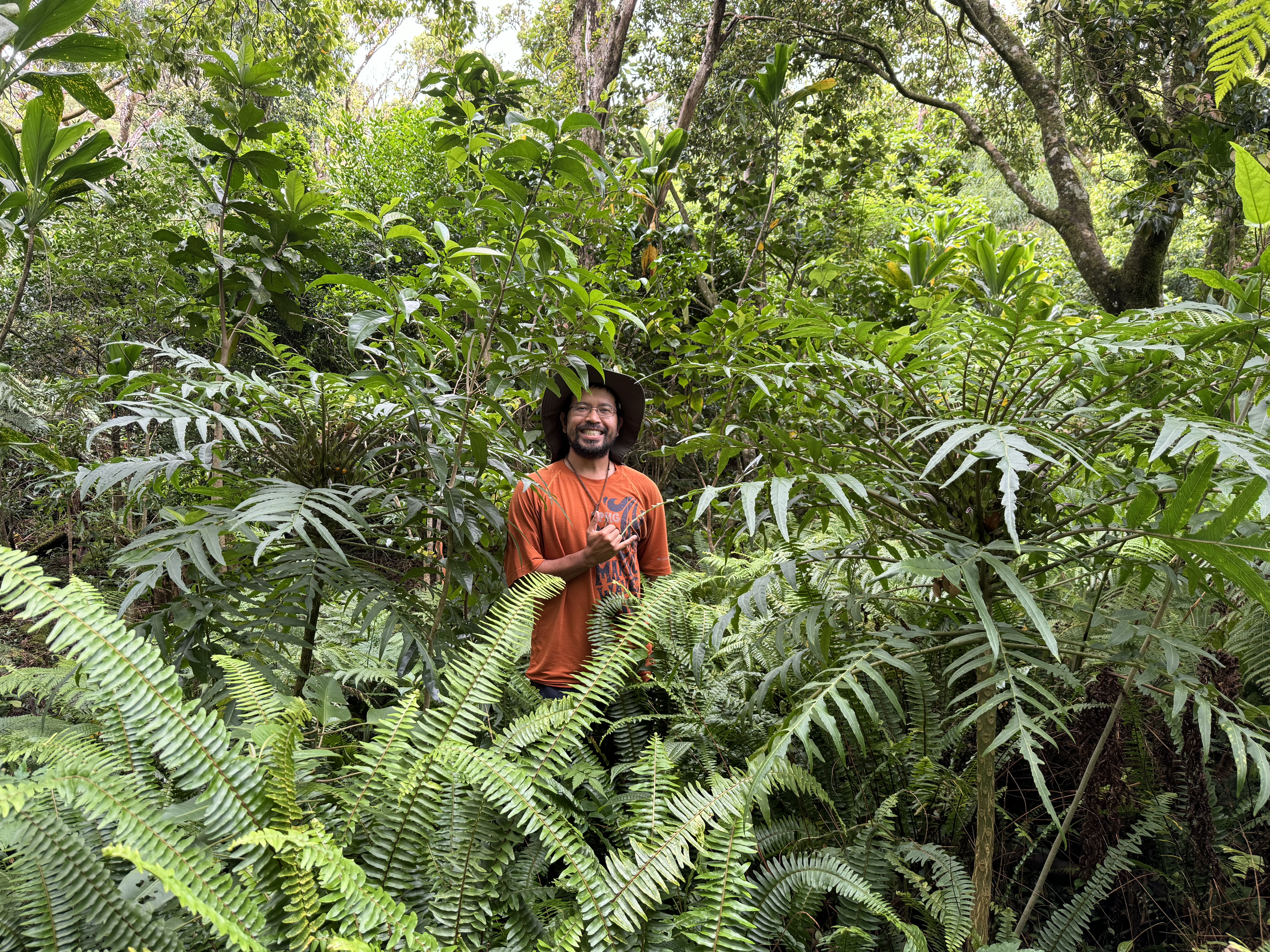
Let’s talk about the plight of 2 Ko`olau endemic taxa who were both on the very brink of extinction but are now on a tenuous path toward recovery. It’s a tale of destruction and despair but also of compassion and hope. This is the story of Achatinella fuscobasis and Cyanea grimesiana ssp. grimesiana.
When it comes to the Hawaiian forests, we are living with the consequences and results of past decisions made by man. It’s normally thought of in a negative connotation. 100+ years of social upheaval, questionable land management, and a general deprioritization of the environment has lead to a wholesale turnover of the Hawaiian biota. Hundreds of species had been introduced and established in the archipelago while simultaneously many native species have declined and gone extinct. When comparing the current state of many Hawaiian forests to both fossil and historical records, they are almost unrecognizable with the sheer number of novel characters and interactions.
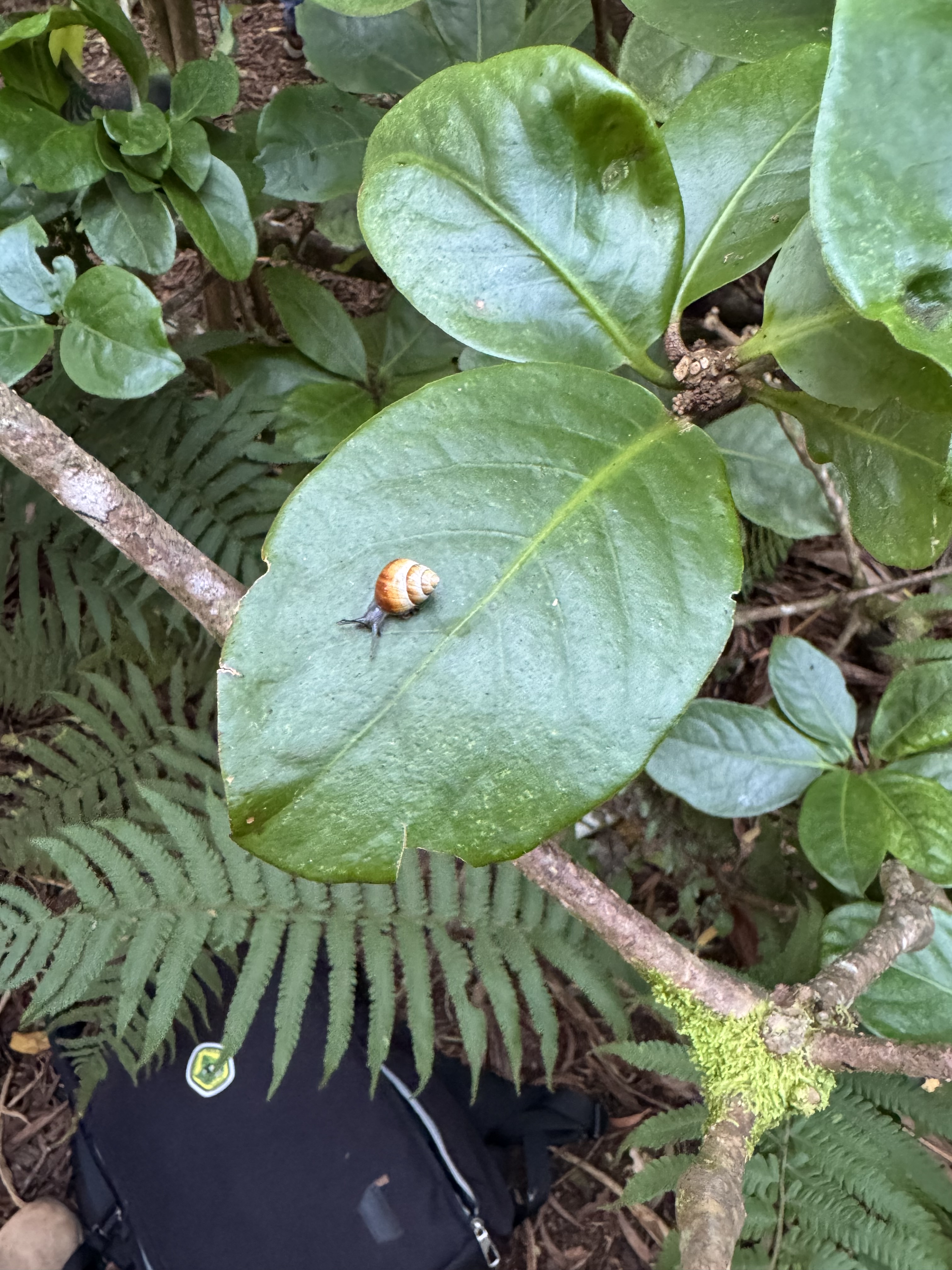
Through it all, some endemic species have survived the onslaught. A. fuscobasis is one of the many species of kahuli or tree snails that were so characteristic of the forests of O`ahu. There are accounts from as recently as the 1930’s of native snails being so plentiful that it looked as if they covered entire trees like a layer of rice. That to collect shells, one could simply shake a tree vigorously and they would come raining down. But the combination of habitat destruction and invasive predators have proved to be a death knell for the pretty tree snails as many have gone into a catastrophic decline with many species not seen in decades. The entirety of the native land shell guild of Hawai`i is basically on the verge of disappearing forever.

The same could be said of native Hawaiian plants. The story of Cyanea grimesiana ssp. grimesiana is emblematic of that. The same combination of threats that the land snails are facing also negatively affect the native plants. Over time, those pressures have taken their toll with many plant taxa on the brink of extinction. The only known populations of ssp grimesiana were known from a few gulches in the southern Ko`olau mountains where they disappeared in the 1990’s. A single individual was discovered in 2004 but that too succumbed to the pressures that threaten Hawaiian forests.
There are probably many alternate universes in which this is where the story ends. Just a cautionary tale about the enormity of the destruction man wrought on a vulnerable landscape. A version of the universe where we can only wistfully imagine what extinct Achatinella or Cyanea looked like in real life.
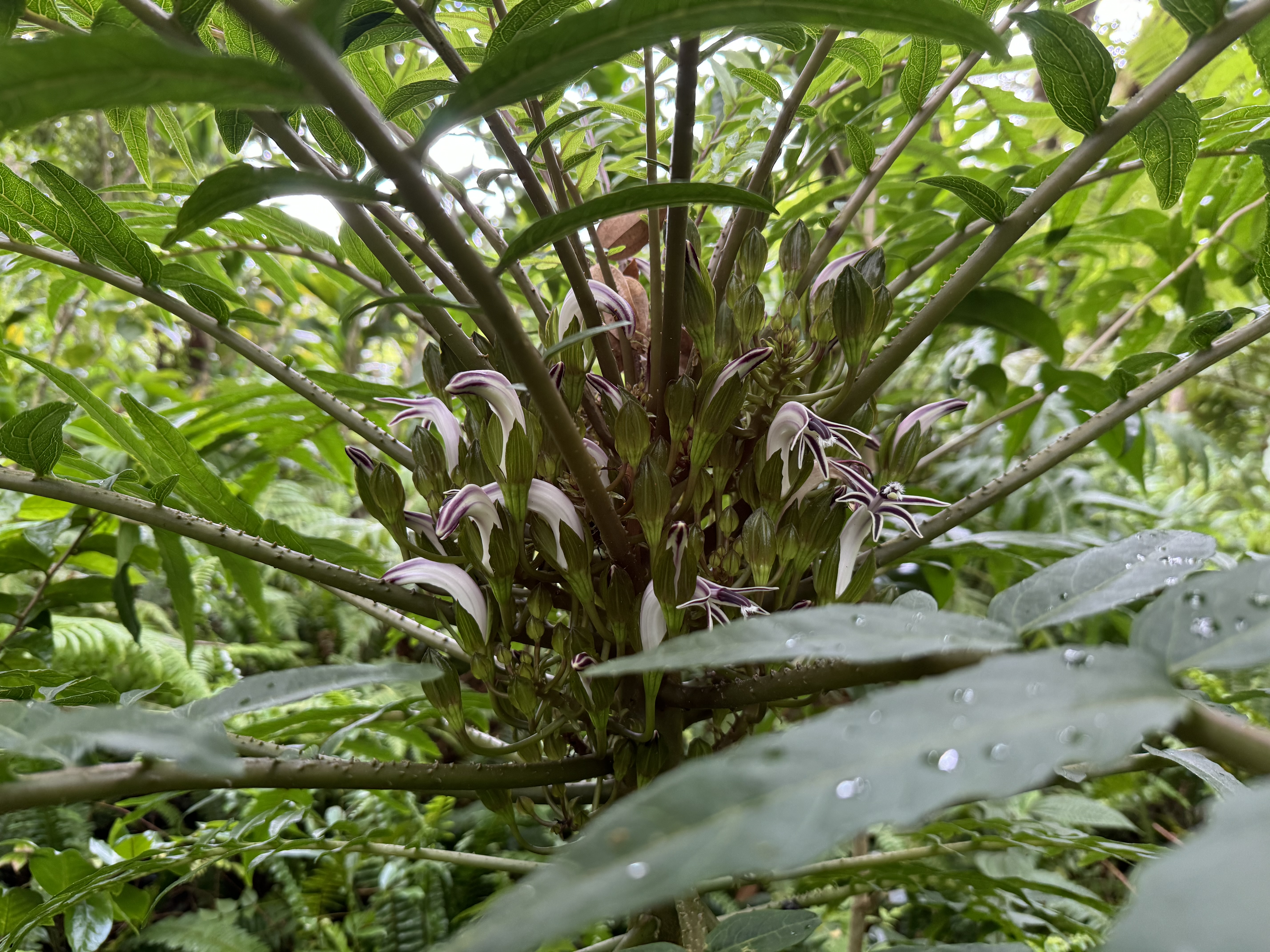
For all of today’s challenges, we are lucky to live in this version though. Because the story did not end there. When it comes to the modern Hawaiian forests, we luckily are living with the consequences and results of past decisions made by man; In this case, positive ones. Botanists knew of the plight of Cyanea grimesiana ssp grimesiana. They were able to make collections from those last dying individuals way back in the 90’s. The number of individuals were so low that waiting for seeds was not ideal; the founder plants could die before they ever became reproductive. Through use of tissue culture, other researchers were able to preserve all the known individuals of ssp. grimesiana. Three individuals are represented today. Their progeny have now been outplanted in protected habitat where seedlings have been observed for the first time.
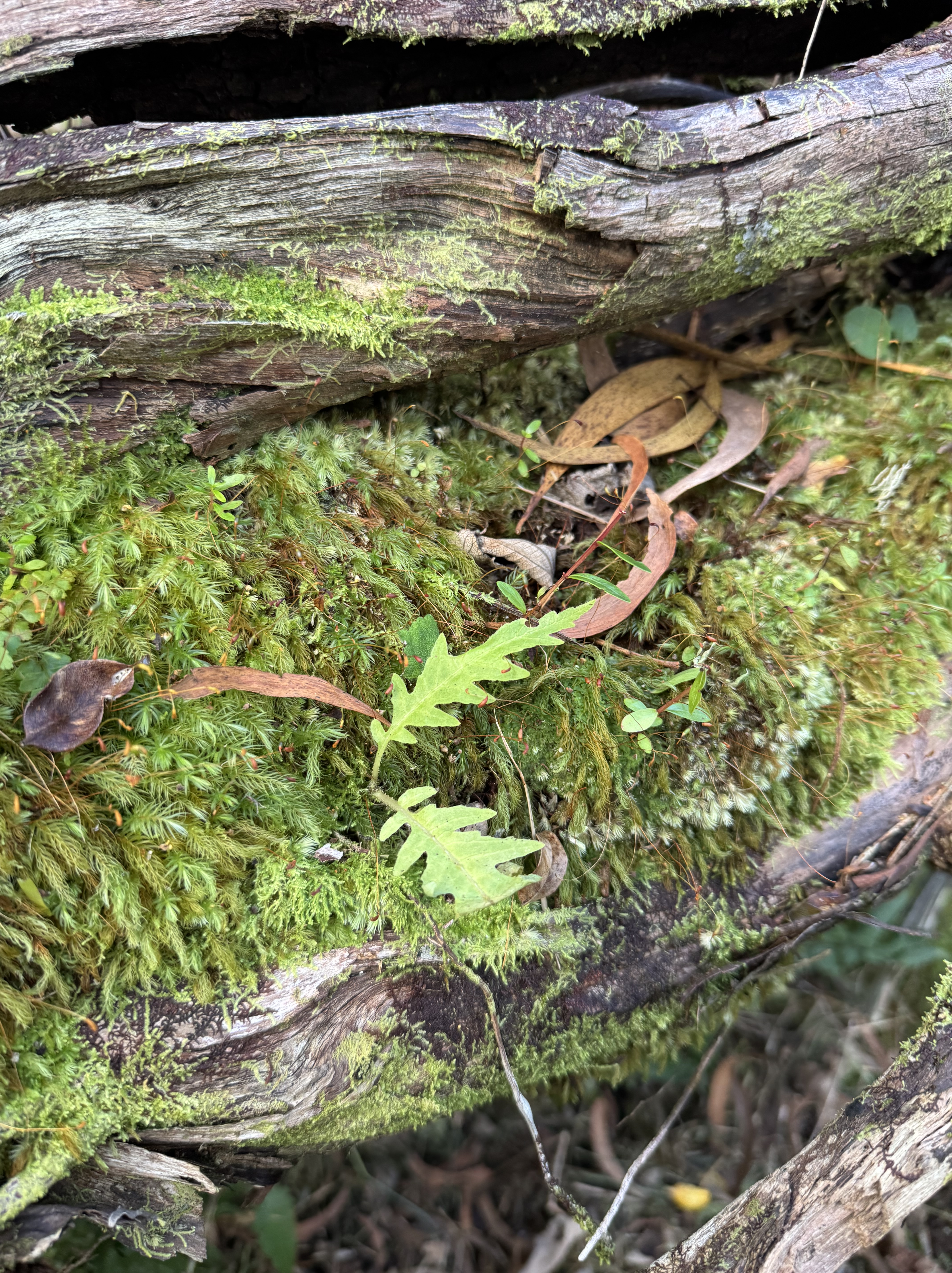
As for A. fuscobasis, 11 were evacuated from their last known holdout in 1991, saved before invasive cannibal snails could wipe out that vulnerable colony. Through fits and starts, they were able to survive, though wholly in captivity. Recently, some individuals of fuscobasis were released into the same protected forest as C. grimesiana, marking the first time the population has been found outside the lab in 33 years.
If it wasn’t for those handful of folks, who 30 years ago basically said “You’re not dying today” and then followed through with the actual effort to keep them alive, these 2 taxa wouldn’t be with us now. It is incredibly humbling for me to think about that effort. These taxa were extinct in the wild and for all intents and purposes only sustained in a handful of containers and test tube racks for decades. There could be no slip ups. Something as mundane as a prolonged power outage could be an extinction factor. Food had to be collected, trays had to be cleaned. And not just when you felt like it. Every day, on a regular schedule. The very existence of these taxa depended on the persistence of a handful of caring humans. It seemed daunting, incredibly overwhelming, and impossible. And yet through it all Achatinella fuscobasis and Cyanea grimesiana ssp grimesiana are with us to this day with a path to recovery becoming clearer and more possible because of those positive sustained efforts started decades ago.
A brighter future is not guaranteed. The old threats remain. New threats can emerge. But just as we are living with the happy consequences of the past actions and decisions a handful of folks took with A. fuscobasis and ssp grimesiana our own current actions and decisions can have a profound impact on not just these taxa but the rest of the incredible Native Hawaiian Forest. What will we choose to do? Happy Holidays all.
P.S. 13 years ago, I also made a holiday post with some probable Achatinella fuscobasis we fortuitously came across in the wild. I like to think I make my posts rhyme over decades!

 Studia Mirabilium