

DLNR here in Hawai`i has for the last few years given a theme for each year to highlight different components of local conservation. A few years back was about Achatinella tree snails, last year was about native forest birds. This year was themed around the idea of community forest. Considering that I have been part of a native forest restoration project for the last 15 years, I was completely supportive of the idea. It’s something I’d like to think I have some experience with.
I’ve mentioned before how I don’t think of native forests as a place to go to; I see them more as an intricate, connected web of interactions that occur when the conditions are just right. While some conditions are the most basic of primordial forces (Wind, rain, fire, earth, light), others are interactions with different living things. For as much as the landscape shapes its respective plants and animals, the plants and animals also shape the place.
Autochthony is a term that comes up here at Studia Mirabilium because you can’t talked about native ecosystems in an isolated area without talking about how distinctive and unique it is. In some ways it’s the diametric opposite of the modern connected social world. Someone can be reading this post in Ghana right now. I could look up what life is like for herder in Mongolia just as easily as I could a truck driver in Tennessee. I could have one tab open to write a blog post, and have another tab book a flight and be in Japan tomorrow.
This global village with goods and ideas spreading at the speed of light has had an affect on biota. For some have harnessed our ability of transport to spread around themselves. Mimosa pudica is found all over the tropics worldwide, Mus musculus is found just about anywhere there is human habitation. One species of felid and one species of canid has spread worldwide far beyond where they existed before domestication. In some places like islands, they’ve become established in areas they would have never been able to reach without assistance. In very many ways, we didn’t create multiple distinct urban habitats, we created a pseudo-Pangea, propped up by our actions, in which plants and animals that have somehow adapted to the human condition opportunistically exploited. A strangely sometimes deliberate novel community of plants and animals have shaped landscapes and disrupted ecosystems worldwide.
Here in Hawai`i, the autochthonous forms that originally shaped these forests are mostly gone sadly. Hunted, outcompeted and replaced by these members of the global village. Many Hawaiian residents can look out their window and see a Monkeypod tree, a plumeria, a chicken, a cat and dog and not really think about just how weird it is to even have these taxa here. And those endemic forms, the `o`o birds, the moa nalo, the tree snails, the land crabs, the sea bird colonies have all largely been forgotten. So forgotten, in fact, that most people would now think those original natives are actually the ones that are out of place and weird for Hawai`i.
If we have created a wholesale turnover in the native biota and replaced it with these species that have adapted to human created habitats can it be reversed? And to what extent? Enter Community Forests.
Most places where people live and play in Hawai`i where once dryland forests. But there are some neighborhoods the abut mesic and wet forests. That is where we’ve been working for the last 20 years. A small handful of folks have dedicated one day a week with a goal of rehabilitating a heavily degraded native forest. And it’s made a difference.
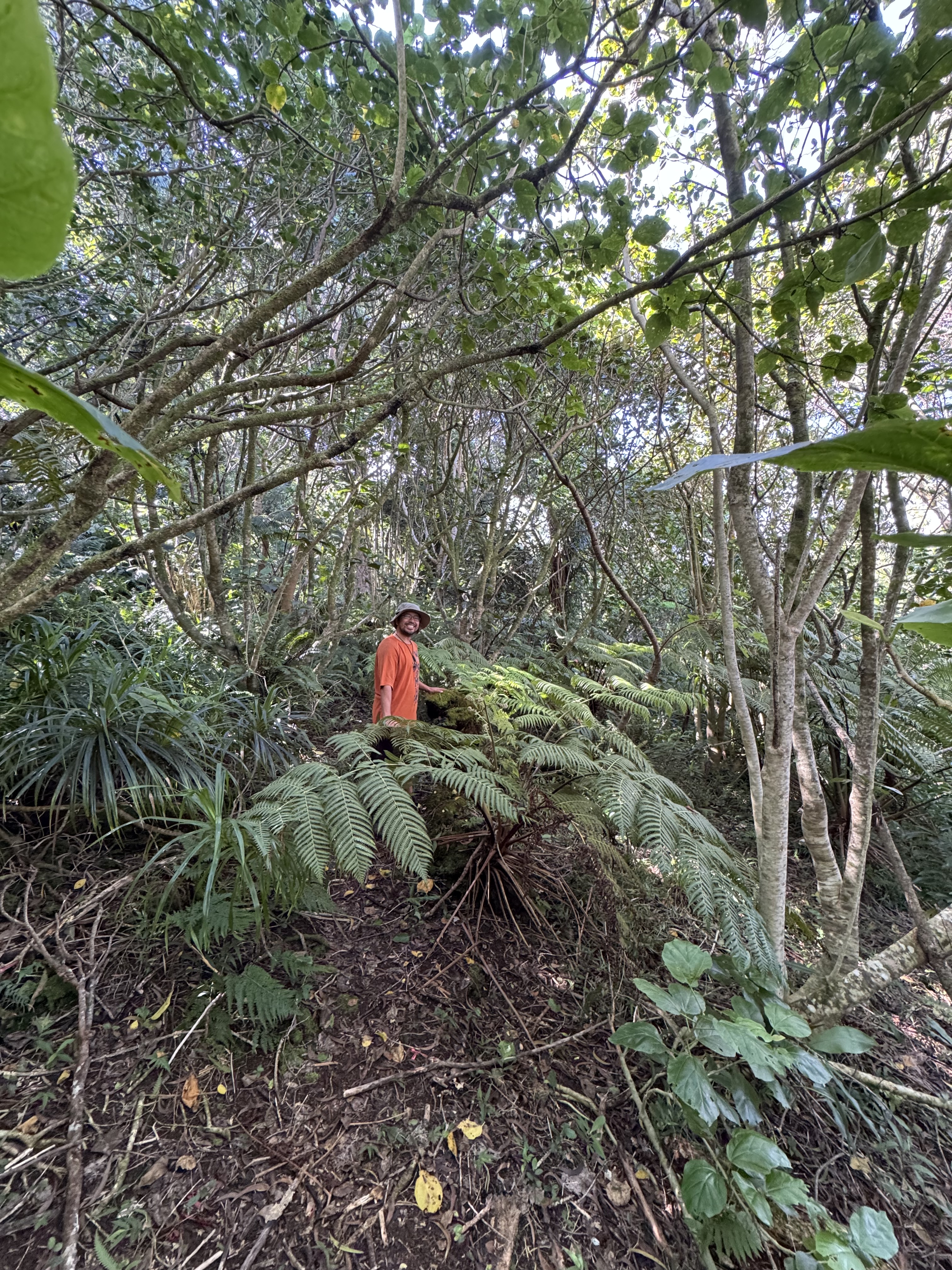
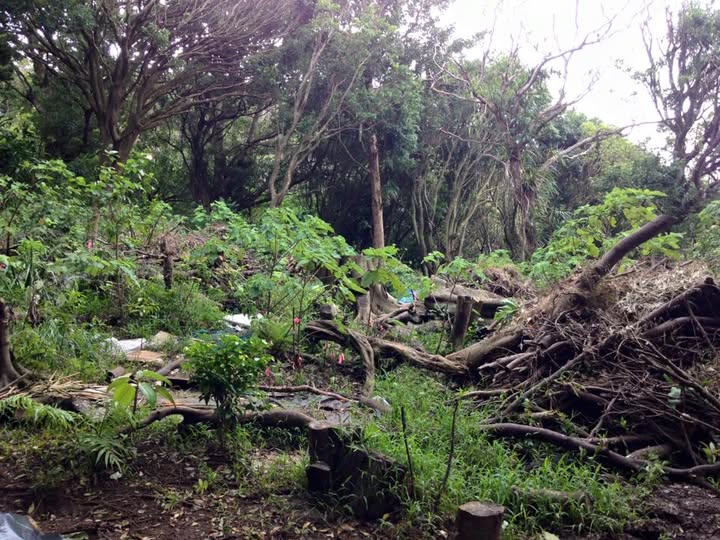
The series of photos I’ve interspersed through this post are all taken from the same place, over a period of 11 years. Where an invasive banyan once stood, a canopy of native Hibiscus and Acacia dominate with many native ferns in the understory. It took plenty of work, but this part of the forest seems to have stabilized into a native condition.
I think in some ways, when people hear community forest, they think of it just from a human perspective. And there is nothing wrong with that. The forests that are around us, what sort of benefits can we get? But for me, I like to think about it from the other shoe: what benefit does the forest gain from us? Can we play the role of `i`iwi, `o`u, land crab, flightless rail with a dash of Paul Bunyon and Johnny Appleseed? Yes, we can. If there is anything I would like folks to get out of DLNR’s designation for the year of the community forest it is that the potential for a mutually beneficial relationship between man and forest is there and not as far-fetched as one may think.

 Studia Mirabilium