
I started this blog 15 years ago with a basic goal in mind: what would the world look like if conservation was a success? How are we interacting with the healthy population of species that are now our next door neighbors? How do we share the planet? There were places that I knew that were examples of this. Back in 2006, I was able to visit one of those places: Puerto Ayora on Santa Cruz in the Galápagos Islands. Now, almost 20 years later, I was finally able to visit another one of those spots. On Monday, I took the ferry to Rottnest Island of the coast off Perth, Australia.
Rottnest Island was named by early Dutch explorers for all the “rats” that they observed like a plague on the island. As the smart readers of this blog know, those weren’t rats at all and that plague upon the island ended up playing a key role in the conservation of an entire species.

Quokka (Setonix brachyurus) is a diminutive macropod native to a small area of Southwest Australia and some outlying islands. With habitat destruction and introduced predators like cats, dogs and foxes, Quokka numbers on Mainland Australia have declined markedly.
On the offshore islands, the Quokka have thrived freed of those pressures. Recent human practices have indirectly helped even further. Rottnest Island was originally thought to have a carrying capacity of roughly 2,000 individuals. But with frequent irrigation of the lawns in the Thompson’s Bay settlement allowing a steady food source to be readily available, Quokka numbers have exploded to somewhere around 8,000 to 12,000 individuals. That plague that those Dutch explorers saw became even larger and Rottnest is the most important population for the species with Thompson’s Bay being the easiest place to observe them.
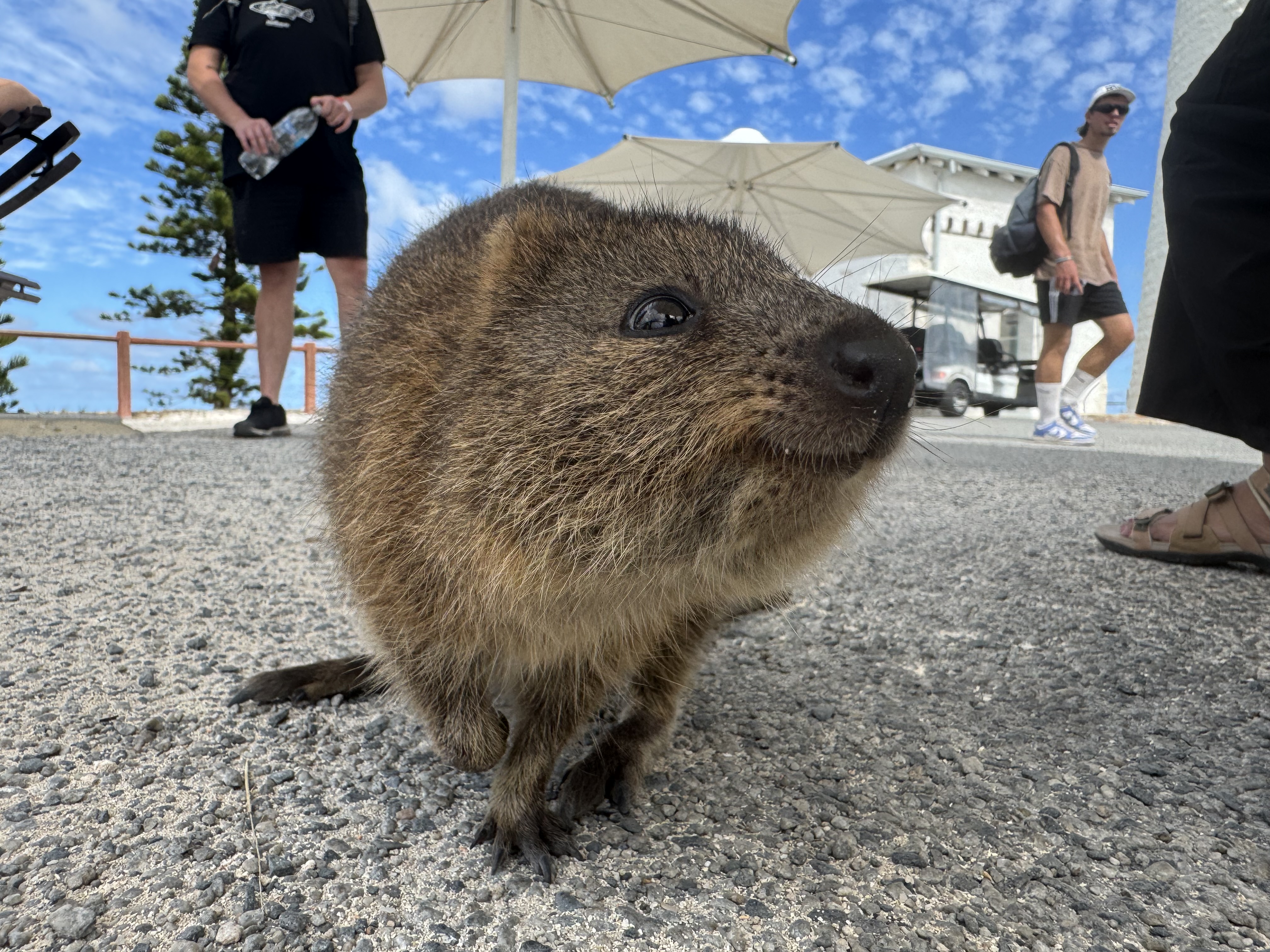
I’m not sure if these populations ever saw the problems of introduced predators, but these Quokka are remarkably non-plussed around humans. It makes for wonderful interactions and observations if one is respectful and responsible. This Quokka at the lighthouse above had no problem checking me out.
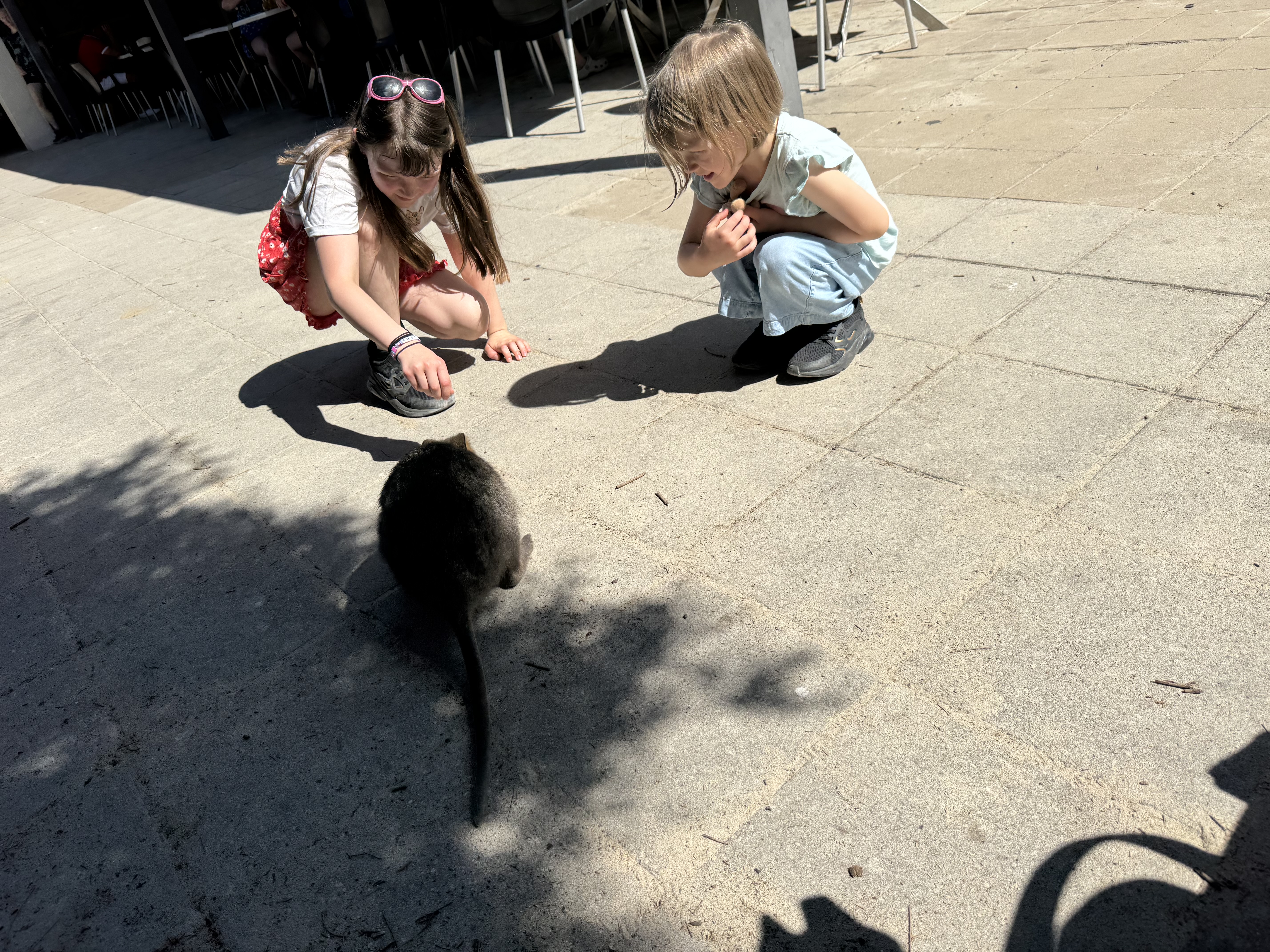
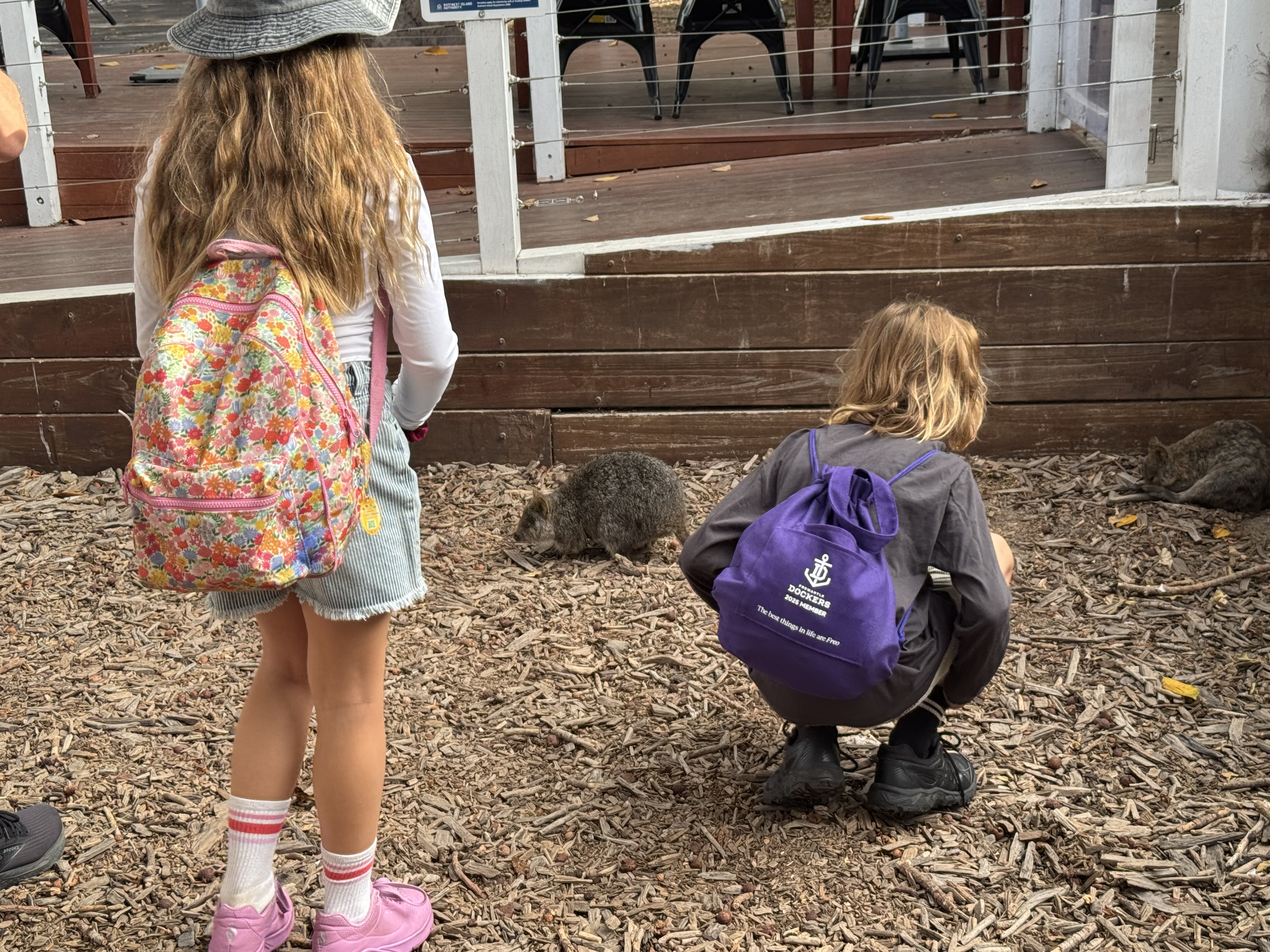
What really pleased me was with their rather gentle and calm nature, Quokka allow kids to really emotionally connect with them. It’s important to me because even with all the conservation work that I do in Hawai`i, it can be difficult to get the public to care about taxa they never see, let alone interact with. What better way to get children to care about a wider world than to take them to see such a charismatic animal and have them figure out if it is worth fighting for or not. Given all the joy and wonderment I was seeing on all the kid’s faces, my hunch is that most would say it’s worth it.
It certainly left an impression me. Here is an important meta population for this vulnerable species having to deal with unique pressures of the tourism industry. Dare I say that they are thriving? While most people are responsible there are some folks that feed the Quokka things outside their normal herbivorous diet. There are challenges no doubt. But to see these animals doing well amongst a bustling human population, it just gives me a clear view on what this shared planet can actually look like.

 Studia Mirabilium
There are small populations of quokkas on the mainland as well, but they’re far more retiring than the ones on Rottnest and most people wouldn’t know they’re there. It made the news recently that a new population was discovered in the hills not far from here, though the exact location has (sensibly) not been disclosed.
Hi Chris, I heard about those. Glad they’re still found on the mainland and hope their shy and retiring nature helps with predators. You’re still based out of Perth? Really impressed with Kings Park