
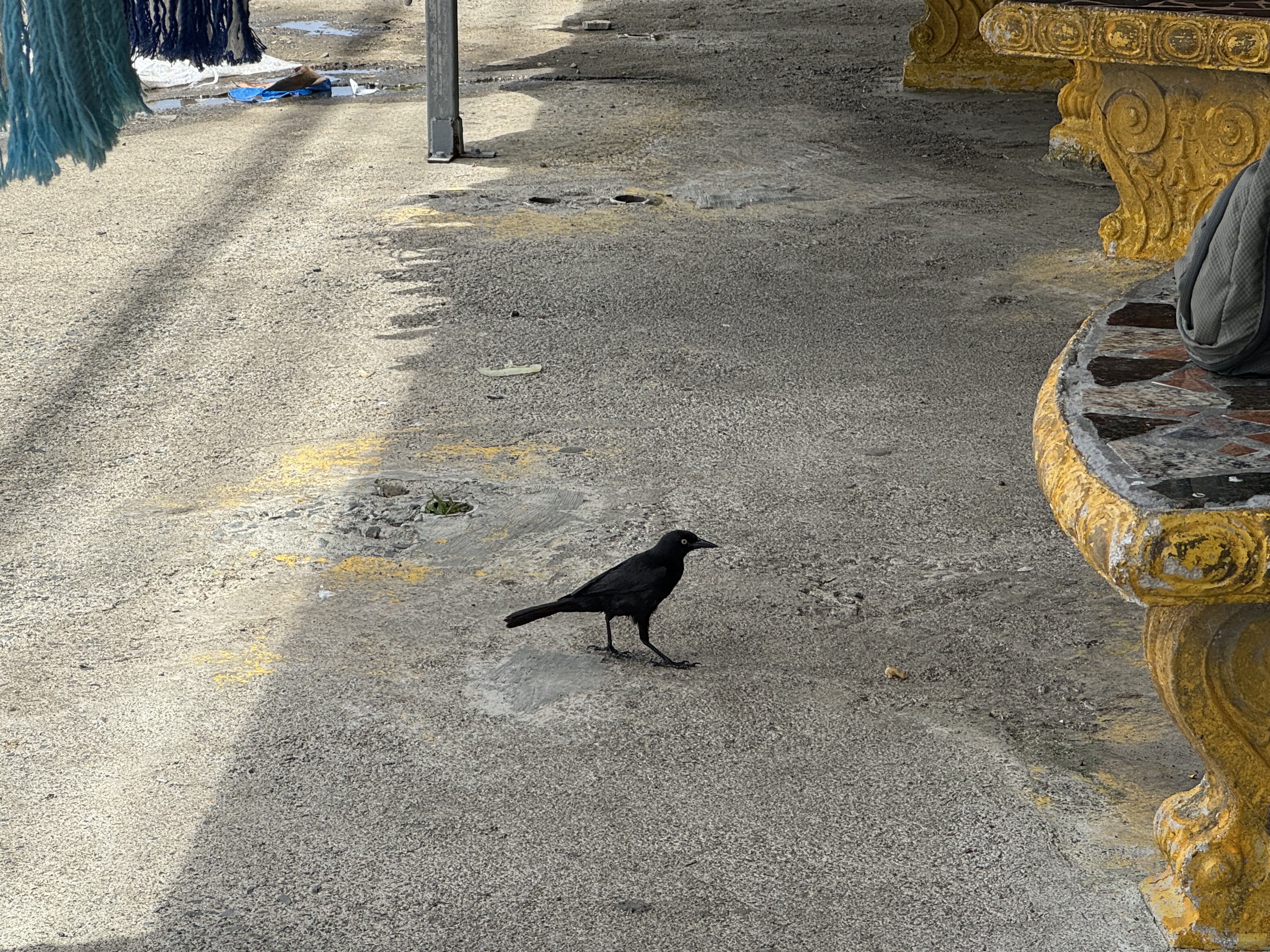
Many species of grackles (Qusicalus spp) have adapted fairly well to the human landscape. I came across them in large numbers in and around San Antonio a few years back. Here on my trip to Puerto Rico it was no different. Greater Antillean grackles (Q. niger) were quite common at roadside stops.
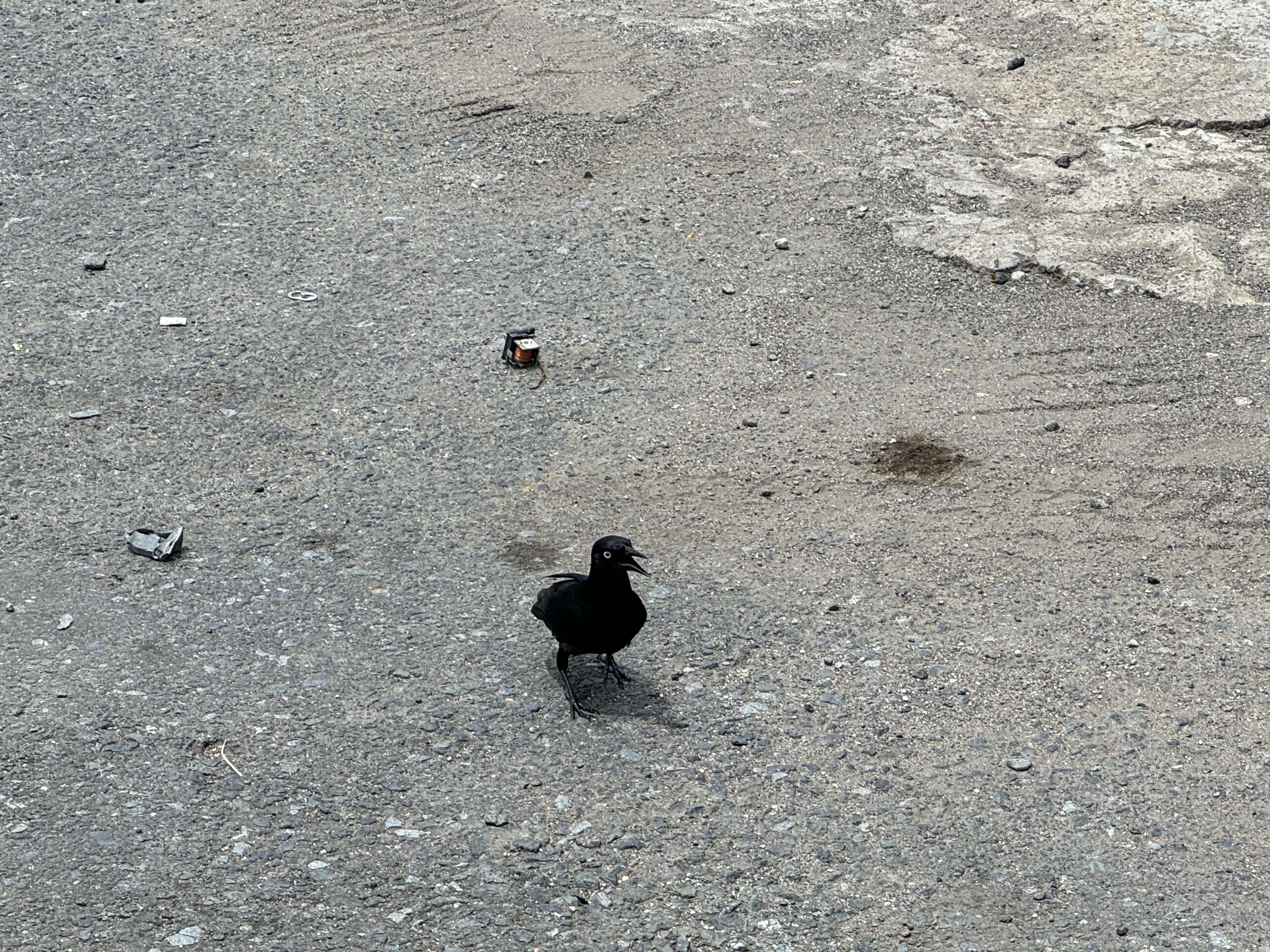
They are common enough that I doubt the average person gives them a second thought. Or if anything, considers them a nuisance. What I find interesting is they kind of allow one to have a glimpse of Hawai`i of long ago. For it seems one of the extinct Hawaiian honeycreepers evolved into something akin to a grackle like bird.
The bird family Icteridae which grackles are part of, share a trait called “gaping”. Certain skeletal processes are hypertrophied allowing these birds to open their bills with some force. These adaptations in the bill morphology are thought to aid in a feeding strategy where the birds can probe into a substrate and pry it open with their bills to aid in finding food.
One lineage of honeycreeper (Aidemedia spp) seems to have also evolve a bill to allow gaping. These birds are thought to have at least evolved a feeding strategy fairly similar to icterids like the grackles pictured above.
And unfortunately because they are extinct we don’t know what else if anything is similar to a grackle. Hawaiian Aidemedia seems to have gone extinct before Europeans were able to document them so we really can’t say if grackles would be a good analogue for them or not. Certainly there are some similarities. It’s a shame though, if they were similar to modern grackles would they have adapted to the modern world just as readily if they survived?
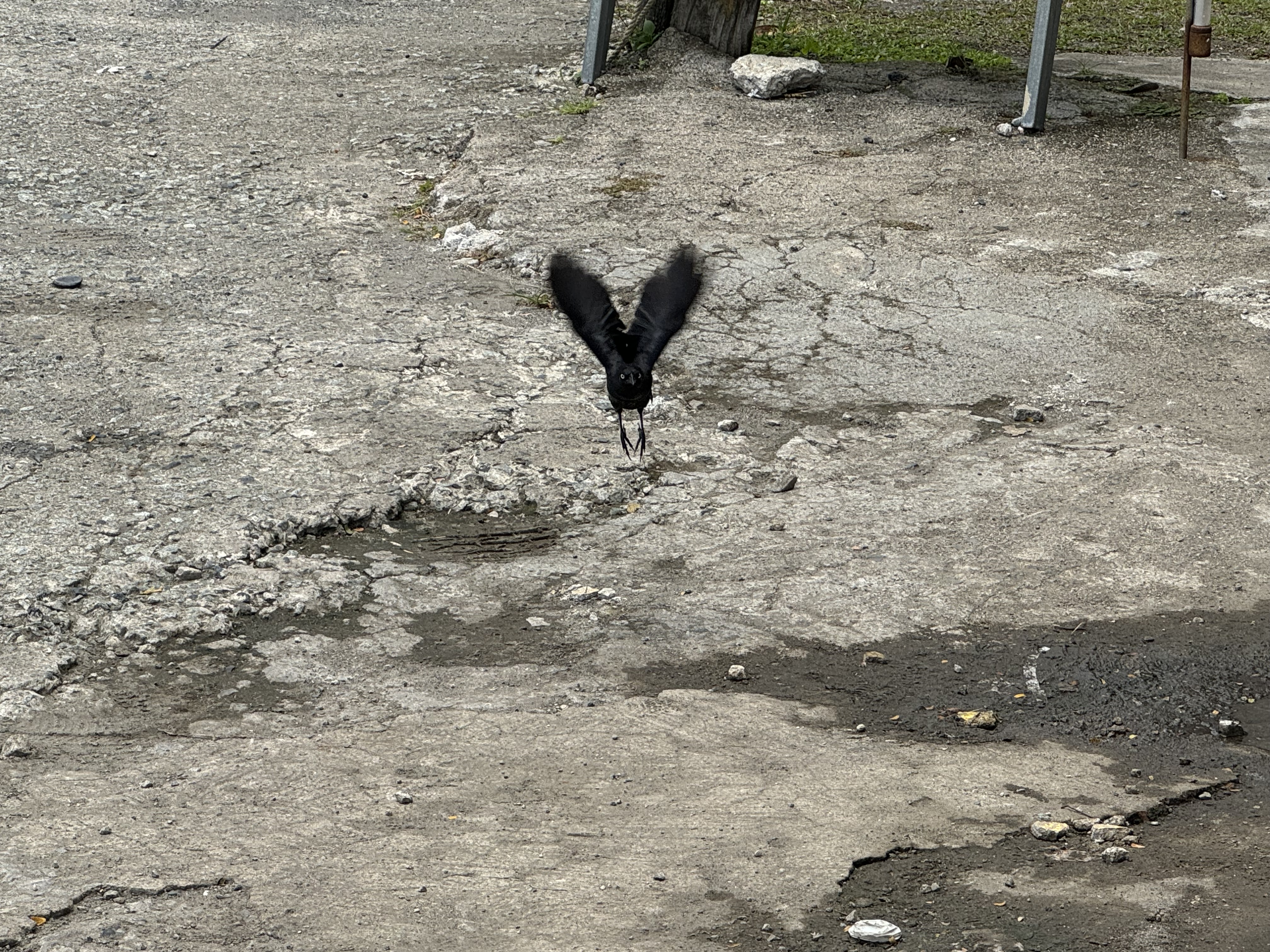
So while I was appreciated being able to observe Puerto Rican avifauna up close, I couldn’t help but think of another island chain in another ocean and the birds that were once around. When I look at these non-descript photos of the side of the road with a common bird, I can’t help but think of a similar scene at the North Shore shrimp trucks on O’ahu, dream of a alternate future and smile.

 Studia Mirabilium